
More than 687 cases of school unrest reported across the country during the second term of 2026 are set to undergo a comprehensive investigation, with the Government giving a newly appointed task team 90 working days to establish what triggered the incidents and recommend measures to prevent a repeat.
The inquiry will go beyond individual cases of student indiscipline to examine possible failures in school leadership, learner protection, institutional safety and the management of learning institutions.
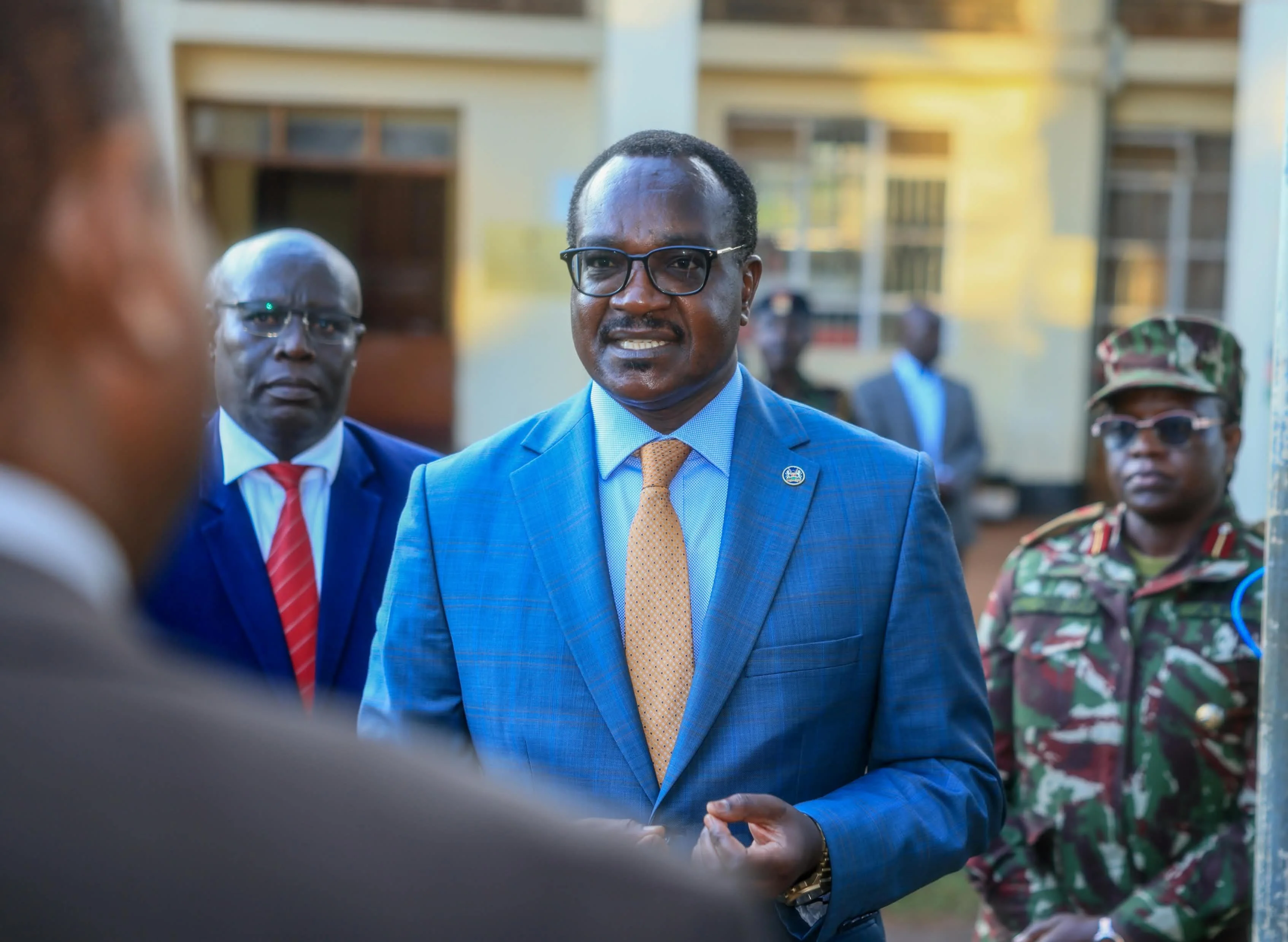
Education Cabinet Secretary Julius Ogamba, who inaugurated the multi-stakeholder team at the Centre for Mathematics, Science and Technology Education in Africa (CEMASTEA) on Tuesday, said the investigation must address longstanding concerns that have contributed to instability in schools.
The team, led by Professor Peter Mulwa Mbithi, has until March 2, 2027, to present its findings and propose reforms covering school administration, safety requirements, learner welfare and accountability within the education sector.
Ogamba said incidents involving arson, violence and destruction of school property were a warning that deeper problems needed to be addressed rather than treating every case as an isolated disciplinary matter.
"These incidents cannot be treated as isolated disciplinary matters. They point to broader questions concerning school governance, learner welfare, institutional accountability, safety standards and the effectiveness of our education management systems," Ogamba said.
He referenced the 2024 Hillside Endarasha Academy tragedy and the fire that occurred at Utumishi Girls Academy in May 2026, saying the incidents demonstrated the importance of strengthening safeguards in schools.
The team has also been instructed to revisit earlier inquiries into school unrest, particularly the Sagini, Macharia, Wangai and Koech investigations, whose recommendations were intended to address similar challenges.
It will assess the progress made in implementing the proposals, establish which measures have been neglected and identify the government agencies and institutions responsible for following through on them.
"I wish to emphasise that this should not become another exercise in producing a report that remains unimplemented. We must address the unfinished business of previous inquiries while responding to emerging challenges in our education system," he said.
A major part of the assignment will involve examining whether schools have adequate facilities and procedures to protect learners during emergencies.
The team will assess fire prevention systems, emergency response arrangements, infrastructure standards, security measures and disaster preparedness across learning institutions.
Boarding schools will be a particular focus, with investigators expected to inspect dormitory conditions, the availability of emergency exits, firefighting equipment, student supervision and evacuation plans.
Their management structures and daily operational practices will also come under review to determine whether existing arrangements meet the required safety standards.
forced.
The inquiry will further look into whether financial pressures within schools and households could be contributing to unrest.
This will involve examining government capitation, school infrastructure funding, parental contributions, school fees and the general cost of education.
The affordability of school uniforms and the policies governing their use will also be reviewed to determine whether financial demands on families and institutions are creating tensions.
Beyond physical safety and school administration, the task team will investigate challenges affecting learners and their relationships within schools.
It will assess how institutions handle student discipline, guidance and counselling, mentorship programmes, psychosocial support and complaints raised by learners.
Investigators will also examine bullying, peer pressure, substance abuse, gender-based violence and other factors that could contribute to unrest.
Ogamba urged schools to adopt positive disciplinary approaches that encourage communication and student involvement while safeguarding the rights and dignity of every child, including learners with special needs and disabilities.
The investigation will also consider the growing influence of digital platforms in school-related incidents.
Members will examine how social media, smartphone use, misinformation and online mobilisation may contribute to the organisation or escalation of unrest among learners.
The possible involvement of criminal gangs, religious extremism and other emerging security threats will also form part of the inquiry.
Ogamba said the proposed reforms should promote responsible digital behaviour, timely intervention and stronger child protection systems, alongside improved coordination between schools and security and social protection agencies.
The investigation will also seek to establish the responsibilities of various individuals and institutions involved in running and supervising schools.
School heads, Boards of Management, teachers, parents, sponsors, learners and education officers will all fall within the scope of the accountability assessment.
The team will identify shortcomings in existing laws, regulations and education policies that may be affecting the prevention and handling of unrest.
To capture the different circumstances facing schools, Ogamba directed the members to conduct consultations across all 47 counties.
Learners, parents, teachers, school administrators and communities affected by unrest will be engaged to ensure the investigation considers their experiences and concerns.
The final report will outline the factors behind school unrest and recommend changes to existing policies, laws and administrative procedures.
It will also provide a prioritised and costed action plan showing how the recommendations should be implemented, the institutions responsible, the timelines involved, the resources required and indicators for measuring progress.
"Every recommendation must have an identifiable institutional owner, a timeline, resource implications and measurable indicators," he said.
Ogamba said the Education Ministry would use the findings to consider appropriate policy, administrative, regulatory and legislative measures.
An inter-agency arrangement will also be put in place to monitor the implementation of the proposed reforms after the task team completes its assignment.
He stressed that addressing unrest in schools would require joint efforts involving the Education Ministry and agencies responsible for internal security, health, child protection, social services and disaster risk management.
The CS challenged the appointed members to conduct the investigation with independence, integrity and professionalism, insisting that its outcome must translate into practical improvements in schools.
"The true measure of success will not be the report produced, but the lives protected, the institutional reforms implemented and the recurrence of school unrest prevented," Ogamba said.
The task team was appointed through Gazette Notices No. 16733 of October 23, 2026, and No. 16968 of October 30, 2026.