
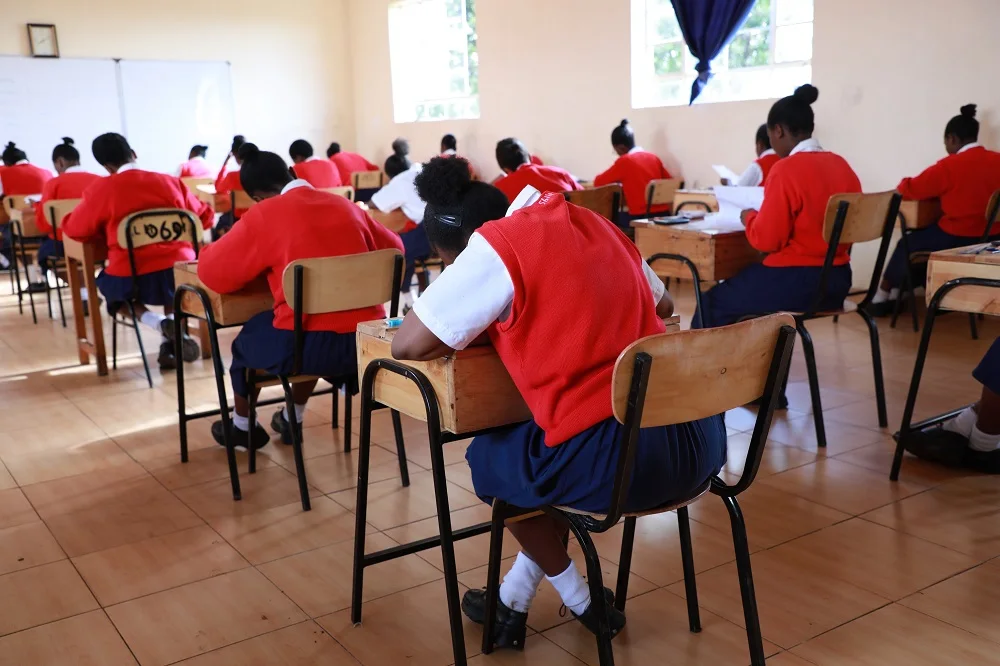
Police investigations into suspected cheating in the ongoing Kenya Certificate of Secondary Education (KCSE) examinations have intensified following reports of examination papers being circulated online, with a university student among those arrested as authorities move to seal loopholes in the examination process.
The arrest of a Kibabii University student in Bungoma County has brought fresh attention to the security of examination materials, with detectives investigating how the suspect obtained the papers and whether other people were involved in their circulation.
Bungoma County Police Commander Omar Bika Arero said the student was apprehended after officers received information that examination papers were being shared through the Telegram messaging platform.
Police also recovered a mobile phone suspected to have been used to distribute the materials. According to Arero, officers moved in before the suspect could circulate the papers to a wider audience.
“Before he could properly get his plans underway, information had already reached our officers that he had already begun distributing that exam to others, he was arrested,” the police commander told a local daily.
The suspect is expected to be arraigned once detectives complete preliminary investigations. Police are seeking to establish the source of the examination papers, whether the student had accomplices and how many people may have received the material.
The Bungoma incident is not the only suspected case under investigation, with reports of examination irregularities also emerging from Garissa and Wajir counties. Investigators are working to establish the circumstances behind the incidents and identify those responsible.
The emerging cases have placed renewed focus on the Kenya National Examinations Council (Knec), which has stepped up security and monitoring measures to prevent examination malpractice during the national tests.
In its latest directives, the council has restricted the use of mobile phones by examination officials while examinations are in progress and prohibited candidates from wearing wristwatches.
Centre managers have also been instructed to ensure that all mobile phones are switched off and kept in lockable storage facilities outside examination rooms. The devices must remain secured until all papers scheduled for the day have been completed.
Meanwhile, candidates are proceeding with the fourth day of the written examinations today after sitting three papers yesterday.
The morning session featured Chemistry and General Science, while English Composition and Essays were scheduled for the afternoon.
Chemistry, including its large-print version, was allocated two hours. General Science, English Composition and Essays, together with their large-print versions, had a duration of two and a half hours.
Candidates using Braille for Composition and Essays, as well as those sitting English examinations for hearing-impaired candidates, were allocated three hours.
Education Cabinet Secretary Julius Ogamba has appealed to the public to assist in protecting the integrity of the examinations by reporting credible information about suspected malpractice directly to Knec.
Speaking in Nairobi, Ogamba provided the council's toll-free numbers, 0800-724-900 and 0800-721-410, urging members of the public to use the channels to report any suspicious activities.
He further cautioned candidates and parents against falling victim to online fraudsters and groups claiming to have access to examination papers, warning that such claims could be attempts to con unsuspecting members of the public.
“I caution candidates, parents and members of the public against individuals or online groups who are claiming to possess examination materials. Be vigilant so that you do not get conned,” he said.
The warning comes as the examination body maintains tighter controls over the handling of examination materials, with authorities seeking to prevent further incidents that could compromise the fairness and credibility of the national examinations.