
More than 1,900 children have been left without parents or separated from their caregivers as the Ebola outbreak continues to spread across eastern Democratic Republic of the Congo (DRC), with UNICEF warning that the true number could be higher.
The UN children's agency said 1,581 affected children had been identified in Ituri and another 322 in North Kivu by September 28. UNICEF said the figures cover only areas where it works with the Provincial Division of Social Affairs, meaning the scale of the crisis could be greater than currently recorded.
The outbreak, which was declared in May, is caused by the Bundibugyo virus and has grown into the largest Ebola outbreak ever recorded in the DRC. According to the World Health Organization (WHO), the disease had spread to 63 health zones in seven provinces by September 23, with 7,890 confirmed cases and 3,799 deaths.
The outbreak's case fatality rate stood at 48.1 per cent.
Ituri remains the main centre of the outbreak, while North Kivu continues to report sustained transmission. The response has been made harder by insecurity, population movement and the wider humanitarian crisis affecting the region, which have created challenges for disease surveillance, contact tracing and access to treatment.
UNICEF said children who lose their parents or caregivers face several risks beyond Ebola itself. Without an adult to care for them, they can be more exposed to infection, violence and exploitation, while some may not be reached through contact tracing or taken to health facilities when they begin showing symptoms.
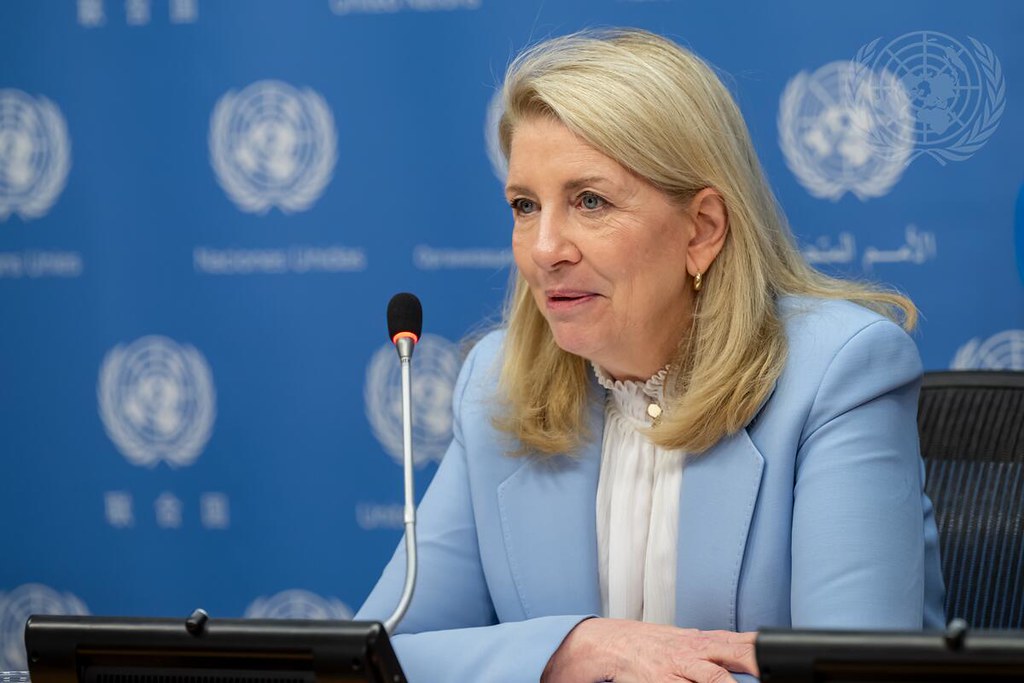
"For children, Ebola can set off a rapid chain of harm," said UNICEF Director of Emergency Operations Lucia Elmi. "A parent falls ill, and a child may be exposed. That parent is then hospitalized or dies, and the child is left without the person they depend on, while fear of infection and stigma leaves relatives and neighbours afraid to step in."
The crisis has also affected children living without stable family care. UNICEF said 214 children living and working on the streets in Bunia had been identified as needing protection.
Children are also bearing a heavy share of the disease burden. An analysis of Ministry of Health data, in cases where the age of patients was recorded, showed that at least 2,076 children had contracted Ebola by September 29, while at least 1,162 had died.
UNICEF said children make up more than a quarter of all confirmed cases but account for about a third of deaths. Those aged under five are at the greatest risk, with seven out of every 10 children under five who contracted Ebola dying.
The agency said a major concern is that many children die before they are able to reach treatment facilities.
Elmi said Ebola treatment centres should include nurseries as a standard part of their services so that young children can remain in a safe setting while their parents or caregivers receive treatment.
"In Bunia, I met Lina*, a seven-month-old baby who survived Ebola after losing her mother to the disease," said Elmi. "Her story is a powerful reminder that treating a child for Ebola is not enough. Nurseries must be a standard part of every Ebola Treatment Centre – they protect children, and they give parents the confidence to seek treatment, knowing their little ones are safe and within reach."
UNICEF currently supports 12 nurseries located near Ebola Treatment Centres in Ituri, North Kivu and South Kivu. The centres care for children who have been exposed to Ebola, those who have been left without caregivers and children whose parents or caregivers are receiving treatment.
The agency is also helping trace families, reunite children with relatives and arrange alternative care where reunification is not immediately possible.
Through its response, UNICEF-supported psychoeducation sessions have reached 90,600 people, while more than 15,900 family members have received psychosocial support in their homes.
The Ebola outbreak is adding pressure to an already difficult humanitarian situation in the DRC. WHO has described it as the country's 17th Ebola outbreak since the virus was first identified there in 1976.
The current outbreak differs from several earlier outbreaks in the country because it is being caused by the Bundibugyo virus rather than the Zaire virus. There is currently no approved vaccine or specific treatment for Bundibugyo virus disease.
WHO says controlling the outbreak therefore depends heavily on finding cases early, isolating patients, providing supportive care, tracing people who have been exposed, maintaining infection prevention and control measures, conducting safe burials and working closely with communities.
UNICEF is seeking US$150.8 million to support its Ebola response, including US$113.4 million for operations in the DRC. So far, only US$40.1 million of the amount required for the DRC has been raised.
The agency is appealing for urgent funding to expand care for children, support social workers and provide psychosocial services. It is also seeking resources for family tracing and reunification, foster and extended-family care, and efforts to help affected children return to school.
UNICEF is further calling for every Ebola Treatment Centre to have a nursery, saying the facilities are needed to keep children safe while their parents or caregivers receive medical care.