The World Health Organization has urged countries to keep travel and trade links with Kenya, Uganda and the Democratic Republic of Congo open after Kenya confirmed its first imported case of Bundibugyo Ebola virus disease.
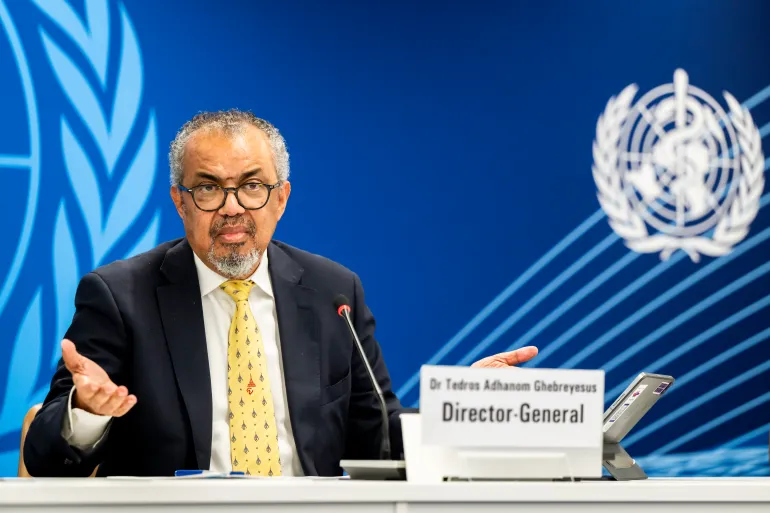
WHO Director-General Tedros Adhanom Ghebreyesus said on Tuesday, October 6, that the agency was closely following the situation and would check any travel or trade measures imposed in response to the outbreak.
“WHO advises against any restriction of travel to, or trade with, the affected countries based on the currently available information. We continue to closely monitor and, where necessary, verify travel and trade measures in relation to this epidemic,” he said.
The WHO is supporting health authorities in Kenya, Uganda and the DRC with contact tracing, surveillance and screening as they work to determine whether the virus has spread beyond the confirmed case in Kenya.
“WHO is supporting the governments of Kenya, the DRC, and Uganda in contact tracing, surveillance, screening, and other response measures to rapidly identify potential cases and prevent further spread of the virus,” Tedros said.
WHO Regional Director for Africa Dr Mohamed Janabi said Kenya’s preparations had helped the country respond quickly after the case was detected.
“Health emergency preparedness gives us a head start. Kenya has put important outbreak control measures in place,” he said.
“The priority now is to move swiftly to detect any further cases before the virus has an opportunity to spread.”
Kenya has been on heightened alert since May 2026, when Ebola outbreaks were declared in the DRC and Uganda.
By October 6, more than 652,000 travellers entering the country had been screened, while 267 suspected samples had been tested through five laboratories.
The country has also trained about 5,000 health workers on Ebola prevention and management. Isolation units in 27 counties considered high risk have been identified and assessed as part of the preparedness measures.
WHO has provided about 1,000 Ebola tests and 1,000 personal protective equipment kits to counties considered at high risk.
The country’s Ebola preparedness score also improved from 66 per cent in May to 82 per cent in July, according to WHO.
The confirmed case involved a Kenyan citizen who had lived in the DRC for seven years. He developed symptoms while in the DRC and received treatment at several health facilities before beginning his journey to Kenya.
He travelled by road to Kampala through Beni on October 2 before flying to Nairobi on October 3. He was then taken to Nairobi Hospital, where he was isolated.
Samples tested at the National Virology Reference Laboratory and the Kenya Medical Research Institute confirmed that he had Bundibugyo virus disease.
The patient later died on October 5 despite receiving supportive care. He was buried the following day under Kenya’s safe and dignified burial protocol.
Health Cabinet Secretary Aden Duale said on Wednesday that 11 members of the patient’s family had been quarantined.
He added that 23 Nairobi Hospital healthcare workers who attended to the patient had been identified and placed under monitoring.
Kenya formally notified WHO of the case on October 6 in line with the International Health Regulations.
The confirmation makes Kenya the fourth country to report Bundibugyo virus disease, according to WHO.
The agency has called for continued support for response efforts in the affected countries, stressing the need for coordinated government action, surveillance and community involvement to limit further transmission.