
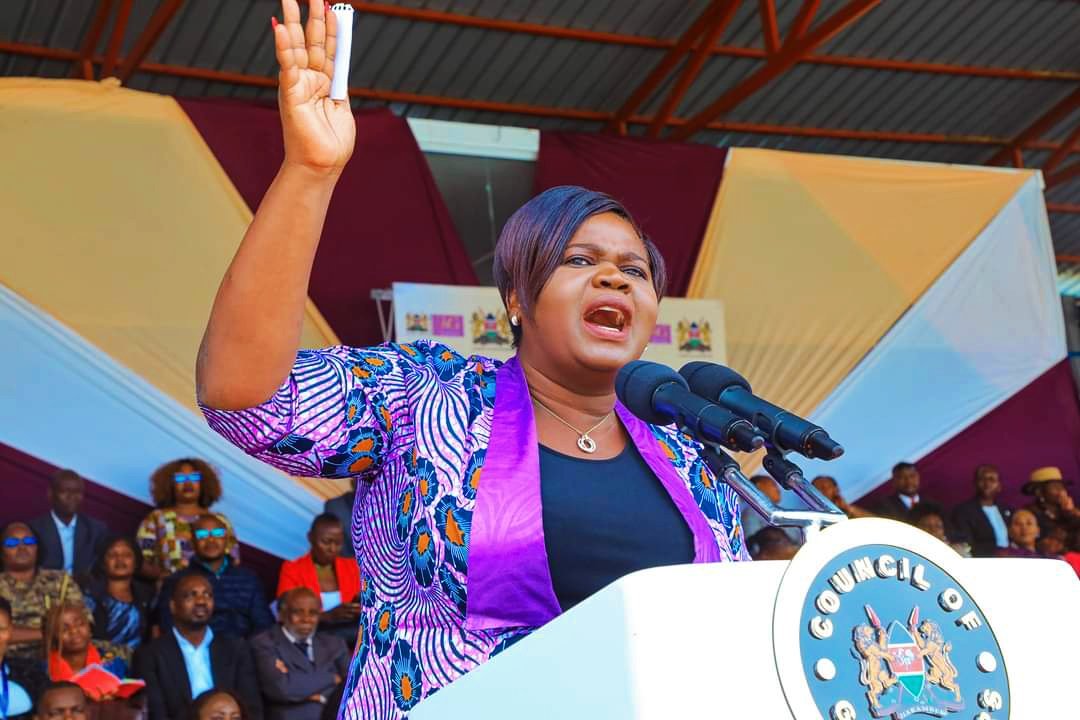
Homa Bay Governor Gladys Wanga has lodged a formal complaint with the Media Council of Kenya (MCK) over reports by KTN and The Standard newspaper concerning violence during events in the county on 16 August 16, 2026.
In a letter dated September 7, Wanga accused the two media outlets of publishing and broadcasting what she described as fabricated, unverified and prejudicial allegations which she said had damaged her reputation and undermined the integrity of her office.
The governor maintained that she supported legitimate media scrutiny and public accountability but objected to what she described as failures by KTN and The Standard to meet basic standards of accuracy, fairness and verification.
“My concern is not with legitimate media scrutiny; I welcome accountability and open public discourse. However, KTN and The Standard severely violated basic journalistic standards by presenting unverified allegations in a manner that creates a false and deliberate impression,” she said.
The complaint follows a KTN broadcast aired on September 6 and a report published by The Standard on September 7 about events that occurred in Homa Bay on August 16.
A key issue raised by Governor Wanga is a front-page photograph published by The Standard showing an armed man wielding a machete.
The governor identified the man as Nicholas Odhiambo Onyando, whom she said was an employee of Siaya County serving as a revenue officer in Akala.
She argued that the presence of an employee of a neighbouring county at the scene should have prompted further independent investigation into the identities and roles of those involved, rather than being used to associate the violence with her administration.
“The individual in question has been identified as Nicholas Odhiambo Onyando, an employee of Siaya County serving as a Revenue Officer in Akala. The presence of a weapon-wielding officer from a neighbouring county at the scene of the conflict in Homa Bay clearly demonstrates that these acts were perpetrated by external agents. Misleadingly framing such external violence to implicate my office or administration is a grave distortion of the facts and a total failure of editorial oversight,” Wanga said.
The governor also accused KTN of failing to adequately reflect her administration's response during its broadcast.
She said her office had provided a substantive response to the allegations but claimed the station did not give it adequate or fair coverage.
“Furthermore, despite my office providing a clear and substantive response to these grave claims, KTN failed to reflect it adequately or fairly in its broadcast, effectively denying me my right of reply,” she said.
Wanga maintained that her position on the August 16 events remained unchanged, insisting that violence and intimidation should be condemned while investigations should establish what happened.
“My position on the events of August 16, 2026 has been unequivocal and consistent: I unreservedly condemn violence and intimidation in all forms, affirm that every Kenyan has a constitutional right to visit Homa Bay and engage in peaceful assembly, and maintain that the truth must be established through impartial, evidence-based investigation,” she said.
The complaint comes as the Media Council continues to emphasise verification, accuracy and the right of reply as key principles of professional journalism.
The revised Code of Conduct for Media Practice 2025 requires media organisations to correct inaccuracies promptly and provide individuals or organisations with a fair opportunity to respond when inaccuracies are reasonably alleged.
It also requires corrections and apologies where directed by the Council or its Complaints Commission.
The MCK has previously raised concerns about declining ethical standards in the media, particularly the erosion of the right of reply and increasing reliance on unverified or anonymous information.
In February 2025, the Council urged journalists and media organisations to strengthen fact-checking and verification mechanisms.
Data from the Council also illustrates the wider challenges facing Kenya's media sector. The MCK recorded 92 verified press-freedom violations in 2025, down from 130 in 2024.
Homa Bay accounted for 12% of recorded press-violation incidents in 2025, making it one of the counties identified as a significant hotspot.
Against that background, Wanga has asked the Media Council to examine whether the KTN broadcast and The Standard report complied with the professional standards governing journalism.
She wants the Council to direct the two media organisations to issue an immediate and prominent retraction and unconditional apology.
She has also called for appropriate disciplinary action over the alleged breaches.
The governor said the disputed reporting should be assessed against three areas: accuracy and fairness, the right of reply, and accountability in reporting, particularly because the events remain subject to official scrutiny.
“Public discourse on sensitive matters must be anchored in truth and evidence, not speculative character assassination,” she said.
The complaint now places the dispute before Kenya's media regulator, which will be expected to consider the allegations against the standards governing professional journalism and the rights of both media organisations and the complainant.