
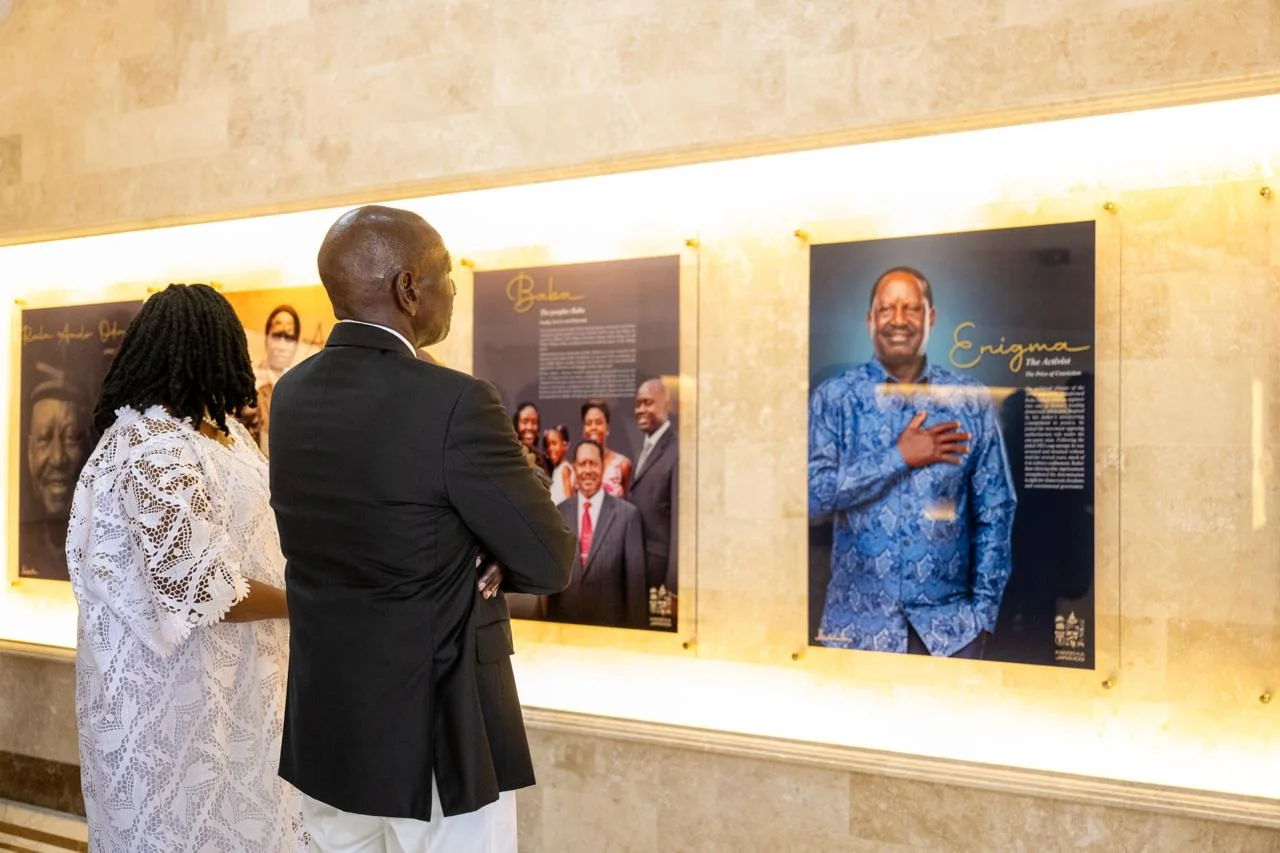
From a mausoleum in Bondo to a stadium in Nairobi, Kenya is finding new ways to keep Raila Odinga’s memory alive, nearly a year after his death.
As the country prepares to mark the anniversary on October 15, 2026, the tributes are extending beyond physical landmarks to books, university debates and efforts to preserve the political history of a man who helped shape the country’s multiparty democracy.
The growing list of memorials includes the Raila Amolo Odinga Mausoleum in Siaya County, the renaming of Talanta Stadium in Nairobi and plans for a Sh20 million monument in the capital.
Universities, publishers and media organisations are also examining his contribution to public life, raising questions about how his political ideas and the events that defined his career will be remembered by future generations.
At the centre of the commemorations is a challenge that goes beyond honouring a former Prime Minister: ensuring that the record of his life remains available for scrutiny, debate and learning rather than being confined to ceremonial tributes.
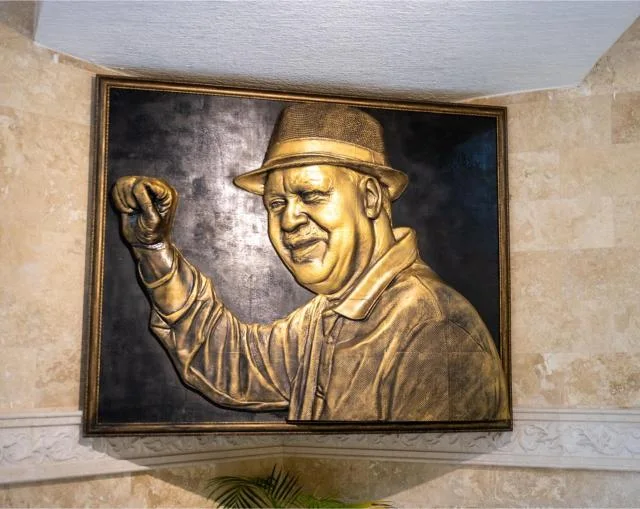
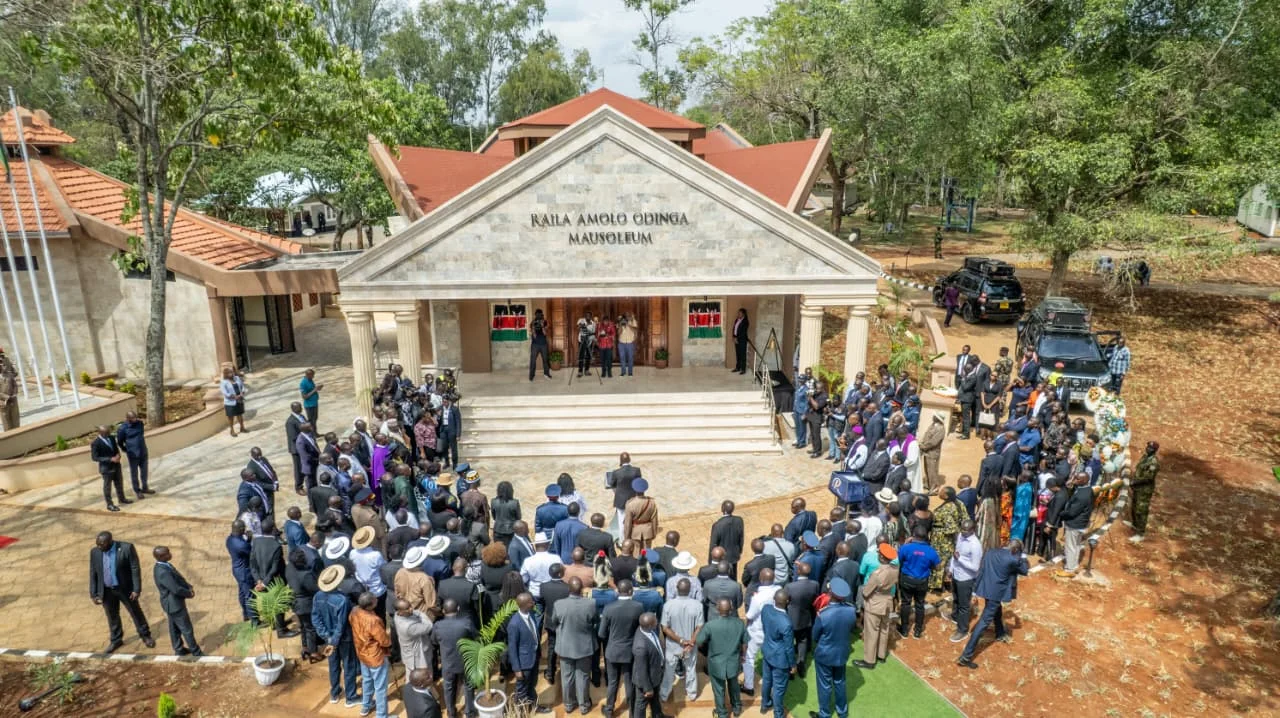
President William Ruto dedicated the Raila Amolo Odinga Mausoleum at Kang’o ka Jaramogi, the Odinga family compound in Bondo, on October 7, 2026, before handing it over to Raila’s widow, Ida Odinga.
The ceremony brought together members of the family, national leaders and county officials ahead of the first anniversary of the former Prime Minister’s death.
The Ministry of Defence, through the Kenya Defence Forces and in partnership with the National Museums of Kenya, oversaw the construction. Military engineers began work in July 2026 and completed the project in about two months, according to the ministry.
The mausoleum stands near the resting place of Raila’s father, Jaramogi Oginga Odinga, Kenya’s first vice-president and a prominent figure in the independence struggle.
Its five-sided design carries political and cultural symbolism, with Ruto linking it to the ODM Pentagon associated with Raila’s 2007 presidential campaign.
“This mausoleum speaks Baba’s language. It is shaped as a pentagon, with five sides. Among the Luo, five is Abich, the number of unity, togetherness and completion,” Ruto said during the dedication.
The design recalls Raila’s long political career, during which he built alliances across political and regional divisions but repeatedly fell short of winning the presidency.
Ruto used the occasion to recognise Raila’s place in Kenya’s history, despite their changing political relationship over the years.
“In Raila Amolo Odinga, Kenya lost a leader extraordinaire, a man of uncommon courage, a patriot, a Pan-Africanist and a statesman who gave his life to the pursuit of freedom, justice and a Kenya with plenty within its borders,” the President said in his tribute on October 7.
Ida also recalled an earlier chapter in their relationship, saying Ruto had defended her husband following the disputed 2007 General Election, when the country was plunged into political violence. Their relationship later evolved through subsequent political realignments, including the period after the 2018 handshake between Raila and former President Uhuru Kenyatta.
“I remember that after the elections of 2007, you defended him fiercely and strongly. Some people might think that you just started with the handshake, but you started a long time ago,” Ida told Ruto.
Her remarks recalled a political career in which former opponents sometimes worked together, demonstrating how Raila’s relationships crossed party lines even during periods of intense disagreement.
Yet Ruto acknowledged that the building itself could not fully represent the former Prime Minister’s contribution to the country.
“A building cannot contain Baba’s legacy. Stone can keep his memory, but only a nation can keep his promises,” he stated.
The government has pledged to establish a library and museum at the site, creating an opportunity to preserve Raila’s speeches, photographs, correspondence and other historical records. The value of the proposed facilities will depend on whether they become accessible resources for researchers, students and members of the public.
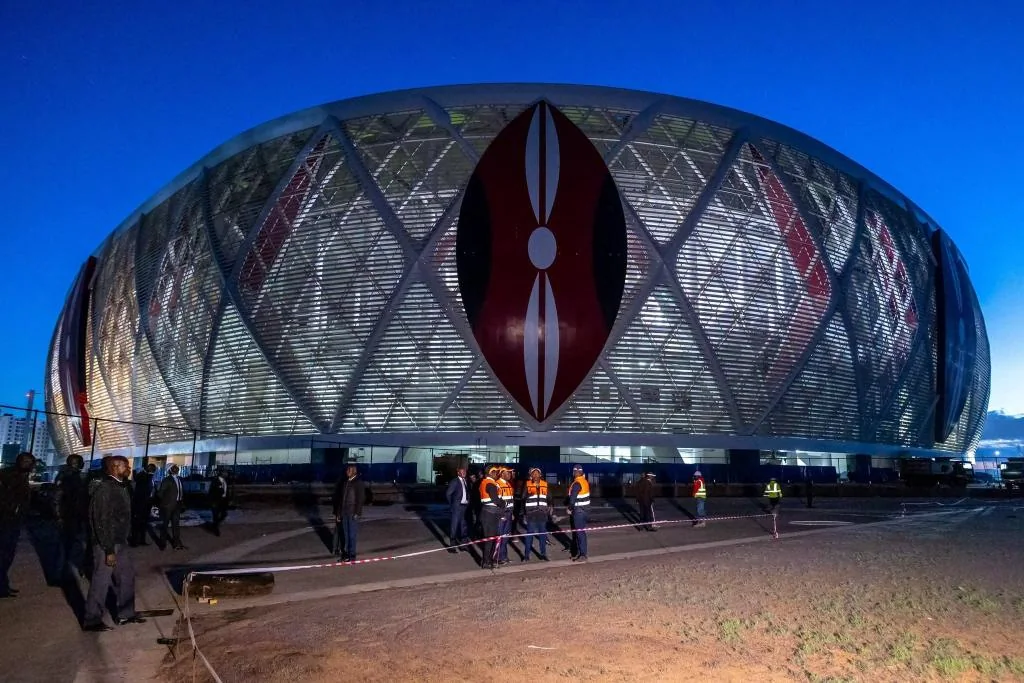
In Nairobi, Raila’s name has also been attached to a major sporting facility. Talanta Stadium, located at Jamhuri Grounds, has been renamed the Raila Amolo Odinga International Stadium.
The 60,000-seat facility is part of Kenya’s preparations to co-host the 2027 Africa Cup of Nations alongside Uganda and Tanzania. The naming connects Raila to football, a sport he followed closely, while placing his memory in a public space expected to host sporting events and attract thousands of visitors.
Nairobi Governor Johnson Sakaja offered a personal reflection on Raila during the mausoleum dedication, saying the anniversary had given him an opportunity to speak about a relationship that went beyond political titles.
“It has been a year, exactly one year, since Baba left us. I did not have a chance to eulogise him. We have mourned for a year, but now we must build on what he left us,” Sakaja said.
He added: “For me, ‘Baba’ was not a political title, it was personal.”
The remarks reflected the affection associated with the name Baba, which became widely used by supporters who viewed Raila as a symbol of resistance, hope and democratic change.
Nairobi County is pursuing another tribute through plans to erect a monument and statue in the Central Business District. In July 2026, the County Assembly allocated Sh20 million in the 2026/27 budget for the project after approving a motion to establish the memorial at the Supreme Court roundabout along City Hall Way.
The proposal, sponsored by Nairobi West Member of County Assembly John Rex Omolleh, had initially identified Uhuru Park as the preferred location before the site was changed.
The monument is intended to recognise Raila’s contribution to democratic reforms, good governance, the rule of law, infrastructure development and the expansion of democratic space.
The county has already taken part in the anniversary activities, including a candle-lighting vigil held at Uhuru Park on October 2, 2026, in partnership with the Orange Democratic Movement (ODM). Sakaja joined party officials and members of the public at the gathering, which featured music, performances and tributes.
Nairobi’s association with Raila predates his death. In November 2021, Mbagathi Road was renamed Raila Odinga Way in recognition of his place in the country’s political history.
The latest plans add to the growing number of public landmarks bearing his name. However, the tributes also raise questions about whether memorials can do more than preserve the memory of a prominent leader. The long-term value of the stadium and other public facilities will also depend on how well they serve citizens, create opportunities and contribute to the country.
The push to preserve Raila’s history — and keep it open to debate
One of the strongest messages to emerge from the anniversary events came from Raila’s daughter, Winnie Odinga, who urged Kenyans not to turn her father into a leader beyond criticism.
She spoke at the 27th Nairobi International Book Fair, held at Sarit Expo Centre from September 23 to 27, 2026, where the Kenya Publishers Association posthumously inducted Raila into its Hall of Fame. Winnie, a member of the East African Legislative Assembly, accepted the recognition on behalf of the family.
The honour recognised his contribution to public life and writing, including his 2013 autobiography, The Flame of Freedom.
But Winnie used the occasion to make the case for critical engagement with her father’s record rather than unquestioning admiration.
“Question even the people you admire, including Raila Odinga. He spent his life questioning authority. It would be a strange tribute to him if you turned him into somebody who could no longer be questioned,” she said.
She also challenged young people to take an interest in history and reading, warning that a lack of knowledge could make it harder for them to understand the forces shaping their country.
“Read because there are people who benefit when you do not know your own history,” Winnie said. She added that reading could help young people recognise that other people had faced similar difficulties and found ways to navigate them.
Her message placed the responsibility for preserving Raila’s legacy beyond his family and political allies. His career included detention, opposition politics, disputed elections, negotiations with political rivals and five presidential campaigns in 1997, 2007, 2013, 2017 and 2022.
Understanding that history requires more than relying on recollections or political tributes. Raila’s autobiography, government records, parliamentary proceedings, media reports, independent research and accounts from political allies and opponents can provide different perspectives on his life and the events he helped shape.
The family has also used the anniversary period to share memories that bring the former Prime Minister’s private life into the national conversation.
At the RAO2026 Memorial Conference at Daystar University in Nairobi, Raila’s eldest daughter, Rosemary Odinga, reflected on October 9 on what it meant to grow up with a father whose public identity extended to millions of Kenyans.
Her remarks offered a personal perspective at a gathering otherwise focused on politics, democracy and historical legacy. For the family, remembering Raila means preserving the memory of a husband, father and relative, as well as that of a former head of government.
The university hosted the conference on October 8 and 9 at its Valley Road campus. Organised by the African Institute for Strategic Communication, Journalism and Media Research and the School of Communication, the event examined Raila’s political life and communication legacy under the theme Future-Proofing Democracy: Resilience, Adaptation, and Opportunity.
Media Council of Kenya chief executive David Omwoyo called on participants to examine Raila’s relationship with the press and the role of journalism in documenting his political journey.
“We want us to reflect a bit about his fair interaction with the press and his deep-seated relationship with Kenyan media houses,” Omwoyo said during the conference.
He also described Raila as a politician who understood the place of disagreement in public life.
“Raila, he was a friend of the media, but he knew how to pick a very good and constructive fight,” Omwoyo highlighted.
Omwoyo warned against allowing political propaganda to take the place of independent reporting.
“We must protect sacred spaces where fact defeats fiction, and journalism is different and distinct from propaganda,” he maintained.
His remarks linked Raila’s legacy to current concerns about misinformation and the rapid spread of misleading content on digital platforms.
Nation Media Group chief executive and managing director Geoffrey Odundo also called attention to the importance of preserving media archives, which contain photographs, newspaper reports, speeches and broadcasts documenting key moments in the former Prime Minister’s public life.
“The National Media Group archives allow those memories to be placed within a wider record, enabling a photograph to take someone back to a particular year, a broadcast to recover the mood of a national moment, and a newspaper report to help readers understand the choices faced at that time,” he said.
Such records can help future generations understand not only what happened, but also the political climate surrounding events, the decisions leaders faced and how the public responded. They can also provide evidence against accounts that change over time.
Odundo encouraged Daystar University to continue hosting the conference as a forum for research and debate. The initiative could complement the proposed library and museum in Bondo by bringing together different sources of historical information.
At the same conference, Kisumu Governor Professor Peter Anyang’ Nyong’o, a longtime ally of Raila and a veteran of Kenya’s democratic reform movement, focused on the lessons the country could draw from his political career.
Nyong’o argued that Raila’s approach to democracy was particularly relevant to leaders facing electoral defeat.
“Raila’s ethic of democracy is not the art of winning every contest, but the discipline of refusing to destroy the republic when you are not declared the winner,” Nyong’o said during a lecture at the conference.
The statement addressed a central part of Raila’s political history: his repeated presidential bids and the disputes surrounding several elections.
Nyong’o also challenged county governments to demonstrate their commitment to Raila’s legacy through service delivery, arguing for a form of remembrance that extends into the daily lives of citizens.
For county administrations, that means showing whether the principles associated with Raila translate into accountable leadership, responsive institutions and better public services.
ODM, meanwhile, is using the anniversary to remember its former leader while seeking to maintain the political organisation he built.
The party designated October 2026 as “Raila Month”, organising activities across the country ahead of the anniversary.
ODM director of communication Philip Etale outlined the programme in an interview with Radio Generation on September 10.
“We call it Raila Month because that’s the month that our Baba rested,” Etale said.
“It’s one year down the line. We have dedicated the entire month.” He added.
The party planned visits to different regions and activities aimed at engaging supporters and reflecting on Raila’s political contribution.
Etale said the programme would also seek to strengthen the party.
“We are going to revitalise our party. We are going to re-energise our party,” he stated.
The commemorations have included a candle-lighting tribute at the Kenyatta International Convention Centre in Nairobi, extending the anniversary activities beyond Bondo.
But the party’s task goes beyond organising events. With the 2027 General Election approaching, ODM must determine how to maintain its structures, retain supporters and define its political direction following the death of its longtime leader.
The anniversary therefore comes at a time when Raila’s memory is being preserved through physical landmarks, family recollections, books, academic discussions and political activities.
Professor Adams Oloo, chairperson of the Raila Amolo Odinga Memorial National Steering Committee, has called for a national commemoration that brings together Kenyans across political, religious and regional divisions.
“The celebration has to be national; it knows no religion, it has no boundary. It has to reflect what Baba was,” Oloo said during the unveiling of the committee in Nairobi.
He urged Kenyans from all counties, communities, faiths and political backgrounds to remember Raila and renew their commitment to the principles he championed.
“We invite every Kenyan, of every county, community, faith and political persuasion, to remember him with love and to recommit to the ideals for which he lived: democracy, justice and one united Kenya,” he maintained.
Oloo also announced an international candle-lighting ceremony for October 14, inviting people around the world to take part at the same time.
“Wherever you may be, at home, in your place of worship, or in any corner of the world, light a candle in his memory at that hour so that one light may shine in a million places at once.”
As Kenya approaches the first anniversary of Raila’s death, the growing collection of tributes reflects the scale of his influence on the country’s political and public life.
But the enduring measure of his legacy will extend beyond the mausoleum, stadium and proposed monument. It will also depend on whether his history is preserved honestly, whether young people are encouraged to question and learn from it, and whether the democratic principles associated with his career continue to shape the country’s institutions.