
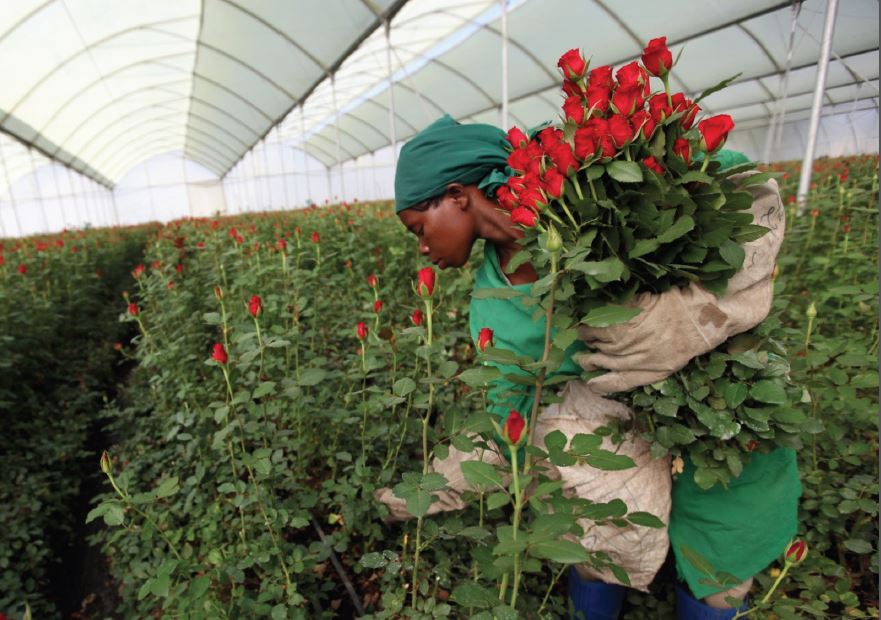
Agriculture cemented its place as the country’s biggest economic pillar in 2025, with stronger production, higher export earnings and increased county investments pushing the sector’s contribution to Kenya’s Gross Domestic Product (GDP) to 23.2 percent, a new Council of Governors (CoG) report shows. The report, released on August 6, 2026, indicates that the value of agricultural output grew from Sh3.64 trillion in 2024 to Sh4.07 trillion in 2025 as county governments continued to invest in irrigation, farmer support programmes, livestock services and other initiatives aimed at improving production across the country. Among the strongest performers was the horticulture sector, which remained Kenya’s leading agricultural export after earning Sh216.5 billion in 2025, up from Sh203.6 billion recorded the previous year. “Horticulture retained its position as Kenya’s leading agricultural export, generating Sh216.5 billion in earnings, up from Sh203.6 billion in 2024,” the report stated. Coffee also recorded one of the biggest gains during the year, with export earnings rising from Sh38.4 billion to Sh52.1 billion on the back of favourable global prices. Tea remained one of the country’s biggest foreign exchange earners, bringing in Sh187.1 billion despite a drop in production volumes. Food crop production also improved, with paddy rice output increasing to 180,100 tonnes while maize deliveries rose slightly to 178,000 tonnes. The livestock sector also posted better results during the year. Milk production exceeded one billion litres, up from 909 million litres in 2024, following improved rainfall that increased the availability of pasture and water. Cotton production also rose from 6,200 tonnes to 8,800 tonnes, supporting efforts to revive the textile and apparel industry. Despite the gains, the report noted that some major crops continued to face challenges. “Wheat deliveries declined from 294,300 tonnes to 240,600 tonnes, while sugarcane deliveries fell sharply from 9.4 million tonnes to 7.1 million tonnes, highlighting continued dependence on imports and the need for greater investment in productivity, processing infrastructure and farmer support,” the report said. According to the report, county governments continued to play a central role in supporting agriculture through investments in production, irrigation, extension services, livestock health programmes and value addition. The report shows that counties placed about 3.1 million hectares under cultivation, including 166,000 hectares under irrigation, while livestock vaccination campaigns reached about 4.17 million animals. It also highlights the distribution of fertiliser to more than 305,000 farmers, training for nearly 103,000 farmers through Agriculture Training Centres and investments in cold chain facilities aimed at cutting post-harvest losses. Looking ahead, the Council of Governors said sustaining the sector’s growth will depend on continued investment in farmer support services and improved productivity. The CoG said sustained growth would require “greater emphasis on extension services, digital advisory systems, farmer field schools, improved targeting of agricultural inputs, soil testing, and monitoring of productivity outcomes” to strengthen food security and build a more resilient agricultural sector.
Counties drive Agriculture growth as horticulture earns Sh216.5bn
The report, released on August 6, 2026, shows that the agriculture sector had reinforced its position as the backbone of Kenya's economy, with the value of agricultural output rising from Sh3.64 trillion in 202...
3 min read
Device voice
More from NewsBrowse the section