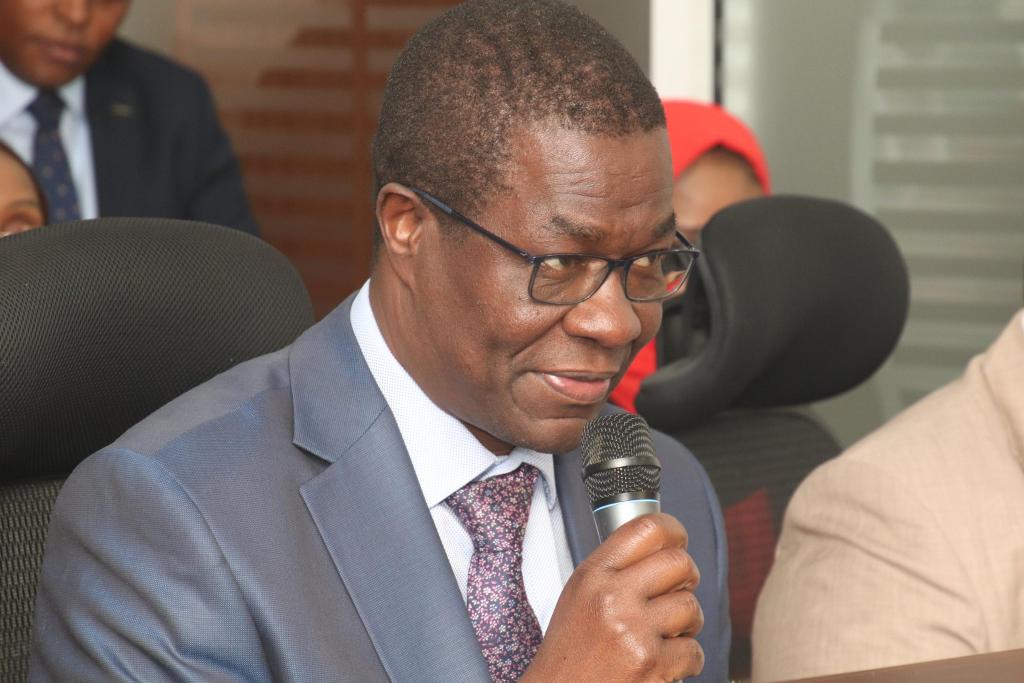
Energy and Petroleum Cabinet Secretary Opiyo Wandayi has assured Kenyans that the country has sufficient fuel stocks despite renewed instability in the Middle East, saying the government's fuel import system has remained resilient even as global oil markets experience heightened volatility.
Speaking on Tuesday, Wandayi said Kenya's government-to-government (G2G) fuel import arrangement had shielded the country from supply disruptions and rising freight costs triggered by escalating military tensions around the Strait of Hormuz, one of the world's busiest oil shipping routes.
"In recent days, many Kenyans have understandably been concerned by developments in the Middle East, particularly the renewed military escalation around the Strait of Hormuz," he said.
The CS noted that attacks on commercial vessels and disruptions to oil tanker traffic had unsettled international energy markets, with shipping activity through the strategic waterway remaining unpredictable.
"The market remains unsettled... commercial traffic is running well below its usual levels, and daily price assessments are moving sharply from one session to the next as events in the region continue to unfold," he said.
Despite the uncertainty, Wandayi said Kenya had maintained uninterrupted fuel supplies through the G2G arrangement, with petroleum cargoes sourced from a wider range of regions beyond the Gulf.
"What we can state plainly, as government, is this: Kenya's fuel supply has held firm throughout under our government-to-government arrangements. Every scheduled cargo has arrived and has been offloaded on time, and fuel has remained available at the pump throughout the country," he said.
Wandayi explained that the arrangement had enabled Kenya to maintain fixed freight and insurance costs even as international benchmark prices fluctuated.
"Kenya has continued to pay the same fixed freight and premium. That fixed cost... has kept our landed costs in check and our deliveries on schedule," he said, adding that suppliers had been able to source fuel from alternative regions without transferring additional costs to motorists.
To cushion consumers further, Wandayi announced that the government had extended the application of the 8 percent Value Added Tax (VAT) on petroleum products for another three months until October 14, 2026.
He also announced that the government would deploy Sh945 million from the Petroleum Development Levy during the July-August 2026 pricing cycle to help sustain current pump prices.
"These interventions reflect our broader commitment to protecting consumers, supporting businesses, and shielding the economy from external shocks while ensuring petroleum products remain as affordable as possible under prevailing global market conditions," he said.
Wandayi reassured motorists, manufacturers, farmers, transport operators and businesses that there was adequate fuel across the country, supported by sufficient national stocks and a fully operational import and distribution network.
"I wish to assure all Kenyans that these global developments have not affected the availability of petroleum products in our country. Fuel remains readily available across the country," he said.
His remarks come as tensions in the Middle East have intensified following renewed military exchanges between the United States and Iran around the Strait of Hormuz, leading to attacks on commercial vessels, reduced tanker traffic and sharp swings in global oil prices.
The renewed conflict has heightened concerns over global energy security, with the strategic waterway remaining a key flashpoint for international oil supplies.