
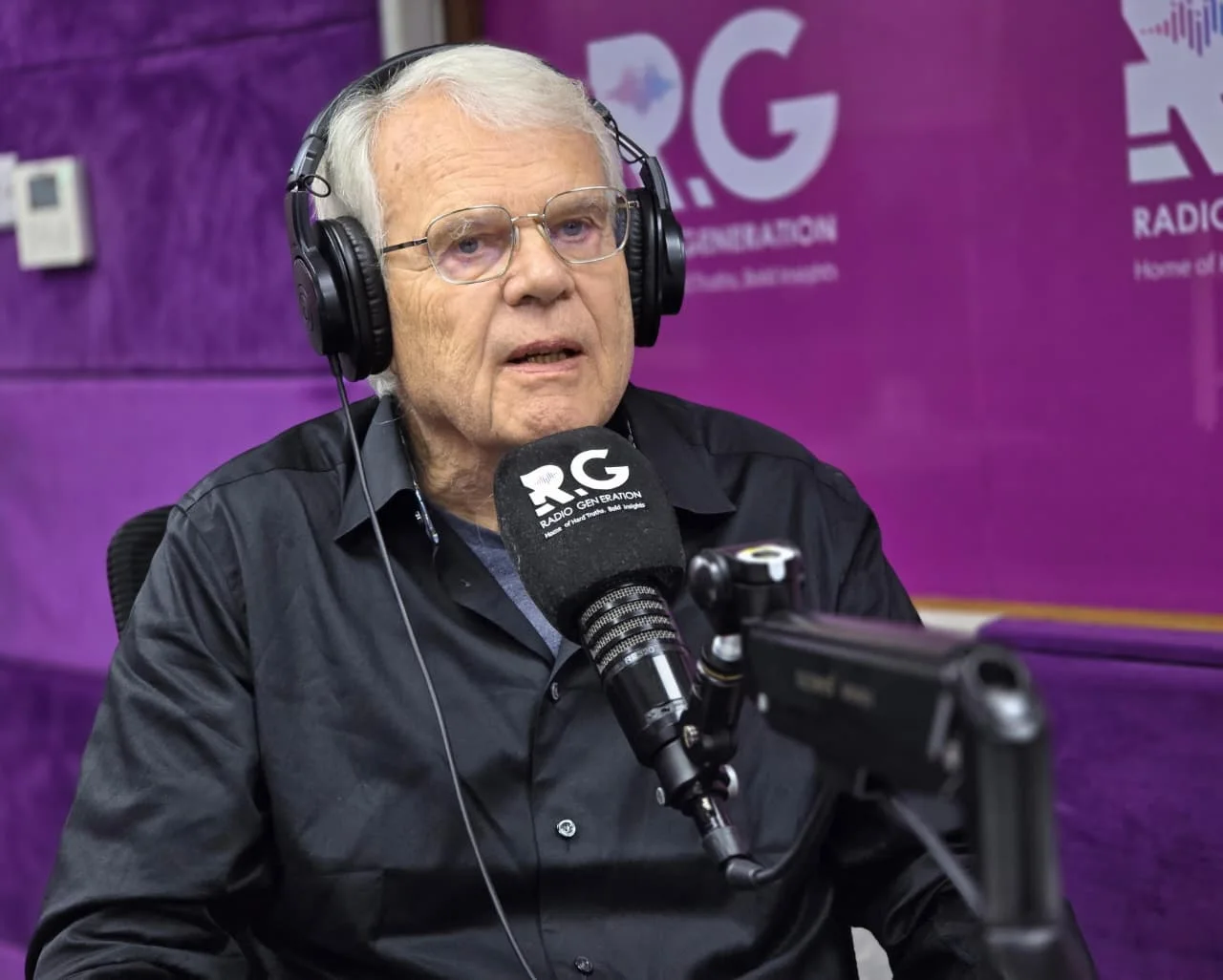
Danish humanitarian entrepreneur and author Torben Vestergaard Frandsen has blamed weak public institutions and political leaders who benefit from corrupt practices for the continued prevalence of corruption across Africa, calling for stronger accountability systems to prevent the abuse of public office.
Frandsen said many African countries had introduced laws and established agencies to fight corruption, but the failure to enforce existing regulations and hold influential individuals responsible had allowed the problem to persist.
Speaking on Radio Generation on Wednesday, he argued that corruption thrived where leaders exercised power without effective checks, making it easier for public resources to be misused while those responsible escaped accountability.
His remarks come against the backdrop of persistent governance concerns across the continent, including the misuse of public funds, questionable procurement deals, bribery, financial scandals and weak enforcement of anti-corruption laws.
Frandsen maintained that Africa's challenge was not necessarily a shortage of laws but the absence of strong institutions and political leaders willing to ensure that the rules applied to everyone, regardless of their position.
He pointed to Botswana as an example of an African country that had achieved better results in controlling corruption, attributing its record to leadership focused on national development and improving the lives of citizens.
“Somehow you are caught with leaders that live on corruption. You do have examples where it's pretty good here in Africa. Botswana, for instance. Botswana hardly has any corruption, and they always had very good leaders that wanted to develop the country and do something good for the people, but you need that kind of developers to do that,” he said.
He also identified Seychelles, Mauritius, Comoros, Sao Tome and Principe and Cabo Verde as African countries that, in his assessment, had comparatively lower levels of corruption.
Drawing comparisons with other parts of the world, Frandsen cited Denmark, Norway, Sweden, Finland and Iceland as countries that had established stronger systems for controlling corruption.
He attributed the differences to historical experiences and the development of institutions capable of limiting the misuse of public power.
However, he dismissed geographical location and climate as major explanations for why some countries performed better than others, arguing that leadership and the strength of public institutions were more important.
Frandsen insisted that African governments needed independent institutions with the authority and capacity to question decisions made by those in power and ensure public officials faced consequences for misconduct.
“I think it's more or less the same laws we have. You also have very good laws against corruption, but nobody seems to follow it. We do have stronger institutions than you have, and that will definitely make a difference. Strong institutions are what you need.”
He further called for constitutional safeguards to prevent political leaders from holding on to power for too long, identifying presidential term limits as an important tool for protecting democratic accountability.
Using Zimbabwe's former president Robert Mugabe as an example, Frandsen said a leader could begin their tenure with good intentions but gradually become unwilling to surrender power, weakening the institutions meant to hold them accountable.
He argued that Mugabe had performed well during his first two presidential terms but later treated constitutional restrictions as obstacles to his continued stay in office.
According to Frandsen, the former president's prolonged grip on power contributed to Zimbabwe's political and economic decline, forcing millions of citizens to leave the country for neighbouring states and other destinations.
He added that extended political dominance created room for corruption among leaders' associates, who could exploit their closeness to power to accumulate wealth without facing adequate scrutiny.
The entrepreneur also cited Germany's constitutional arrangements following the Second World War, saying the country introduced safeguards to prevent political power from becoming concentrated in the hands of individuals and being abused.
He argued that African countries could draw lessons from such arrangements by building institutions and constitutional protections that prevent similar governance failures.
Frandsen also questioned the size and role of military establishments in some African countries, accusing certain governments of using security forces to suppress citizens instead of protecting national interests.
He suggested that governments should reconsider their reliance on large military establishments and invest more in civilian institutions, police services and disaster-response agencies.
While acknowledging the security challenges facing countries such as the Democratic Republic of Congo and Sudan, he maintained that internal political disputes could not be resolved through military intervention alone.
His views on addressing corruption are explored in The Anti-Corruption Mandate, a book he co-authored with Dolphin Malaysia to provide guidance on tackling the problem across different sectors.
Frandsen said the publication was developed following discussions between the two authors about the lack of a comprehensive guide that addressed the different circumstances and systems through which corruption occurs.
He explained that their work identified approximately 40 areas requiring attention to establish an effective anti-corruption strategy.
The publication seeks to offer practical guidance on preventing corruption and improving accountability across different institutions and circumstances.
Frandsen maintained that meaningful progress would require more than passing laws, saying political commitment, independent institutions, constitutional safeguards and citizens prepared to report wrongdoing were all necessary to ensure public officials were held accountable.