
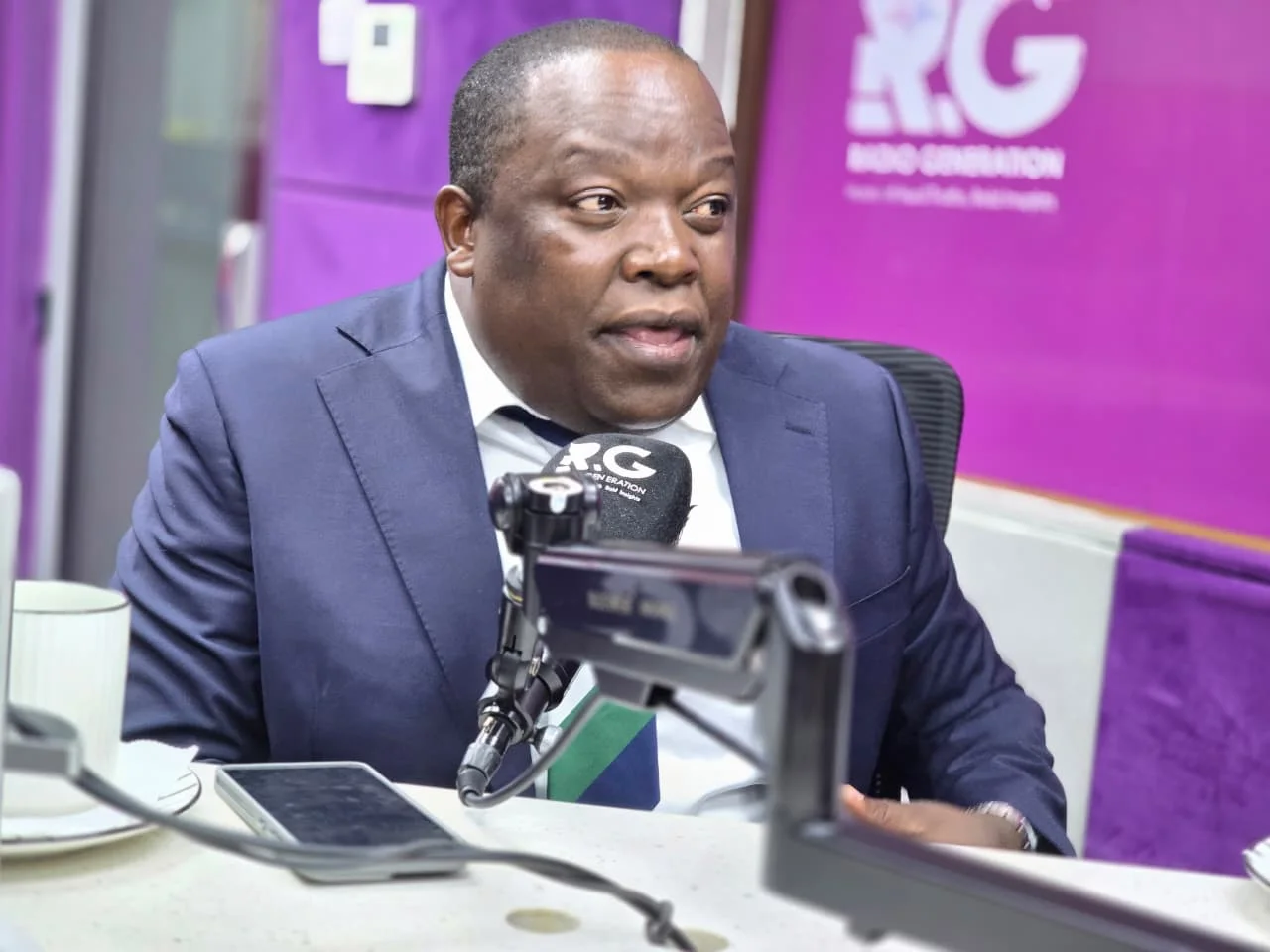
Governance expert Steve Ngari M’makindu has defended President William Ruto's development record, pointing to employment creation, affordable housing, agricultural reforms and infrastructure financing as evidence of progress under the administration's Bottom-Up Economic Transformation Agenda (BETA).
Speaking on Radio Generation on Tuesday, Ngari said the construction industry had become a significant driver of employment, with government-backed housing, roads and market projects supporting livelihoods across the country.
He cited figures indicating that 728,400 Kenyans were directly employed in the construction sector, arguing that the industry's economic impact was considerably larger when indirect employment was included.
Ngari said small businesses operating around construction sites, including food vendors, water sellers and suppliers, also benefited from government development projects.
“If you want to be a true economist, the construction industry has created 1.1 million jobs in Kenya today, and it is increasing,” he said.
The Kenya National Bureau of Statistics (KNBS) Economic Survey 2026 provides further context, reporting that construction sector output expanded by 6.8 per cent in 2025, recovering from a 0.7 per cent contraction in 2024.
The survey also recorded a 20.3 per cent increase in cement consumption to 10.28 million tonnes, reflecting increased construction activity.
However, the employment figures require distinction. KNBS data shows 728,400 workers across the formal and informal construction workforce, while the government's Delivery Unit separately reports more than 640,000 jobs associated with its affordable housing programme.
Ngari also highlighted the affordable housing programme, which forms one of the five pillars of BETA alongside agriculture, micro, small and medium-sized enterprises (MSMEs), universal healthcare and the digital superhighway and creative economy.
He cited housing developments in Mukuru Kwa Njenga, Nairobi, and Pioneer Estate in Eldoret as examples of the administration's efforts to expand access to decent housing.
The Government Delivery Unit's January 2026 scorecard indicates that more than 260,000 housing units had been launched or were under construction by August 2025, compared with 8,872 units in 2022. It also reported more than 640,000 jobs associated with the programme.
On market infrastructure, Ngari said the government had constructed 600 markets countrywide, arguing that the facilities were intended to provide traders with better working environments and improve access to markets for farmers.
The government's delivery scorecard, however, reports 185 markets built under the Economic Stimulus Programme, with another 43 modern retail and wholesale markets under construction.
Agriculture was another area Ngari identified as central to the administration's development strategy, particularly through subsidised farm inputs, increased production and improved earnings for farmers.
He cited the revival of the sugar industry, higher tea and coffee prices and reduced fertiliser costs as interventions supporting agricultural livelihoods.
The government's scorecard reported that tea earnings increased from Sh154 billion in 2022 to Sh215 billion in 2025, while coffee cherry prices rose from between Sh70 and Sh80 per kilogramme to Sh120-Sh160.
The fertiliser subsidy programme has also expanded. Government data indicates that the price of a 50-kilogramme bag declined from approximately Sh7,000 in 2022 to Sh2,000 in 2026.
Ngari further highlighted the creative economy and digital entrepreneurship, saying online platforms were creating opportunities for young people to earn through content production and other digital services.
He cited Facebook and YouTube monetisation, alongside the Hustler Fund and support for small businesses, as part of the administration's efforts to expand economic opportunities beyond traditional employment.
Infrastructure financing formed another major part of his defence, particularly the government's plans to expand roads, dams and other strategic projects.
Ngari said limited public resources had constrained the implementation of major infrastructure commitments, including President Ruto's pledge to construct 1,000 dams.
He argued that the establishment of the National Infrastructure Fund would provide an alternative financing mechanism and reduce reliance on conventional public borrowing.
The National Assembly reported that President Ruto assented to the National Infrastructure Fund Act in March 2026. The framework is designed to mobilise capital from sources including pension funds, collective investment schemes, sovereign wealth funds and climate finance institutions to finance strategic projects.
“It is a fund that will secure this country to get any amount of funding to do all the roads that we need, all the dams that we need,” Ngari said.
The KNBS Economic Survey 2026 indicates that Kenya's economy grew by 4.6 per cent in 2025, compared with 4.7 per cent in 2024, with construction recording a notable recovery.
Ngari maintained that the government's development agenda should be assessed through its investments in productive sectors, employment opportunities and infrastructure, arguing that the initiatives were laying the foundation for long-term economic transformation.