
Kenya’s preparations for the 2027 General Election will include a new system for identifying AI-generated fake content, with the government directing agencies to have detection tools ready at least six months before voting begins amid concerns over digital manipulation and election-related violence.
The National Development Implementation Committee (NDIC) has ordered the development and testing of procedures for detecting suspected deepfakes, confirming whether the material has been manipulated and sharing verified findings with the public before the election period.
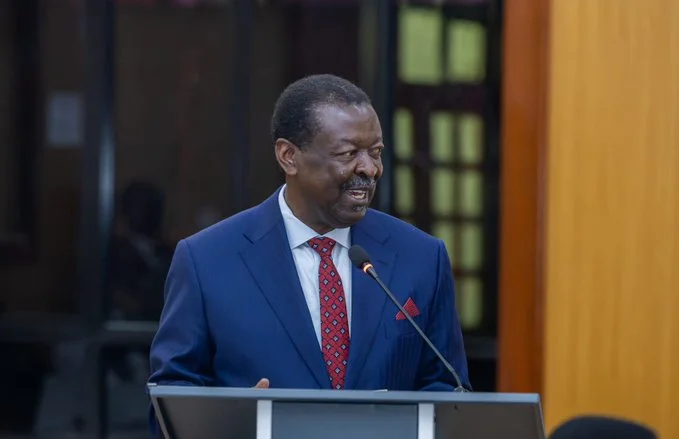
The resolutions were reached during the committee’s second meeting of 2026, held at the Kenya School of Government on October 12 and chaired by Prime Cabinet Secretary Musalia Mudavadi.
In its post-meeting dispatch, NDIC identified artificial intelligence-generated content, particularly fabricated audio and deepfake material, as a major threat to the integrity of election information.
“AI deepfakes and synthetic audio are the primary threat vector for 2027,” the committee stated.
The committee wants the detection tools operational six months before the General Election, with a tested framework guiding how suspected cases are investigated and how the results are communicated.
The planned measures are part of efforts to prepare authorities for the possible spread of misleading digital material during the election period, when false recordings and manipulated content could be circulated to influence voters or create confusion.
NDIC also clarified how different institutions will handle cybersecurity threats during the polls. The Election Cybersecurity Operations Centre (ESOC), operating under the National Computer and Cybercrimes Coordination Committee (NC4), is tasked with monitoring cyber threats originating from outside election systems.
The Independent Electoral and Boundaries Commission (IEBC), however, will remain responsible for its internal information and communications technology systems.
Beyond digital threats, the committee examined the wider security risks facing the 2027 elections, including the activities of organised criminal gangs and the use of goons to interfere with political events.
To assess the level of risk, NDIC referred to the Electoral Vulnerability Index 2026–2027 by the Kofi Annan Foundation. The assessment gave Kenya a risk score of 45.4 per cent and indicated an 84.1 per cent probability of some form of electoral violence.
The committee also highlighted findings by the National Cohesion and Integration Commission, which indicated that roughly nine in 10 organised criminal gangs were mobilised, financed and deployed by politicians.
Figures from the National Crime Research Centre showed that 309 criminal groups had been documented in 11 counties in 2025. NDIC further reported that 109 organised gangs and groups had been documented by September 2026, with Western, Rift Valley and Nairobi recording the highest numbers.
According to the committee, these groups are increasingly being used to threaten members of the public, disrupt political rallies, exert control over territories and intimidate voters.
NDIC warned that arresting suspects would not be enough to eliminate the threat if the networks behind the criminal activities continued to operate.
“NDIC stated that large arrests alone do not demonstrate the dismantling of networks, and that case-linking, financial disruption, intelligence mapping and prosecution support must be sustained to prevent re-mobilisation,” the dispatch stated.
The committee called for law enforcement agencies to maintain pressure on the networks by linking related cases, cutting off their sources of funding, mapping their activities and supporting prosecutions.
The approach is intended to address the structures that enable criminal groups to regroup and resume their activities even after arrests have been made.
NDIC also directed agencies to extend security planning to political party nominations, describing the process as a key point at which tensions and violence could emerge.
The committee said the threats facing women seeking elective office and persons with disabilities should be included in the identification of electoral hotspots and early-warning monitoring.
It further instructed relevant agencies to continue mapping and disrupting criminal networks while ensuring that candidates, campaigns and party primaries receive protection based on the risks they face.
The directives place digital security and the prevention of election-related violence among the issues requiring attention before the 2027 vote. Authorities are expected to prepare for threats involving manipulated online content while also addressing the possible use of criminal groups to interfere with political participation.
NDIC reaffirmed the government's commitment to peaceful elections and said citizens and candidates should be able to participate in the democratic process without fear.
The committee also stressed that security agencies must carry out their duties neutrally, lawfully, promptly and accountably as the country prepares for the next General Election.