
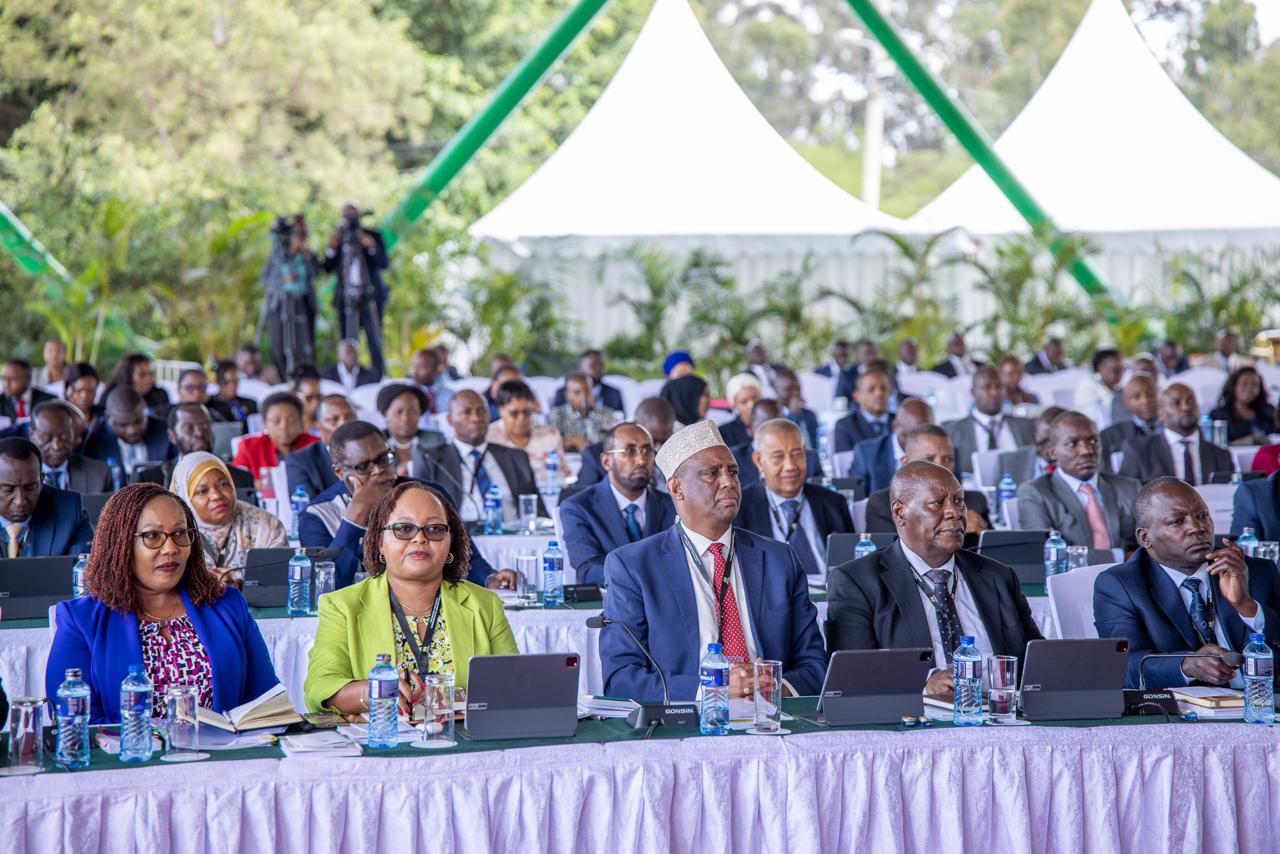
Counties want a bigger share of international climate financing, with governors seeking Sh130 billion to fund a new round of local projects targeting water scarcity, declining agricultural production and infrastructure damaged by extreme weather.
The Council of Governors (CoG) is asking development partners to provide $1 billion (about Sh130 billion) for the second phase of the Financing Locally Led Climate Action (FLLoCA) programme, as the current five-year initiative approaches its scheduled end in June next year.
The funding target represents more than three times the Sh38 billion ($300 million) mobilised during the first phase, with governors arguing that the initiative has demonstrated how climate resources can deliver direct benefits when communities are involved in deciding how the money is spent.
The programme, jointly implemented by the government, the World Bank and international development partners, is being presented as a model that other countries could adopt because of its focus on locally identified climate challenges.
At COP31, the governors are using the international platform to rally support for the next phase, saying the initiative has already benefited millions of Kenyans through projects designed to help communities cope with changing weather conditions.
Wilber Ottichilo, chair of the CoG Environment and Climate Change Committee, said counties had committed between two and three per cent of their respective budgets to the programme.
He said much of the investment had gone into improving access to water, supporting farmers and developing infrastructure capable of withstanding harsh weather conditions.
"Majority of the projects have been on water conservation and water distribution," he said.
Ottichilo said counties were complementing these efforts through small-scale irrigation schemes, dam construction and greenhouse farming to improve food production and strengthen agricultural activities against climate-related disruptions.
Infrastructure has also emerged as a key area of investment, with counties undertaking interventions to address damage caused by heavy rainfall, including the destruction of bridges that affects transport and access to services.
The programme operates under the World Bank's Programme-for-Results financing arrangement, which releases funds against verified achievements rather than making the entire allocation available in advance.
Counties must therefore demonstrate that they have met agreed targets before receiving further payments. These conditions include completing infrastructure projects, establishing working administrative systems and meeting environmental and social protection requirements.
Governors say the approach has helped ensure that funding supports actual projects while encouraging communities to understand climate change and take part in efforts to adapt to its effects and reduce its impact.
Ottichilo argued that international climate funding should give greater attention to communities dealing directly with the consequences of changing weather patterns instead of focusing mainly on large energy investments.
"Climate change can only be handled and succeed at the community level," he said.
He noted that communities relying on activities affected by weather conditions were particularly vulnerable, making locally driven interventions essential in addressing the crisis.
The Vihiga governor disclosed that the delegation had met World Bank President Ajay Banga as part of efforts to secure support for the proposed funding, although he did not provide details of the discussions or confirm whether any financial pledges had been made.
The governors were also taking their appeal to United Nations Secretary-General António Guterres in an effort to attract wider international backing.
CoG chair Muthomi Njuki said the programme's performance had partly been made possible by limited interference from the national government, allowing resources to reach the intended beneficiaries through the devolved structures.
"FLLOCA money flows directly from the Treasury to the devolved units, to the wards and to the communities that have designed the programme," he said.
Njuki called on the government to apply the same funding approach to other development programmes, arguing that excessive spending on workshops, seminars and capacity-building activities often reduces the amount available for actual projects.
He said FLLoCA had enabled counties to tackle problems cutting across water supply, agriculture, healthcare and infrastructure, demonstrating how climate interventions could also improve essential public services.
The CoG chair singled out access to clean water as an important factor in improving maternal health, saying many health problems were linked to the difficulties communities face in obtaining safe water.
He added that counties were also investing in health facilities as part of wider efforts to ensure public infrastructure could withstand the growing effects of climate change.
Meanwhile, preparations for the programme's second phase have begun, with counties focusing on strengthening their systems and technical capacity to manage larger allocations and ensure the money is put to effective use.
"FLLOCA phase two has already started in terms of preparation so that we build the capacity to take up the finances and implement projects, even as the first phase comes to an end," Njuki said.
Governors believe the proposed increase in funding would allow counties to undertake more ambitious projects beyond the smaller community-based interventions implemented under the first phase.
Among their priorities is expanding water infrastructure, with plans to move from community dams to larger projects capable of supplying water to entire constituencies and counties.
The governors are now banking on international support to sustain the programme and increase the reach of locally designed projects as counties prepare for the next stage of climate action.