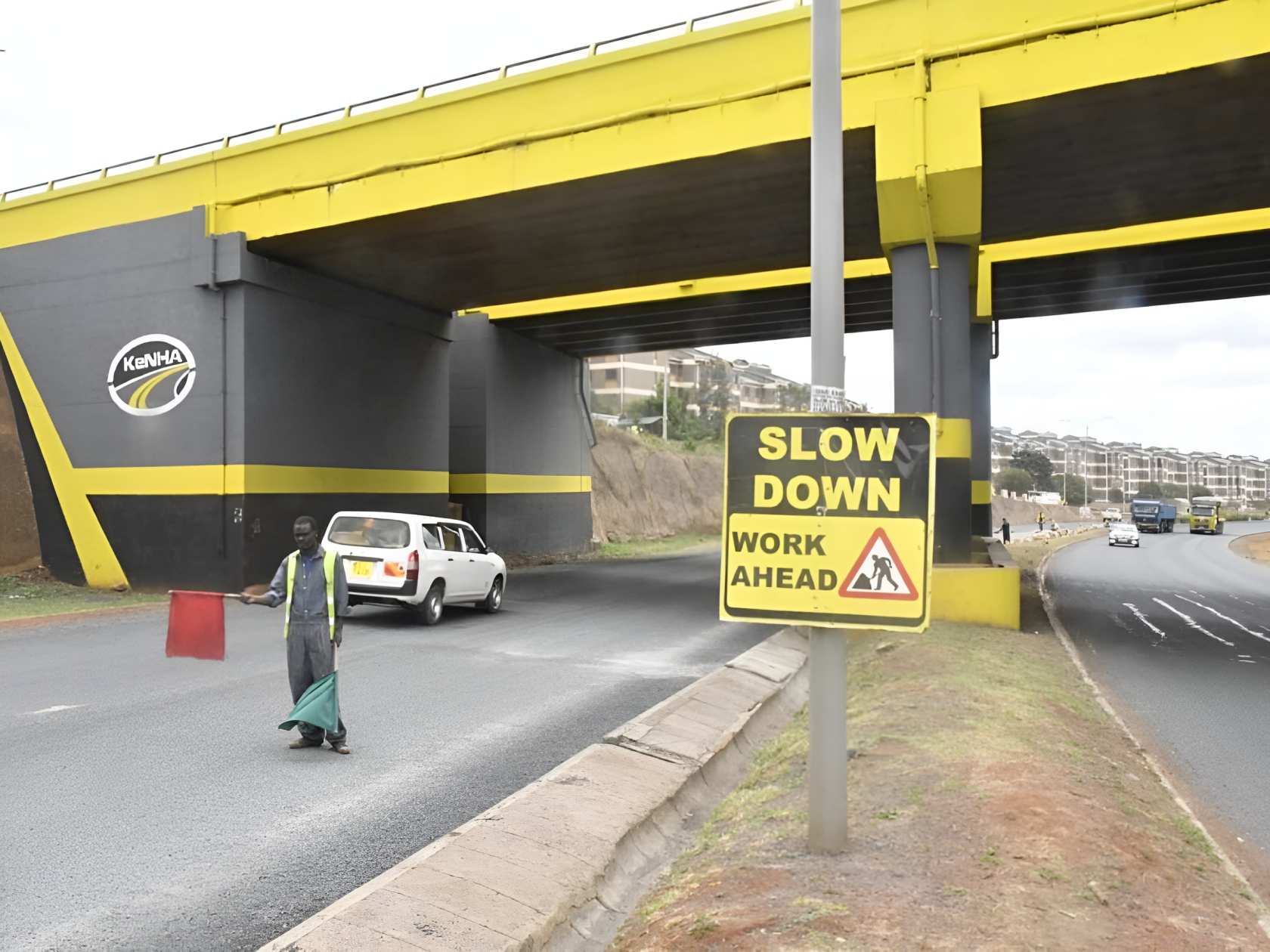
Delayed payments to contractors have left the Kenya National Highways Authority (KeNHA) carrying an extra Sh8.2 billion in penalties and interest, while unresolved project disputes have pushed the agency's potential financial exposure to Sh31.68 billion.
A new audit now warns that the growing obligations could pile more pressure on the authority's finances if the claims are settled against it.
The latest report by the Auditor-General shows that the penalties were charged after KeNHA failed to pay contractors within the timelines agreed in their contracts. The report says the authority could have avoided the additional costs through better financial planning and timely settlement of pending bills.
Beyond the penalties, the audit report highlights a steady rise in contingent liabilities, which grew by Sh7.1 billion, or 29 percent, to reach Sh31.68 billion. These are claims that may become payable if the authority loses disputes with contractors and other parties.
The Auditor-General also noted that KeNHA ended June 2025 with current assets valued at Sh41.01 billion compared to current liabilities of Sh82.51 billion, leaving the authority with a negative working capital position of Sh41.49 billion. The report warns that such a position raises concerns about the agency's ability to meet its financial obligations when they fall due.
“Crystallisation of any of the events would impact negatively and worsen the Authority's working capital status, thus adversely affecting its operations,” the audit warned.
KeNHA said many of the pending claims stem from disagreements during the implementation of road projects, adding that years of inadequate funding affected project execution and contract management.
To reduce the financial risks, the authority said it has embraced alternative dispute resolution (ADR), including negotiated settlements, instead of relying only on lengthy court cases.
“These contingent liabilities mainly arose due to disputes in the implementation of projects which had previously been heavily constrained by low budgetary allocations. The Authority is currently implementing ADR, including amicable settlements to reduce the exposure,” said KeNHA.
The financial concerns emerged in the same year that the Auditor-General questioned the authority over its use of Sh7.3 billion from a securitised Road Maintenance Levy Fund to compensate a consortium of French companies following the cancellation of the Nairobi–Nakuru–Mau Summit Road project.
According to the audit, the compensation did not qualify as pending bills that could legally be paid using the fuel levy fund, which had been securitised to guarantee a bank loan for settling contractor arrears.
The payment to Vinci Highways SAS, Meridian Infrastructure Africa Fund and Vinci Concessions SAS was processed as an emergency transaction before later receiving approval from Parliament.
KeNHA, however, said pending bills dropped to Sh72.8 billion by the end of June 2025 from Sh87.9 billion recorded a year earlier. The authority attributed the reduction to targeted settlement of outstanding bills made possible through the securitisation of the Road Maintenance Levy Fund.
The Nairobi–Nakuru–Mau Summit Road project has since been divided into two contracts and awarded to a consortium made up of China Road and Bridge Corporation Kenya, the National Social Security Fund and Shandong Hi-Speed Road & Bridge International Engineering Co. Ltd at a combined cost of Sh192.6 billion.