
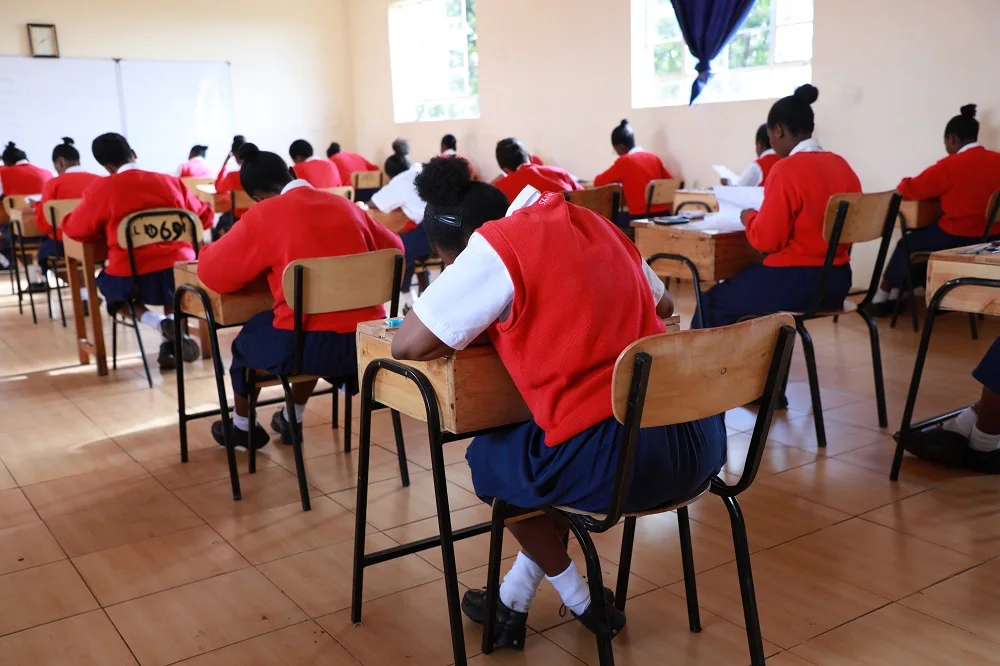
Kenya is preparing for its biggest national examination and assessment season yet, with 3,634,846 learners and candidates registered and the Kenya National Examinations Council (KNEC) putting in place tighter controls to prevent cheating and protect the credibility of the results.
The 2026 examination season will bring together candidates sitting the Kenya Certificate of Secondary Education (KCSE) and learners taking the Kenya Primary School Education Assessment (KPSEA) and Kenya Junior School Education Assessment (KJSEA).
Education Cabinet Secretary Julius Ogamba warned that candidates, teachers and officials involved in the exercise would face the full force of the law if they breached examination regulations.
"Let me affirm today that we will have no mercy on anyone who will be found engaging in any form of malpractice. All candidates, centre managers, supervisors and invigilators must comply with examination regulations, failing which they will be subjected to the full force of the law," warned Education Cabinet Secretary Julius Ogamba.
The warning was issued yesterday during the launch of the examination season at the KNEC headquarters in Nairobi, where officials detailed the measures being used to secure examination materials.
KNEC chief executive officer Dr David Njengere also cautioned parents and candidates against falling for individuals claiming to have access to examination papers before they are administered.
"All candidates will see the papers for the first time on the day of the examination.
I advise parents and candidates not to waste their money on promises that anyone can get them the papers (before exam time)," he said.
To strengthen the security of examination materials, KNEC will use smart padlocks on all storage containers. The system was piloted last year and will allow officials at the council's headquarters to monitor the locks remotely.
The system will record when containers are opened or closed and indicate whether there has been any attempt to interfere with them.
Each container will also be protected throughout the day and night by four armed security officers, with two assigned during the day and another two at night.
Heads of institutions serving as examination centre managers will have a direct responsibility for the security of the materials. Njengere said they must be physically present at centres where examination containers are located.
The containers will be opened at am for the collection of KPSEA and KUSEA papers, while KCSE papers will be collected at 7am and 12.30pm.
KNEC has introduced a separate packaging system for KCSE papers to prevent morning papers from being confused with those meant for the afternoon session.
The morning papers will be placed in white labelled cartons with blue straps, while those for the afternoon session will be packed in yellow labelled cartons with black straps.
Question papers will also carry personalised details of individual candidates as an additional security measure. The information will be removed after each examination session, allowing examiners to mark scripts without access to the candidates' details.
Officials overseeing the examinations and assessments will undergo compulsory briefings beginning tomorrow at sub-county level. KNEC officers will conduct the sessions and officials will not be allowed to delegate their attendance.
KCSE rehearsals are scheduled for Friday, October 16, 2026. Papers involving smaller numbers of candidates will be administered between October 19 and 30, while those with large candidature will run from November 2 to 20.
The KPSEA and KJSEA assessments will take place between October 26 and 30.
The security arrangements will vary depending on the level of assessment. Njengere said armed security officers would not be stationed at KPSEA and KJSEA centres as part of reforms intended to lower the pressure attached to assessments at those levels.
KCSE centres, however, will each have two security officers. Those hosting more than 250 candidates will receive additional officers.
The number of learners registered for the three assessments and examinations has risen compared with last year.
KPSEA has 1,380,463 registered learners, compared with 1,298,089 last year. KJSEA registration has increased to 1,206,028 from 1,130,679, while KCSE candidature stands at 1,048,355, up from 996,078.
The KCSE figure has crossed the one million mark for the first time.
The examination will also mark the second-last KCSE for the 8-4-4 system, with the final cohort under the curriculum expected to sit the examination next year.
Ogamba said the rising numbers would place greater demands on those involved in administering the examinations and assessments.
"This growth in numbers means more resources and greater dedication from all of us in the field administration of these examinations and assessments" said CS Ogamba.
The acting Teachers Service Commission (TSC) chief executive officer Evaleen Mitei said 59,904 examiners had been identified and vetted to mark the examinations and assessments.
She urged teachers to participate in the induction programmes and warned that those found engaging in malpractice would face disciplinary measures.
"The credibility of examinations is our responsibility and national calling. TSC, through teachers, is confident that learners are ready. Weve done everything to ensure total integrity of exams. When we release the examination papers, we entrust them to our partners to deliver credible exams" said Ms Mitei.
The government has also prepared for possible disruptions during the examination period, particularly from weather conditions.
Principal Administrative Secretary in the Ministry of Interior Beverly Opwora, who represented Principal Secretary Raymond Omollo, said counties had developed contingency plans in anticipation of disruptions from above-average rainfall associated with the El Niño phenomenon, as forecast by the Kenya Meteorological Department.
"Field officers from all the relevant
ministries and agencies shall be on standby to provide whatever support that will be required to ensure that our
processes run seamlessly and that none of our candidates are unnecessarily disadvantaged. We have expanded the storage capacity for examination and assessment materials by installing 48 additional containers in sub-counties. This is an addition to the current 653 containers" said Mr Ogamba.
Opwora said security agencies would work together throughout the examination period.
The National Intelligence Service (NIS) will be part of the operation because "the exercise must be intelligence-led to deter malpractices before they happen".
The Directorate of Criminal Investigations (DCI) will also participate in the security arrangements.
The Ministry of Interior will further work with the Ministry of Gender to handle and support cases involving pregnant candidates during the examination period.