
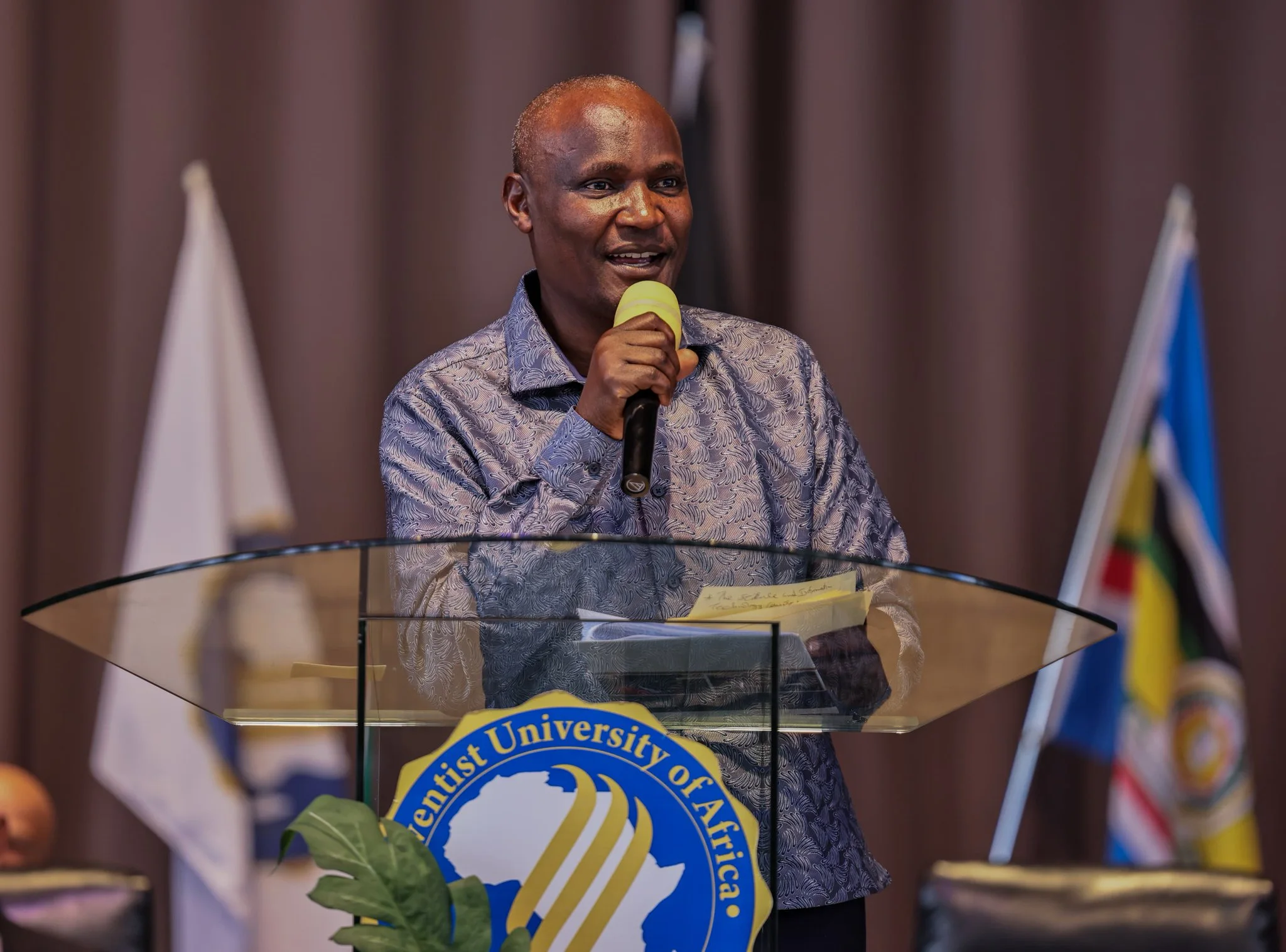
Treasury Cabinet Secretary John Mbadi has called for a more inclusive university education system, saying financial struggles should never determine which young Kenyans get the opportunity to pursue higher learning and develop their potential.
Mbadi said universities must do more to support academically capable students from disadvantaged families, arguing that poverty, gender and difficult family circumstances should not deny young people a chance to secure a university education.
He spoke during celebrations marking the 20th anniversary of the Adventist University of Africa (AUA) in Nairobi, where he challenged institutions of higher learning to widen access to education through scholarships and other support programmes.
The Cabinet Secretary said investing in education was necessary for building a skilled workforce, developing human potential and sustaining Kenya's economic progress.
“No talented young Kenyan should be excluded from higher education because of gender or family circumstances,” Mbadi said, urging universities to identify and support bright students who lack the financial means to continue with their studies.
Reflecting on his personal journey, Mbadi attributed his achievements to the opportunities he received to pursue education and develop his abilities.
He said his current position would not have been possible without access to the human development opportunities that shaped his career.
“If I did not have the opportunity to go through the human development that I went through, I would not be standing here today,” he said.
His appeal came as AUA sought support for a scholarship endowment fund designed to help students facing financial difficulties, particularly women, qualified candidates from underserved regions and those from economically disadvantaged households.
Vice-Chancellor Prof Ademola Stephen Tayo said the institution wanted to establish a lasting funding arrangement that would enable more deserving students to pursue postgraduate education.
He noted that financial limitations had continued to keep pastors and other professionals from accessing advanced training, despite the need for well-qualified leaders in different sectors.
“We must not allow financial hardship to deny the church and the society the services of capable people,” he said.
Tayo identified the scholarship initiative as one of five priority projects the university intends to pursue as part of its plans for the next two decades.
The other proposed developments are a science and information technology complex, a wellness centre, a sports complex and residential apartments for faculty and staff.
Founded in 2006, AUA is a postgraduate institution owned by the Seventh-day Adventist Church and located in Nairobi. The university serves learners drawn from more than 30 African countries, offering courses in theology, public health, leadership, management and computer science.
Its programmes are aimed at preparing professionals and leaders to serve in different parts of the continent.
Mbadi promised to engage the government on possible assistance towards the institution's proposed infrastructure developments, saying partnerships would be important in supporting the expansion of quality education.
One of the major projects is the planned science and technology complex, which is expected to provide facilities for advanced computing, artificial intelligence, data science and cybersecurity.
The proposed facility will also include laboratories and spaces dedicated to research and innovation, areas the university considers important in strengthening its academic and technological capacity.
Tayo said the project would support the institution's plans to venture further into online learning after receiving initial approval from the Commission for University Education.
Mbadi said the university's expansion plans were in line with Kenya's broader development objectives, noting that institutions of higher learning were expected to produce the professionals, researchers and ethical leaders needed to drive national progress beyond Vision 2030.
He said the government was preparing a new long-term development framework that would focus on five areas: economic, human, digital, green and institutional transformation.
On education financing, the CS announced that the sector was expected to receive approximately Sh922 billion in the proposed Sh3.56 trillion national budget for the 2027/2028 financial year.
The allocation would represent 26 per cent of the proposed national budget, reflecting the sector's place in the government's development plans.
Mbadi further urged universities to rethink their traditional approach to education by placing greater emphasis on research, innovation and practical solutions to problems affecting Kenya and other African countries.
He said institutions should not limit their contribution to awarding academic certificates but should also prepare graduates capable of responding to the continent's changing needs.
As AUA prepares to enter its next phase after 20 years of operation, Tayo appealed to government officials, church leaders, former students and development partners to help finance the five proposed legacy projects.
He said contributions from the different stakeholders would be important in expanding the university's facilities, supporting students who cannot afford advanced education and ensuring the institution remains equipped to serve future generations.