
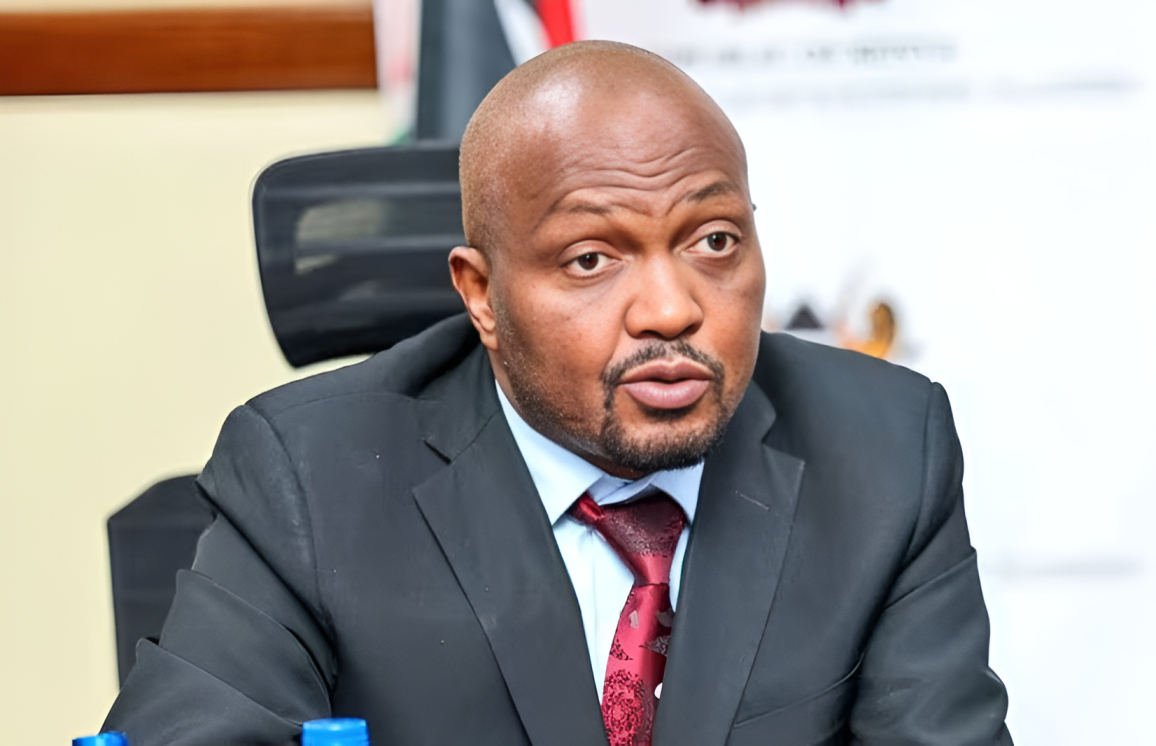
President William Ruto's former senior economic advisor Moses Kuria has reacted to the sentencing of Shakahola preacher Paul Nthenge Mackenzie to 200 years in prison, calling for attention to what he described as political cult leaders.
In a statement following Friday's High Court ruling in Mombasa, Kuria said justice had been served, adding that the country should now turn its attention to political figures who allegedly command cult-like loyalty.
“Justice has been served. Mackenzie in for 200 years. We have dealt with religious cult leaders. Now onward to political cult leaders,” Kuria said.
His remarks came after Justice Diana Kavedza sentenced Mackenzie to an aggregate 200 years in prison over the deaths of 191 people, including 190 children, in the Shakahola massacre.
The founder of Good News International Church received 100 years' imprisonment for murder by starvation and another 100 years for murder by direct homicide involving child victims.
The court ordered the two categories of sentences to run consecutively, resulting in a total of 200 years behind bars. Sentences within each category will run concurrently.
The killings occurred at Shakahola Forest in Malindi, Kilifi County, where followers were subjected to an extreme fasting programme under Mackenzie's religious teachings.
In delivering the sentence, Justice Kavedza said the court had considered the gravity of the offences, the vulnerability of the victims, the individual roles played by the convicts and the impact of the deaths on surviving families.
The judge identified Mackenzie as the principal figure behind the deaths, saying he orchestrated the movement of followers to the forest, issued directives ordering them to fast and targeted children as the first victims.
She also cited evidence of violence against children who resisted the fasting instructions or attempted to escape.
“The abuse of trust in the present case extended beyond the exploitation of spiritual authority. It involved the betrayal of confidence placed in the convicts by the congregants and the abandonment of the fundamental parental duty to protect children,” Kavedza said.
The prosecution had asked the court to impose the death penalty on Mackenzie, arguing that the scale and brutality of the killings warranted the harshest punishment.
However, the judge declined to impose capital punishment, saying a death sentence would eliminate the possibility of disengagement and rehabilitation.
“Nevertheless, the court declines the invitation to impose the death penalty on any of the victims,” she ruled.
The court noted that some followers who attempted to escape were allegedly apprehended, threatened, whipped and confined in fasting areas.
It further considered the impact on surviving families, including those who lost entire households and others whose lives were disrupted by the tragedy.
Mackenzie and 28 co-accused were convicted of 191 murder counts in October after the court found that the prosecution had proved its case.
The Shakahola deaths came to public attention in 2023 after investigations into reports of missing people led authorities to uncover mass graves in the forest.