
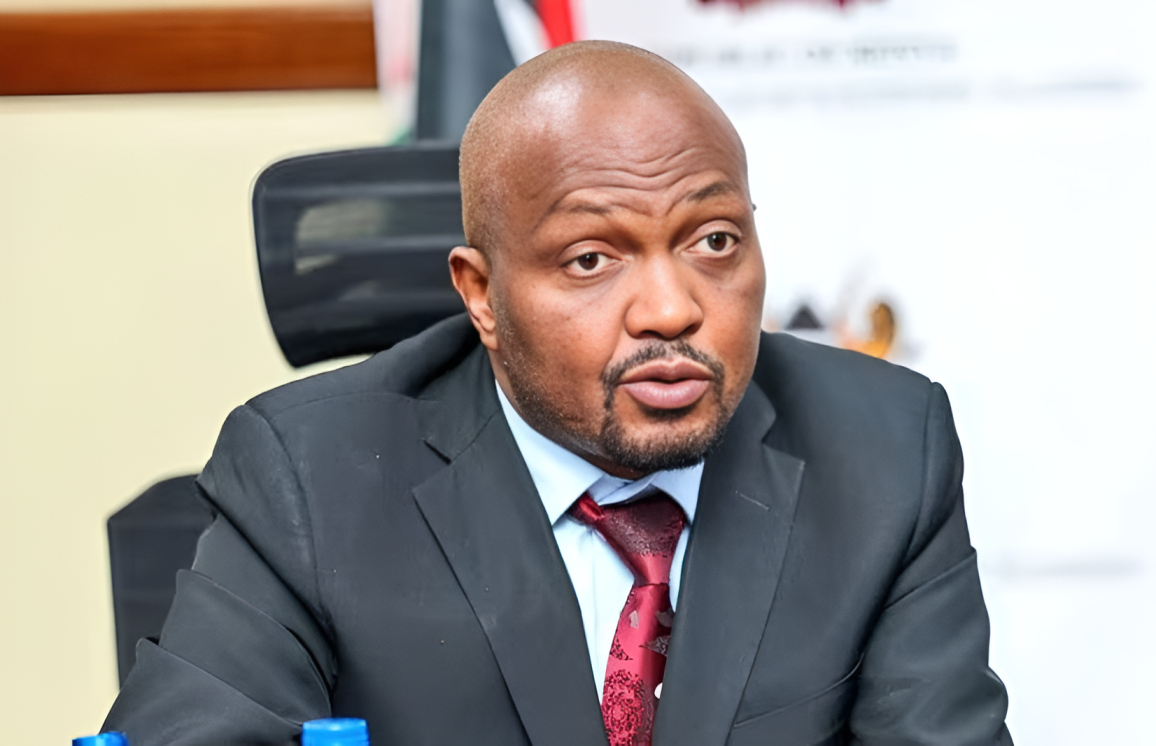
Former Trade Cabinet Secretary Moses Kuria has predicted that Kenya's opposition will not unite ahead of the 2027 General Election, arguing that competing political interests will continue to divide the emerging opposition coalition.
Speaking during a local TV interview on Sunday, Kuria said the opposition was already struggling with internal divisions and that the political manoeuvring was likely to continue until early next year, when he expects the major alliances to become clearer.
He said the political landscape would eventually reveal which leaders and parties were committed to the opposition, which were working with conditions and which were aligned with the broad-based government arrangement.
According to Kuria, that period would make it possible to establish who was genuinely in the opposition and who was supporting it conditionally.
“That's when we'll know who is in the opposition, who is in opposition unconditionally, who is in opposition with conditions, who is truly committed to the opposition, who is on the broad-based side,” he said.
Kuria also dismissed the possibility of opposition leaders presenting a united front, saying he believed the presidential candidate had effectively already been determined despite the ongoing political disagreements.
Kuria’s comments come amid growing divisions within the opposition ahead of the 2027 General Election, with rival camps yet to agree on a common presidential candidate.
The United Opposition, bringing together Kalonzo Musyoka, Rigathi Gachagua, Fred Matiang’i, Martha Karua and Eugene Wamalwa, is yet to settle on a flagbearer, while Linda Mwananchi has emerged as a parallel political force led by Edwin Sifuna, with allies including James Orengo, Babu Owino and Godfrey Osotsi.
The divisions have also been evident at the constituency level. In the Ol Kalou parliamentary by-election, opposition parties failed to rally behind a single candidate, with different political formations such as Jubilee and UDA backing separate contenders instead of presenting a united challenge.
The outcome highlighted the difficulties opposition leaders face in translating their calls for unity into a coordinated electoral strategy.
A July opinion poll placed President William Ruto at 32 percent, compared with 13 percent for Kalonzo and four percent for Gachagua, reaffirming the fragmented nature of the opposition vote. Sifuna’s push for a new political vehicle for his presidential bid has further complicated the equation.
With multiple camps, competing ambitions and no agreed flagbearer, opposition unity remains more an aspiration than an organised electoral strategy as the 2027 contest takes shape.
Moving forward, Kuria argued that Kalonzo Musyoka was the likely presidential candidate around whom the opposition would eventually converge, despite disagreements among the various political formations.
Kuria said the main dispute was likely to centre on who would exercise influence over Musyoka rather than whether he would emerge as the candidate.
He compared the political competition around Musyoka to shareholders competing for control of a company, saying different groups would seek greater influence over his political direction.
The former Gatundu South MP also questioned the prospects of former Interior Cabinet Secretary Fred Matiang'i becoming Musyoka's running mate, saying the political interests surrounding Musyoka would make such an arrangement difficult.
He argued that Matiang'i would be an outsider in such a formation and would struggle to fit into the political arrangement.
“Matiangi would be a rank outsider to that arrangement and he knows that it will be hardship posting for him,” Kuria said.
Kuria also turned his attention to Nairobi Senator Edwin Sifuna, dismissing speculation that he could emerge as a presidential candidate in 2027.
He claimed Sifuna was being encouraged by political actors to believe he could pursue the presidency, while suggesting that some of those promoting his candidacy could instead be positioning him for the deputy presidency.
“Sifuna is being prepared for slaughter. He's being fattened for slaughter,” Kuria said.
He argued that Sifuna's political support would not be enough to secure the presidency if he ran independently and said his political future could instead lie in supporting a broader opposition arrangement.
He maintained that Sifuna was a “brilliant young man” with years ahead of him but maintained that the political expectations surrounding his presidential ambitions were unrealistic.
He also rejected the possibility of the United Opposition settling its differences easily, saying the competing interests of its leaders would remain a major obstacle.
The former CS concluded that the next six months would therefore be critical in determining the shape of Kenya's political alliances ahead of the 2027 polls.