
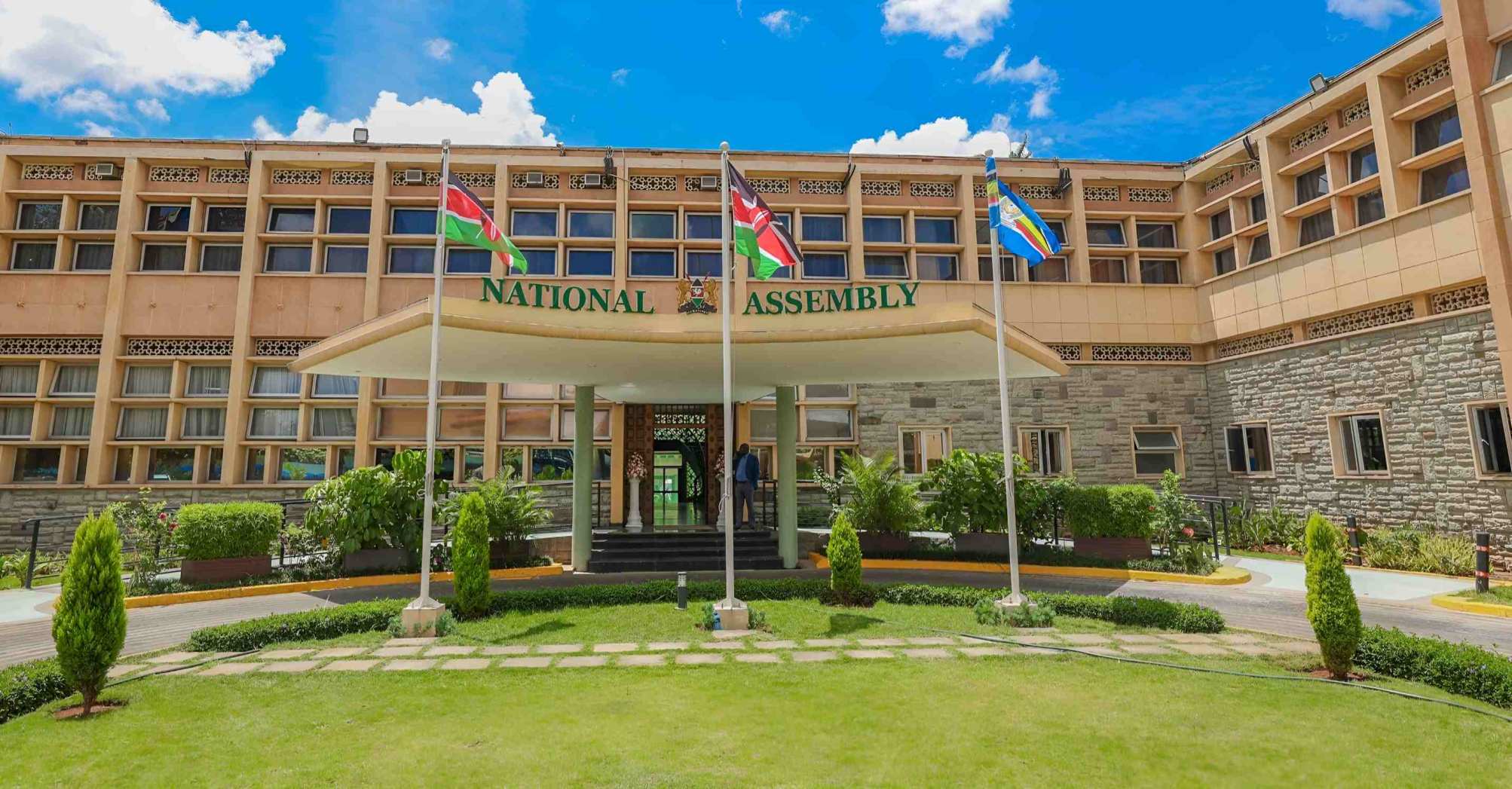
A cross-section of Members of Parliament has backed a Bill seeking to remove attempted suicide from Kenya's list of criminal offences, arguing that survivors need treatment and psychological support rather than prosecution.
Contributing to the debate on the Penal Code (Amendment) Bill, 2024, sponsored by Mathare MP Anthony Oluoch, lawmakers said criminalising attempted suicide is outdated, unconstitutional and undermines efforts to address the country's 0growing mental health crisis.
The Bill seeks to repeal Section 226 of the Penal Code, which makes attempted suicide a misdemeanour punishable by law.
Kilgoris MP Julius Sunkuli said Kenya inherited the provision from British colonial law, yet the United Kingdom abolished the offence more than six decades ago through the Suicide Act of 1961.
He noted that other common law jurisdictions, including Canada and Australia, no longer treat attempted suicide as a criminal offence and urged Parliament to align Kenya's laws with modern legal and human rights standards.
"Attempted suicide is one offence where the person is both the victim and the accused. Instead of punishing such people, we should rehabilitate and counsel them because they are going through mental and emotional distress," Sunkuli said.
He argued that while many religions consider suicide a moral or spiritual issue, it should not automatically attract criminal sanctions, adding that people driven to attempt suicide are often overwhelmed by difficult life circumstances.
Seme MP, Dr.James Nyikal, a medical doctor who chairs the National Assembly departmental Committee on Health, told the House that suicidal behaviour is commonly associated with mental illnesses such as depression and bipolar disorder.
He said criminalising attempted suicide effectively amounts to criminalising illness.
"When somebody is mentally unwell, they may not even recognise they are sick. If suicidal behaviour is treated as a crime, instead of taking that person for treatment, we take them to court. That is the wrong approach," he said.
Kajiado South MP Parashina Sakimba said most suicide attempts stem from financial hardship, family problems, unemployment and emotional distress.
He urged the government to establish mental health centres in every county and expand counselling services in schools to address the root causes of suicide.
"If attempted suicide has been a crime for many years, we must ask ourselves how many lives that law has saved. The answer is none," he said.
Buuri MP Mugambi Rindikiri cited recent statistics showing that between 70 and 80 per cent of reported suicide cases involve men, particularly those aged between 15 and 29 years.
He said counties such as Kiambu, Nyeri, Murang'a, Kirinyaga, Nyandarua and Meru continue to record high suicide rates, underscoring the need for more research and targeted mental health interventions.
"We should invest in research, rehabilitation and public awareness instead of criminalising people who are already suffering," he said.
Teso South MP Mary Emaase said people who attempt suicide often feel hopeless and trapped after experiencing bereavement, debt, workplace pressure or family challenges.
"They need compassion and psychological support, not prosecution," she said, adding that Kenya should follow countries that have already decriminalised attempted suicide.
Vihiga Woman Representative Beatrice Adagala attributed the increasing number of suicide cases to economic hardship, unemployment, drug abuse and relationship problems.
She called on the Ministry of Health to establish counselling facilities in county and sub-county hospitals and urged religious institutions to play a greater role in supporting vulnerable people.
Nominated MP Dorothy Muthoni said suicidal thoughts are often the final stage of prolonged stress, anxiety and depression, stressing that friends, relatives and teachers are usually the first to notice warning signs.
She also called for strengthened guidance and counselling programmes in schools, saying academic pressure and relationship challenges continue to expose young people to mental health risks.
"Suicidal people are not criminals. They are people who need help, love and support," she said.
Maragwa MP Mary Njoroge said survivors should be rehabilitated and assisted to rebuild their lives instead of being punished.
"We should come up with ways of protecting life by addressing the issues that drove them to attempt suicide in the first place," she said.
Nairobi Woman Representative Esther Passaris said the Bill reflects a compassionate society that responds to emotional pain with care rather than punishment.
She argued that prosecuting survivors only deepens stigma and discourages those experiencing mental health challenges from seeking help.
"This Bill is not about encouraging suicide. It is about preventing it by replacing punishment with counselling, treatment and recovery," she said.
Passaris said Parliament now has an opportunity to align Kenya's laws with constitutional guarantees on dignity, equality and the right to the highest attainable standard of health, while encouraging families, schools, employers and healthcare providers to intervene before crises become fatal.
If enacted, the Bill would repeal one of the country's remaining colonial-era criminal provisions and shift the response to attempted suicide from the criminal justice system to mental healthcare and rehabilitation.