
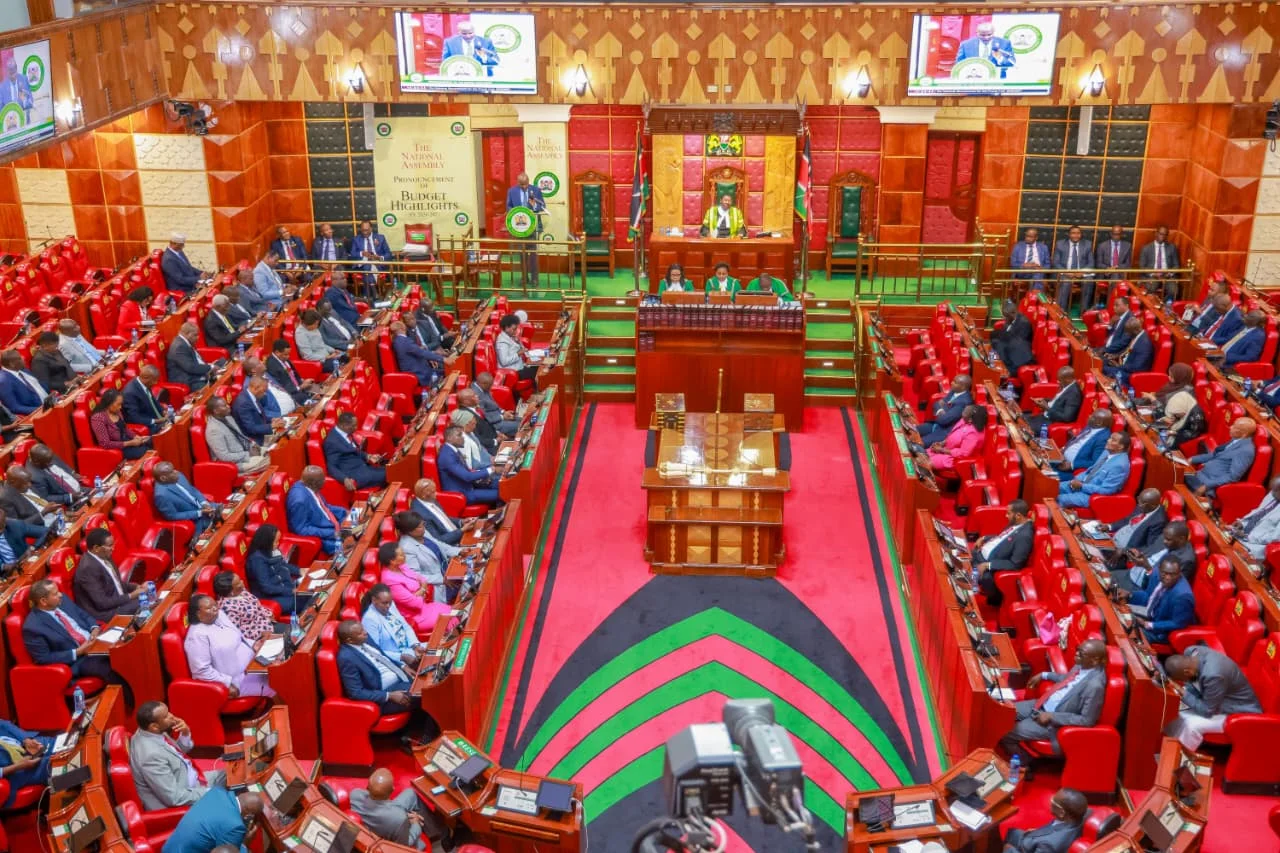
Plans to establish an Audit Advisory Board have hit a fresh hurdle after the National Assembly’s Finance Committee backed its complete removal from the law, citing a court ruling that found the proposed body unconstitutional and warned against interference with the independence of the Auditor General.
The committee, led by Molo MP Kuria Kimani, wants the National Assembly to approve all changes introduced by the Senate to the Public Audit (Amendment) Bill, 2024, including the deletion of clauses that provided for the board’s creation, membership and operations.
The recommendation brings the two parliamentary Houses closer to resolving a dispute over the proposed institution, which was intended to advise the Auditor General but faced legal objections over its potential influence on an office constitutionally required to operate independently.
Sponsored by National Assembly Majority Leader Kimani Ichung’wah, the Bill was approved by the National Assembly on March 11, 2025, before being sent to the Senate for further consideration.
The Senate made several changes to the legislation and returned it to the National Assembly for concurrence. Among its key decisions was to remove the provisions establishing the Audit Advisory Board, together with clauses detailing its responsibilities and how it would operate.
The Finance Committee has endorsed the Senate’s position, relying on a High Court decision arising from a case filed by Transparency International, which challenged the constitutionality of the proposed board.
In its ruling, the court found that giving the board the responsibility of advising the Auditor General would interfere with the independence of the office, both institutionally and in the execution of the office holder’s duties.
The court further determined that establishing such a body would alter the constitutional structure governing the Auditor General’s office and weaken the protections designed to preserve its independence.
It also found that the proposed advisory arrangement was inconsistent with constitutional provisions that shield the Auditor General from the direction or control of any person or authority.
Following its review of the Senate amendments, the committee said removing the contested clauses would help prevent further legal difficulties arising from the board’s constitutionality.
The committee concluded that deleting the provisions entirely “may be advisable to prevent an adverse finding in courts on its unconstitutionality”.
The question of whether the board should be established has remained unresolved since the 2018 court ruling. The latest amendments seek to bring the dispute to an end by eliminating the legal provisions that would have created the institution.
Under the initial Bill, the board was expected to advise the Auditor General on budget preparation and estimates, human resource management and development, alongside other matters that the office holder might refer to it.
Its proposed composition included the Attorney General, a nominee of the Institute of Certified Public Accountants of Kenya, the chairperson of the National Assembly’s Budget Committee, and two representatives from each House responsible for public finance and audit matters.
The Senate ultimately opted to remove the proposed board altogether instead of retaining it with a revised structure. The National Assembly’s committee has now backed the same course of action, supporting the complete deletion of the relevant provisions from the legislation.
The proposed amendments also cover other aspects of public auditing, including how human resource audits should be conducted and the responsibilities assigned to the Auditor General.
Clause 7 of the original Bill had proposed creating a Public Service Human Resources Audit Directorate as a separate unit within the audit framework.
However, the Senate deleted the clause and recommended that responsibility for human resource audits be incorporated into the existing functions of the Auditor General, avoiding the establishment of a standalone directorate.
The Finance Committee has supported this change, arguing that spelling out the creation of specific offices in legislation could restrict the institution’s ability to develop and adjust to new demands.
According to the MPs, allowing the Auditor General to carry out human resource audits within the existing office would provide greater room to adapt while maintaining the Bill’s original objective of including such audits in the public audit process.
The revised proposal therefore seeks to achieve two changes: remove the disputed Audit Advisory Board and allow human resource audits to be undertaken without establishing a separate directorate.
The committee’s recommendation now places the Senate amendments before the National Assembly for consideration, with lawmakers being urged to adopt the revised Bill and settle the long-running dispute over the proposed board while providing greater flexibility in the organisation of the Auditor General’s functions.