
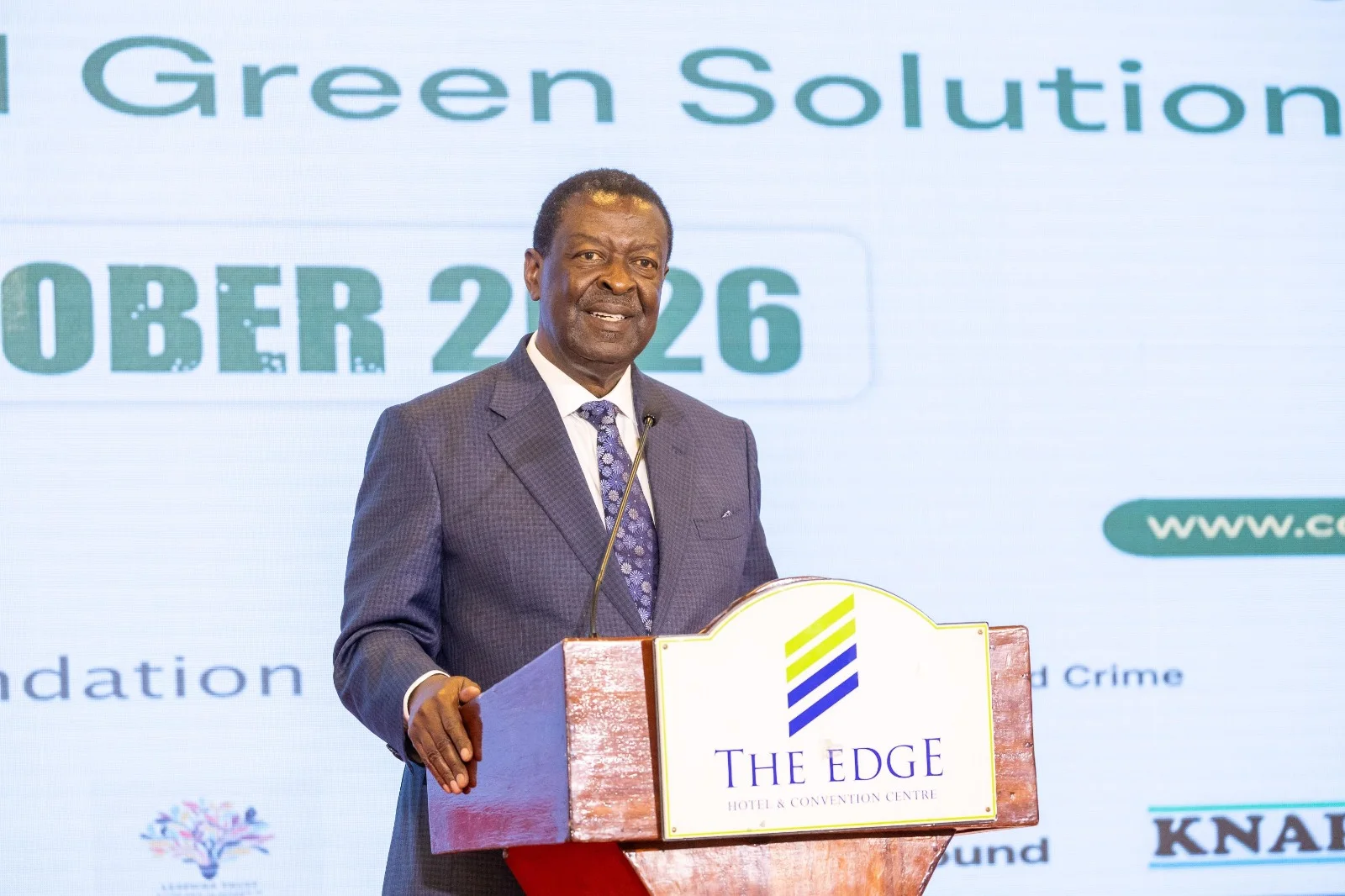
Prime Cabinet Secretary Musalia Mudavadi has urged governments, public institutions and leaders to rebuild public confidence by keeping their promises, accepting responsibility for mistakes and ensuring their actions reflect the values they profess, warning that failure to deliver on commitments could weaken institutions and threaten their future.
Speaking at the opening of the Global Trust Summit 2026 in Nairobi on Thursday, Mudavadi said trust was a key foundation of effective governance and cooperation between countries, adding that leaders could not win public confidence through speeches, policies and assurances without showing results.
He challenged those in positions of authority to move beyond meetings and official procedures and focus on delivering outcomes that improve people's lives, arguing that public trust depended on how institutions served citizens and handled their responsibilities.
“When a society loses the trust of its people, it risks losing the very foundation upon which its institutions, prosperity, and common future depend,” Mudavadi said.
He cautioned that governments and organisations could spend too much time on meetings and administrative processes while failing to achieve meaningful progress.
“We risk becoming so absorbed in our meetings and procedures that we mistake activity for impact and attendance for public confidence,” he said.
Mudavadi said institutions earned public confidence when they acted consistently with their commitments, fulfilled promises and admitted when things went wrong instead of avoiding responsibility.
“Trust grows when words and actions agree, when promises are honoured, when mistakes are acknowledged and corrected,” he maintained.
The Prime Cabinet Secretary said trust should not be treated merely as a government target or a figure used to measure performance. Instead, it reflects the public's experience with institutions responsible for managing resources, protecting people's welfare and shaping the country's future.
He cited an Afrobarometer working paper based on survey data from 37 African countries, which found that higher levels of trust in presidents and ruling parties were linked to weaker public support for accountability measures.
The measures included parliamentary oversight, scrutiny by the media and the ability of citizens to demand answers from their governments.
Mudavadi said the findings raised questions about whether strong confidence in political leaders could sometimes reduce the public's willingness to question their decisions.
He stressed that trusting leaders should not mean accepting every government action without scrutiny, adding that public confidence and accountability needed to work together to ensure those in power remained answerable for their decisions.
“This presents us with an important lesson: trust must not become a substitute for accountability. Rather, the two must reinforce each other,” he said.
He called for institutions that could maintain public confidence while remaining open to scrutiny over their conduct, decisions and performance.
Mudavadi also urged Kenyans and other societies to place greater value on personal integrity, saying honesty and a reputation for being trustworthy should be treated as important assets.
“We should not romanticise the past, which had its own injustices and exclusions, but we must recover the principle that people valued being known as trustworthy,” Mudavadi said.
He warned that the pursuit of profits and measurable results without regard for the methods used to achieve them could allow individuals and organisations to record commercial success while disregarding ethical standards.
The Prime Cabinet Secretary noted that laws, rules and procedures remained important in guiding institutions, but their success also depended on the conduct of the people charged with enforcing them.
He further called on religious, cultural and traditional leaders to take a greater role in promoting trust, citing their influence in shaping values such as responsibility, dignity, forgiveness and service to others.
“Moral authority, like political authority, depends on consistency between words and conduct.”
Mudavadi also raised concerns about misinformation and deliberate disinformation on social media, warning that false claims could fuel suspicion, harm reputations and damage public confidence before the facts were established.
While supporting the protection of freedom of expression, he said the right should not be used to justify the invention or deliberate distortion of information.
“Freedom of expression must be protected, but it should not be confused with a licence to fabricate or maliciously distort facts,” he added.
He said the values that sustain trust are first learned within families, where children develop an understanding of honesty, respect, responsibility and compassion. These values, he noted, should then be carried into schools, workplaces, communities and public institutions.
Mudavadi renews call for greater African representation
Turning to international relations, Mudavadi said global institutions needed to demonstrate fairness, proper representation and the ability to deliver on their responsibilities if they were to retain the confidence of countries and the people they serve.
He pointed to Africa's lack of a permanent seat on the United Nations Security Council, arguing that the continent deserved a more equal role in decisions affecting international peace and security.
“A more representative United Nations would strengthen the trust upon which effective multilateral cooperation depends.”
His remarks linked the question of public trust within individual countries to the need for fairness and inclusion in international decision-making, where the credibility of institutions depends partly on whether members feel adequately represented.
Mudavadi challenged delegates attending the Nairobi summit to ensure the discussions produced clear commitments, assigned responsibilities and reliable ways of tracking progress.
He warned against allowing the meeting to end with speeches and formal statements that were not followed by practical action.
“This summit must leave Nairobi with more than eloquent speeches and an impressive communiqué,” he said.
He urged participants to make their commitments measurable and ensure that the principles discussed at the summit translated into action by governments, institutions and other leaders.