
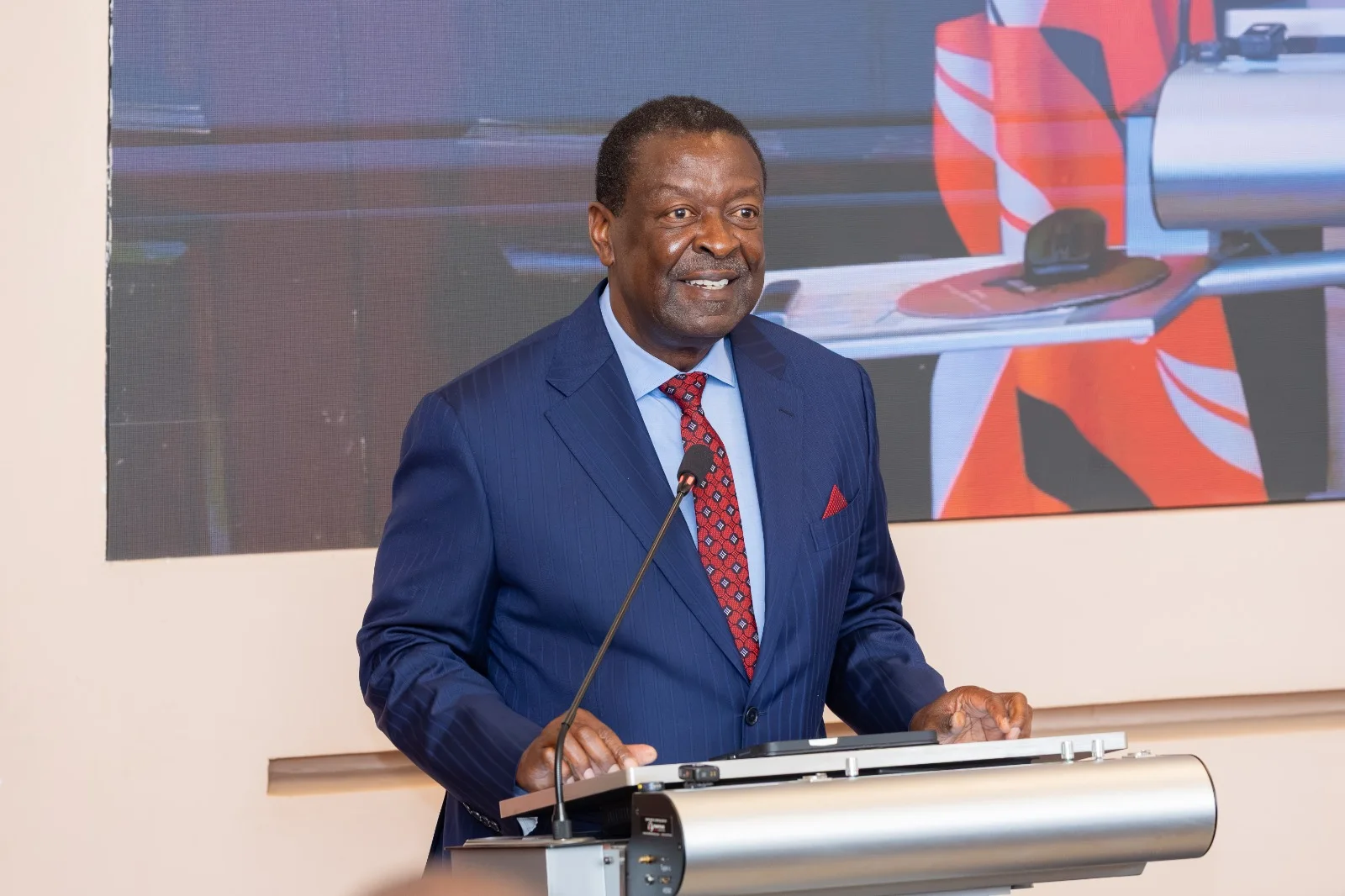
Prime Cabinet Secretary Musalia Mudavadi has intensified his defence of President William Ruto’s re-election bid, warning that emerging political parties risk misleading Kenyans if they enter the 2027 General Election without established structures, policies and a clear national agenda.
Speaking during an Anglican Church of Kenya (ACK) service in Kapsabet, Nandi County, on Sunday, Mudavadi urged voters to reject what he described as political gambling, arguing that Kenya’s leadership should not be determined by hurried political arrangements.
His remarks come as political alliances shift ahead of the August 2027 General Election, with Ruto’s allies advocating continuity while opposition leaders explore alternative coalitions and political vehicles.
Mudavadi questioned whether newly formed parties and emerging political formations had sufficient time to organise themselves and present credible alternatives to the ruling administration.
“We should not second-guess the destiny of our country. We should not wake up one day and gamble with the leadership of our nation,” he explained.
He challenged politicians seeking to establish new parties to explain how they intended to develop policies, grassroots structures, and operational frameworks before the next election.
“There are people, and we have only six months left, according to the IEBC election timetable, yet they are moving around saying they have formed political parties. Tell them, you are forming a party when you have only six months to the election. Where will the policies come from? Where will the structures come from? Where will the framework come from? That is misleading people,” he said.
Mudavadi’s remarks reinforce a broader message from Ruto’s allies that the President should remain the government’s presidential candidate in 2027 and that established political structures give the ruling camp an advantage.
In September, Mudavadi argued that the cooperation between the United Democratic Alliance (UDA) and the Orange Democratic Movement (ODM) under the broad-based government could strengthen Ruto’s re-election campaign. He also called on the parties to build grassroots networks and develop a framework for their post-election agenda.
At the Kapsabet service, Mudavadi said his support for Ruto was based on what he considered the administration’s achievements rather than political convenience.
He defended the President’s leadership by pointing to Kenya’s relative peace, contrasting the country’s security situation with conflicts affecting Sudan, Ethiopia and parts of the Middle East.
“We gather and talk because there is peace in our country. We all stand to say thank you for having Kenya as a peaceful country,” he said.
Mudavadi argued that peace was essential for citizens to attend church, pursue their livelihoods and participate in national discussions. He urged Kenyans to appreciate the country’s stability as neighbouring states faced insecurity and humanitarian challenges.
The Prime Cabinet Secretary also used the church setting to argue that credible leadership should emerge through established structures rather than sudden political declarations.
Drawing parallels with the church, he said aspiring bishops had to rise through the ranks before assuming senior leadership positions.
He warned politicians against expecting to attain national leadership without first building the necessary political foundation.
“For those who think we can parachute leaders into power in Kenya, my friend, that parachute will break while you are still up in the air. We want solid leadership, and the President is our guide,” he maintained.
Mudavadi further portrayed Ruto as a leader whose influence extends beyond Kenya, citing his advocacy for African Union reforms, the African Continental Free Trade Area and manufacturing medicines within Africa.
He argued that continuity would allow the President to sustain his involvement in continental initiatives and long-term development planning.
Mudavadi maintained that Ruto wanted Kenyans to think beyond 2030 and develop a national vision spanning several decades.
He also called for a peaceful, free and fair election, urging political leaders to avoid incitement and violence.