
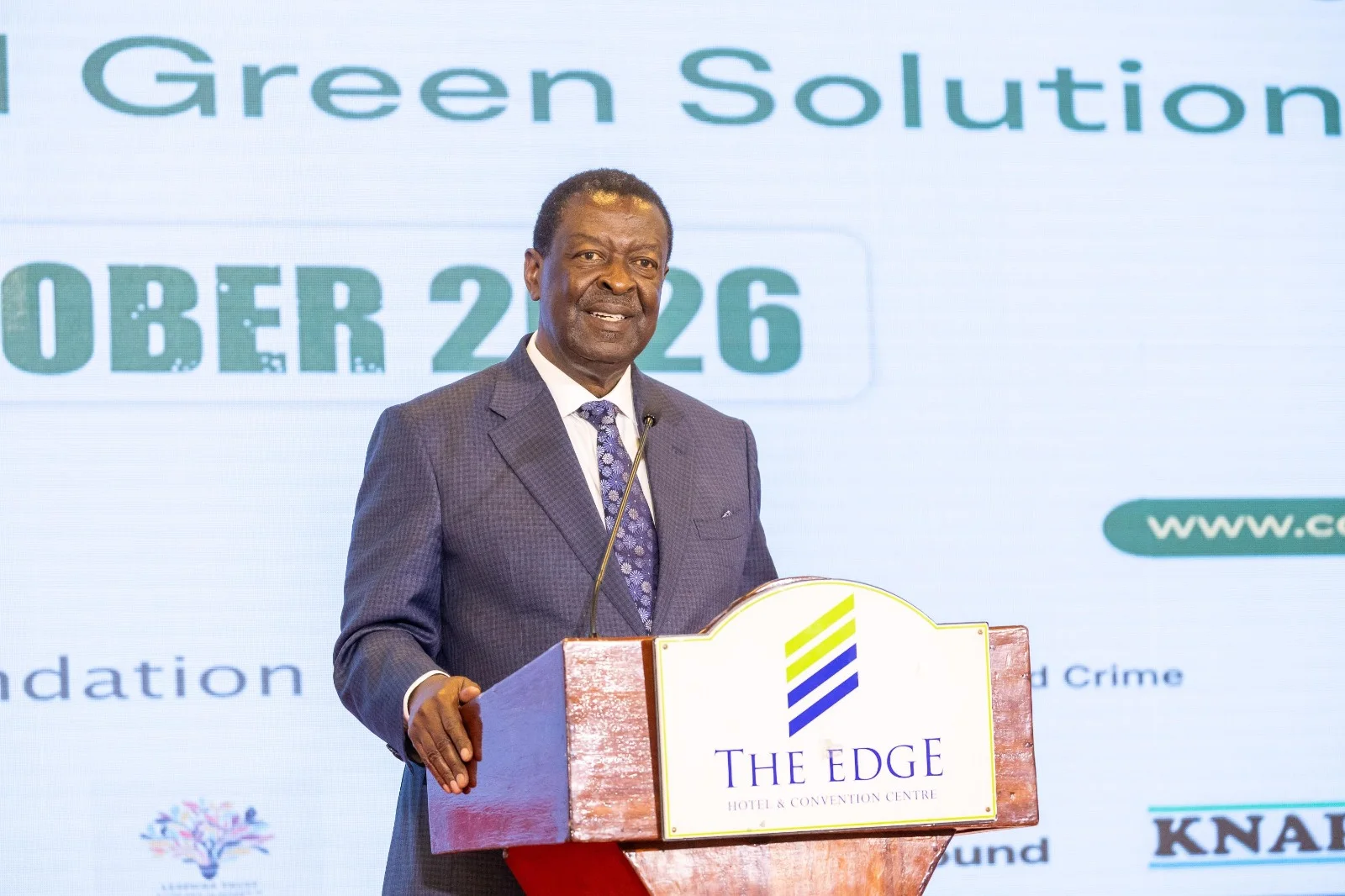
Prime Cabinet Secretary Musalia Mudavadi has called for increased investment in skills development and rehabilitation programmes in correctional facilities, saying they can create employment opportunities, support economic growth and improve public safety.
Mudavadi said equipping offenders with marketable skills and connecting them to employment and business opportunities would help them reintegrate into society and contribute to the economy after completing their sentences.
Speaking on Thursday during the closing ceremony of the fourth Correctional Services Week at the Edge Convention Centre in Nairobi, he said rehabilitation should address the root causes of offending and prepare inmates to return to their communities as responsible citizens.
“At the heart of everything we do lies a deeper purpose: facilitating genuine change in human lives,” Mudavadi said.
“Effective correctional services address the root causes of offending, reduce reoffending and prepare people to return as responsible members of society,” he added.
The Prime CS said correctional institutions should not be viewed solely as facilities for keeping offenders in custody but also as centres for developing human capital and promoting inclusive economic growth.
He noted that vocational training, productive engagement and access to enterprise opportunities could help former inmates secure livelihoods and reduce the risk of returning to criminal activities.
“By equipping offenders with relevant skills, promoting productive engagement and opening pathways to employment and enterprise, correctional services contribute directly to inclusive growth, human capital development and safer communities,” he said.
Mudavadi added that offenders could make meaningful contributions to society if given opportunities to reform and rebuild their lives.
“They are not dens for condemned people. Offenders can be disciplined to become better people with great contribution and impact within societies once they are integrated back to communities,” he said.
He linked rehabilitation reforms to the government's Bottom-Up Economic Transformation Agenda (BETA), which seeks to expand economic opportunities and improve livelihoods.
Mudavadi also called for stronger coordination between custodial and non-custodial interventions, saying rehabilitation should continue beyond prison walls through the involvement of families, communities and relevant institutions.
He said successful reintegration required support systems that would help former offenders access opportunities and adjust to life outside correctional facilities.
The Cabinet Secretary further urged the government to modernise correctional services by adopting international best practices while ensuring reforms remained consistent with Kenya's constitutional values and social context.
“A modern, efficient and rehabilitative system is one of the quiet pillars of Kenya’s ambition to become a globally competitive and prosperous nation,” he said.
The three-day Correctional Services Week was held under the theme, “Transforming Correctional Services through Technology and Green Solutions,” bringing together government officials, justice sector representatives and development partners to discuss reforms.
Mudavadi said the success of the initiatives would depend on implementation, urging stakeholders to translate the resolutions adopted during the event into measurable improvements.
“The real test of any reform agenda is implementation,” he said.
“That is an important milestone, but it must mark the beginning of action, not the end of conversation.”
He called on the State Department for Correctional Services, technical teams and other stakeholders to establish a clear implementation framework with defined responsibilities and measurable outcomes.
He also urged development partners to sustain their support beyond the annual event and align their interventions with the department's priorities.
State Department for Correctional Services Principal Secretary Salome Beacco said digital transformation in correctional institutions should go beyond acquiring technology to focus on improving service delivery and protecting human dignity.
“Smart correctional governance is more than acquiring technology. It is about restoring human dignity through innovation,” Beacco said.
She said the government intended to use information and communication technology to strengthen records management, accountability, operational efficiency and evidence-based decision-making.
On environmental sustainability, Beacco reaffirmed the government's commitment to transitioning correctional facilities to liquefied petroleum gas (LPG) and other clean energy solutions.
“This is not just an environmental imperative; it is a health, economic, and human rights imperative,” she said, urging development partners and private sector players to support the transition through financing, technology and technical expertise.
Mudavadi formally declared the fourth Correctional Services Week closed, calling for stronger cooperation across the justice sector to ensure the resolutions benefit correctional officers, offenders and the wider public.