
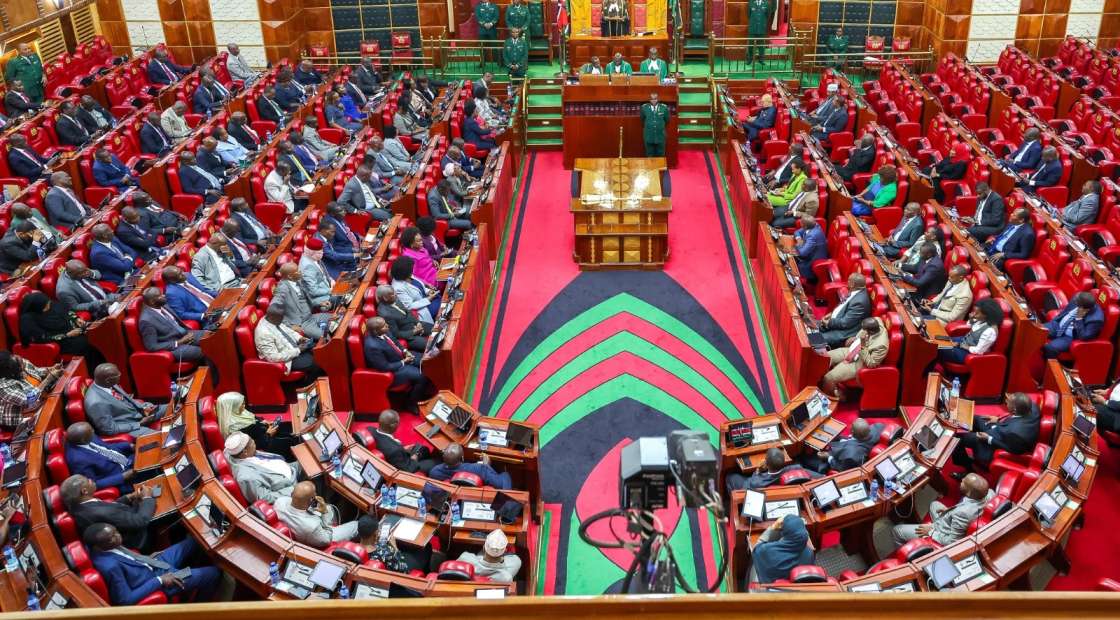
Members of Parliament have rejected a proposal to merge the Tourism Research Institute (TRI) with the Kenya Tourism Board (KTB), arguing that the research body needs better funding and support rather than being absorbed into another government agency.
Members of the Tourism and Wildlife Committee said merging the two institutions could weaken tourism research and affect efforts to build a stable and growing tourism industry.
The MPs spoke on Thursday during a meeting with tourism sector stakeholders led by Tourism Principal Secretary Amb. Prof. Julius Bitok at Bunge Tower. The meeting, chaired by committee chairperson Kareke Mbiuki, was held to collect views from industry players on the Tourism (Amendment) Bill, 2026, sponsored by Majority Leader Kimani Ichung’wah.
Mbiuki said TRI plays an important role in the tourism sector and should be protected as the government works to improve the industry.
“Most developed countries have succeeded because they have invested heavily in research. A proposal in the Bill to have TRI absorbed by KTB would hurt the sector,” he said.
He argued that the institute's poor performance was largely linked to inadequate funding and questioned why merging it with KTB had been proposed instead of addressing the financial challenges facing the institution.
“What informed the planned merger? TRI is underperforming because it has been starved of funding,” Mbiuki said.
The committee chairperson also criticised the Kenya Tourism Fund (KTF), accusing it of selectively supporting government agencies under the Ministry of Tourism and Wildlife.
“KTF has become a small god. Government entities have to kneel before it before they can disburse funds to institutions,” he claimed.
Vice Chairperson Bedzima Juma, Lamu East MP Mohammed Ruweida and Voi MP Abdi Chome also opposed the proposed merger, saying TRI should instead be given adequate resources to carry out its mandate.
The lawmakers said they represent communities in the Coastal region whose livelihoods depend heavily on tourism. They argued that the proposed legislation should seek to strengthen and stabilise institutions supporting the sector rather than combining them.
Ruweida also raised concerns about the fate of TRI employees if the merger goes ahead, warning that workers could be left without jobs.
“Where will the staff at TRI go if the merger is actualised? We fear that they might lose their jobs,” Ruweida said, while opposing the proposed merger.
Abdi called for the institute to retain its independence and receive sufficient funding to undertake research that can help guide the tourism sector.
The MPs' position received support from Bitok, who told the committee that financial challenges had affected TRI's ability to perform as expected.
The PS asked the committee to intervene and help ensure the institute receives enough funding to carry out its work.
Bitok also backed efforts to strengthen tourism research, saying it would remain important to the future of the industry.
“The future of tourism in Kenya is in research. I am not opposed to the proposals in the Bill, but we should not diminish the importance of tourism research,” he said.
Mbiuki said the committee would take into account the views raised by stakeholders as it prepares its report on the proposed amendments to the Tourism Act.
The discussions came as lawmakers and tourism stakeholders consider changes proposed under the Tourism (Amendment) Bill, 2026, with the future of TRI emerging as one of the key issues in the review.