
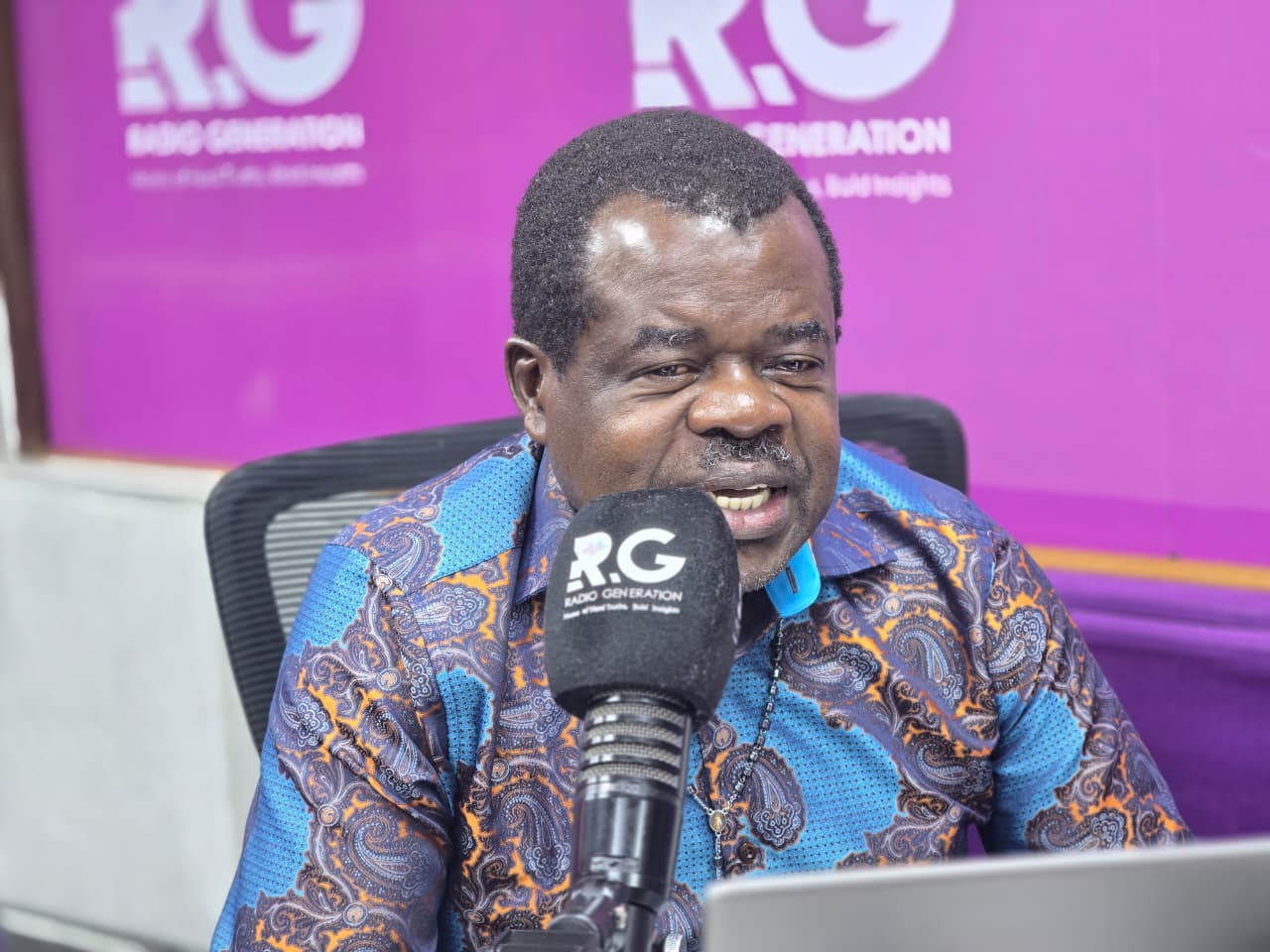
Questions have emerged over how Kenya accounts for billions of shillings in borrowed money, with Busia Senator Okiya Omtatah warning that gaps in existing laws could allow the government to access and spend public funds without following the full parliamentary approval process.
Omtatah says provisions in several public finance laws have created avenues through which external loans, offshore funds and revenue-backed financing arrangements could operate beyond the usual budgetary controls, limiting Parliament's ability to monitor how public resources are used.
In a detailed examination of Kenya's public finance framework, the senator argues that the country's corruption problem cannot be addressed by focusing only on procurement and government spending. He wants greater attention paid to the laws governing public borrowing, the receipt of foreign loans and the movement of money through government-controlled funds.
His concerns come as the World Bank's November 2026 Kenya Economic Update identifies corruption and poor governance as major barriers to the country's economic progress.
The institution estimates that governance failures add approximately two percentage points of gross domestic product to Kenya's annual fiscal deficit, amounting to about Sh370 billion. It further warns that such weaknesses can reduce the daily earnings of informal sector workers by up to 20 per cent.
The World Bank has proposed stronger political leadership, wider use of digital government services, transparency in procurement and Power Purchase Agreements, and better implementation of audit recommendations as measures to address the problem.
However, Omtatah argues that examining how public money is spent is not enough without investigating how the government obtains and manages the funds in the first place.
One of the legal instruments he has placed under scrutiny is the Bretton Woods Agreements Act of 1963, particularly Sections 3, 4 and 5, which govern aspects of Kenya's relationship with the International Monetary Fund (IMF) and the World Bank.
Under Section 3, the Cabinet Secretary responsible for Finance is empowered to appoint individuals to sign agreements with the two international institutions and deposit instruments of acceptance.
Omtatah questions the absence of an explicit requirement in the provision for parliamentary approval before such agreements are entered into, arguing that the wording leaves room for uncertainty over the legislature's role in the process.
Section 4 addresses Kenya's financial commitments arising from membership in the IMF and World Bank. It provides for the use of non-interest-bearing, non-negotiable notes and loans to meet certain payment obligations.
The section also allows specified financial commitments, including principal and interest on qualifying loans, to be charged to the Consolidated Fund without requiring a separate appropriation.
Meanwhile, Section 5 gives particular provisions of the agreements establishing the two institutions legal force in Kenya.
The senator has also drawn attention to Article VII of the World Bank's founding agreement, which grants the institution various immunities, including protection from certain legal proceedings, seizure of its assets and executive or legislative action.
He argues that when these provisions are considered alongside Kenya's constitutional requirements on public finance management, they raise questions about the extent of parliamentary and independent oversight over money obtained through the arrangements.
According to Omtatah, the existing framework could allow foreign borrowing and the release of funds to the National Executive without corresponding expenditure being clearly provided for in the annual Appropriations Acts.
"The bank has literally thrown billions of shillings to the national executive to whimsically spend on projects without clear expenditure lines in the Appropriations Acts of the respective years."
He insists that public debt must be accompanied by clearly identified expenditure items and proper legislative approval to enable Parliament and oversight bodies to establish where the money goes and whether it is used for authorised purposes.
The senator has also questioned Section 49 of the Public Finance Management Act (PFMA), which gives the National Treasury Cabinet Secretary authority to borrow from domestic and external sources in line with fiscal responsibility principles and financial objectives contained in the latest Budget Policy Statement (BPS).
His concern centres on whether approval of the BPS by Parliament can legally be used as sufficient authority for the government to contract loans.
Omtatah argues that the BPS is intended to guide the preparation of the national budget and does not amount to an Appropriations Act or specific legislation authorising public borrowing.
"It is important to note that, annually, Parliament approves the BPS as a guidance for making the national budget, but it is not the national legislation the constitution requires to approve borrowing."
To establish whether borrowing and expenditure are properly authorised, he has proposed a comparison between annual Appropriations Acts and the Treasury's monthly Statements of Actual Revenue and Net Exchequer Issues.
The exercise, he argues, would reveal whether money borrowed and released during a financial year is connected to projects and spending programmes approved by Parliament.
It would also help establish whether all borrowed funds are properly recorded in the national budget and subjected to the necessary accountability procedures.
Omtatah has extended his concerns to Section 50(7)(b), (c) and (d) of the PFMA, which sets out provisions for handling money obtained through foreign loans.
He questions arrangements that allow some proceeds from external borrowing to be held in offshore accounts and spent outside Kenya, arguing that they could weaken constitutional safeguards governing public revenue.
Article 206 of the Constitution requires money received by or on behalf of the national government to be deposited into the Consolidated Fund or another public fund established by an Act of Parliament for a specific purpose.
It also provides that withdrawals from the Consolidated Fund must have legal authorisation and approval from the Controller of Budget.
The senator wants the provisions governing foreign loan proceeds reviewed to ensure that offshore accounts do not become a means of avoiding these requirements or limiting Parliament's ability to scrutinise public funds.
His other major concern involves the securitisation of future tax revenues through special-purpose funds established with governing boards appointed by the Executive.
Omtatah argues that these arrangements give the boards powers to borrow and spend money outside the conventional national budget process, creating structures that could operate independently of established public finance controls.
He has likened the funds to "parallel national treasuries", citing their ability to raise and utilise money without following the borrowing, appropriation and Controller of Budget approval procedures that apply to the national government.
The senator believes such arrangements risk creating a separate system of managing public resources in which important financial decisions are made without the normal legislative scrutiny.
Taken together, his objections cover the entire public finance process, including how the government contracts debt, receives foreign funding, allocates revenue and authorises expenditure.
He wants Parliament to examine the laws governing these arrangements and ensure that all public borrowing and revenue-backed financing remain within the constitutional framework.
Omtatah maintains that closing the gaps would strengthen accountability by ensuring that public money, regardless of its source or the mechanism through which it is managed, remains subject to transparency, legislative approval and independent oversight.