
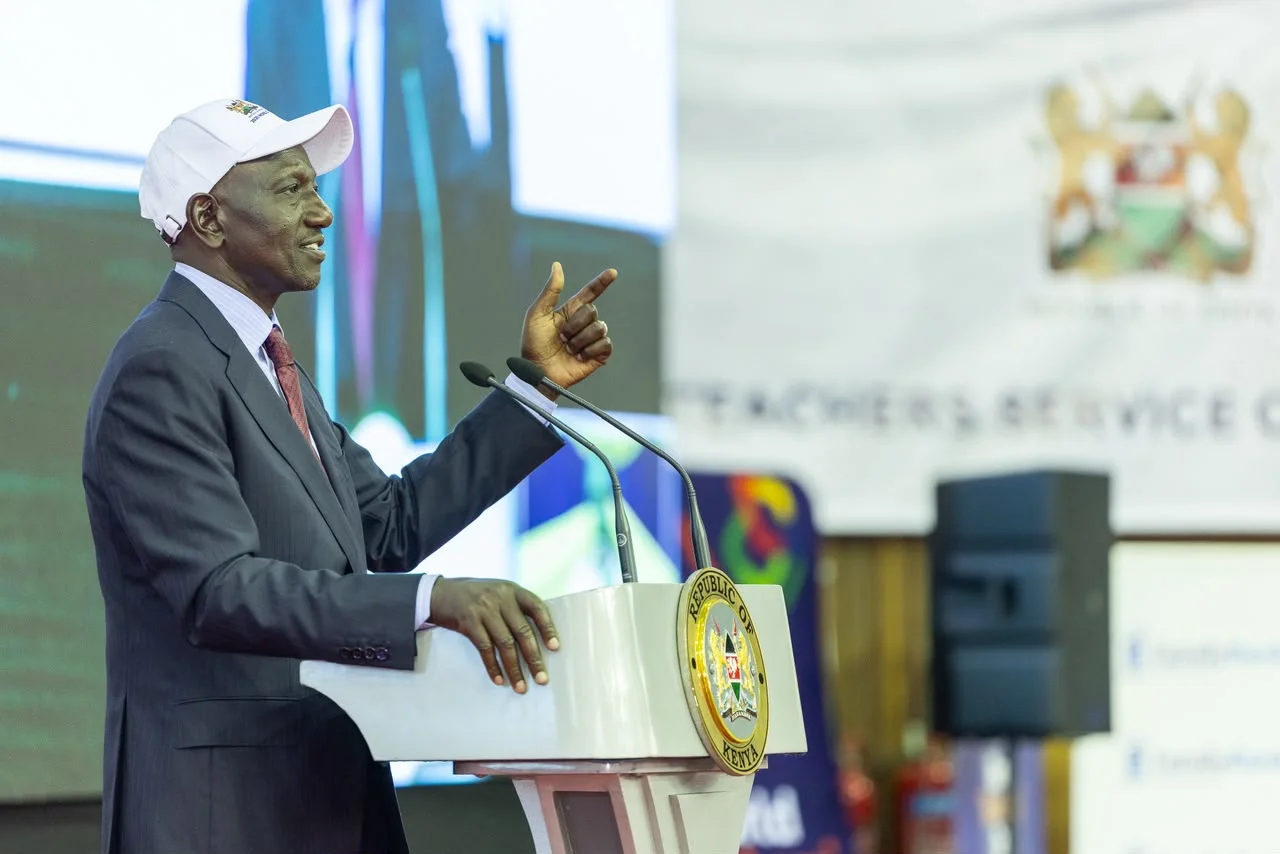
President William Ruto has ordered the government to strengthen its response to Ebola after Kenya confirmed its first imported case, with the patient dying in Nairobi and dozens of people who came into contact with the deceased now under monitoring.
Ruto directed the National Security Council Committee to meet, assess the situation and advise on measures needed to protect the country from further spread of the virus, State House Spokesperson Hussein Mohamed said in a statement on Tuesday.
The order followed confirmation by Health Cabinet Secretary Aden Duale that Kenya had recorded its first imported Ebola Virus Disease case, with the patient dying at Nairobi Hospital on Monday night while receiving treatment.
The government has since stepped up surveillance, contact tracing and other public health measures following a meeting of the National Security Council Committee.
Eight family members of the deceased have been placed under quarantine and are being monitored for symptoms every day.
"Contact tracing is ongoing. Eight family members of the deceased have been placed under quarantine and are undergoing daily symptom monitoring," State House spokesperson said in a statement.
Health authorities have also placed 21 healthcare workers who treated the patient under quarantine as a precaution. The workers are being closely watched for any signs of infection.
Contact tracing has been expanded beyond the patient's immediate contacts to include passengers who were on the same flight when the deceased travelled into Kenya.
"So far, 27 passengers who may have had contact with the deceased have been identified and contacted, and the appropriate public health measures are being undertaken," State House spokesperson said in a statement.
The government said the deceased was safely buried under established public health procedures.
Authorities have deployed surveillance and rapid response teams as Kenya builds on systems put in place since the Ebola outbreak began in May.
"As of 6 October 2026, Kenya has screened 652,584 travellers and tested 267 samples across five laboratories," State House spokesperson said in a statement.
Of the 267 samples tested in the five laboratories, one returned a positive result. The positive sample belonged to the patient who later died, with no other positive cases reported as of Tuesday.
The government said it has also increased the number of health workers trained to deal with Ebola. A total of 4,971 healthcare workers at both national and sub-national levels have received training in Ebola prevention, detection and management.
Several health facilities have been set aside to provide care for people suspected or confirmed to have Ebola.
Kenyatta National Hospital has been allocated eight beds for Ebola patients, while Moi Teaching and Referral Hospital has 50 beds. National Police Hospital has 49 beds, while The Nairobi Hospital has 143 beds.
State House said the available treatment capacity would be increased and more facilities designated if the situation requires it.
"Kenya is prepared to deal with this public health emergency," State House spokesperson said in a statement.
The government has urged the public to stay calm while remaining alert and following measures meant to reduce the risk of infection.
Kenyans have been advised to maintain strict hand hygiene and avoid contact with people showing symptoms linked to Ebola.
These symptoms include fever, severe headache, muscle pain, weakness, vomiting, diarrhoea and unexplained bleeding.
Anyone who develops such symptoms, especially after possible contact with a suspected or confirmed Ebola case, has been advised to avoid close contact with other people and seek immediate guidance and care at a recognised health facility.
The Ministry of Health is expected to issue further guidance on safeguards and preventive measures as the government continues to monitor developments.