
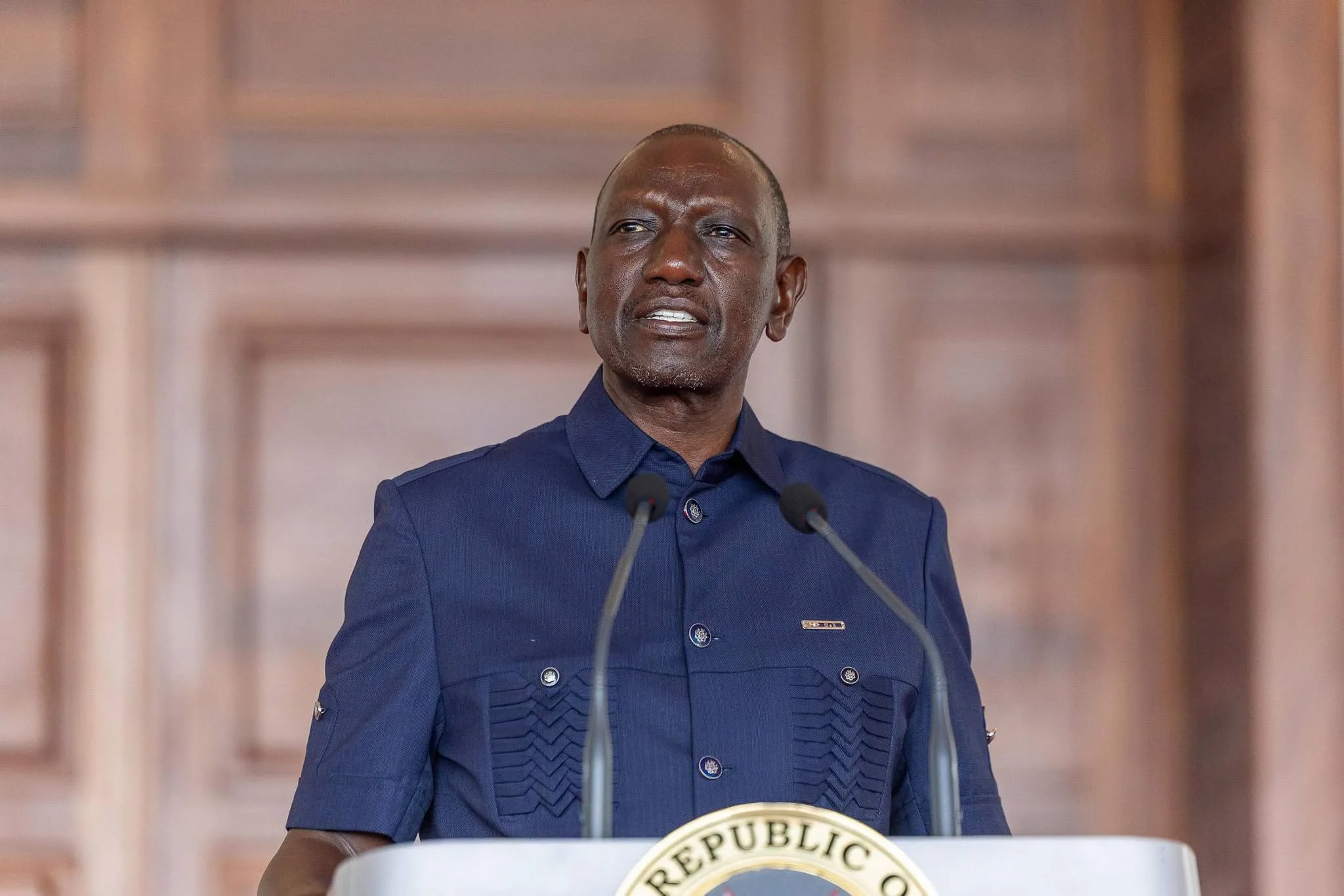
President William Ruto has challenged the European Union (EU) to support reforms in the global financial system, warning that high borrowing costs and growing debt obligations are limiting Africa’s ability to fund development, build climate resilience and achieve its economic targets.
Ruto said African countries could not make meaningful progress towards industrialisation and the Sustainable Development Goals (SDGs) if they continued to face expensive loans and limited access to affordable development financing.
Speaking on Thursday during a meeting with heads of EU delegations to African countries at State House, Nairobi, the President called for a fairer international financial system that would give developing economies better access to affordable credit.
“Equally urgent is reform of the international financial architecture,” he said.
“We count on EU support for fairer access to affordable development financing.”
He urged the European bloc to help African countries secure cheaper funding through concessional loans and blended financing arrangements, arguing that more accessible capital was necessary to support long-term economic growth.
According to Ruto, Africa needs additional resources to expand infrastructure, strengthen manufacturing, improve agricultural production, develop energy systems and invest in healthcare.
He said such investments would also help African countries build stronger domestic industries, create employment opportunities and reduce their dependence on external support.
The President also appealed to European investors to increase their presence in Kenya, saying the government was implementing regulatory and administrative changes aimed at creating a more attractive business environment.
Ruto described the EU as Kenya's largest export destination, accounting for 21 per cent of the country's total exports.
He listed tea, coffee, horticultural produce and cut flowers among the key products supplied to the European market.
The President said the Economic Partnership Agreement (EPA) between Kenya and the EU, which took effect in July 2024, should deliver greater economic returns by turning preferential market access into increased trade and investment opportunities.
However, he pointed to strict sanitary and phytosanitary standards, expensive freight services and inadequate cold-chain facilities as some of the difficulties facing Kenyan exporters.
He said these challenges were particularly difficult for smallholder farmers seeking to access European markets, despite the trade opportunities created by the agreement.
Ruto further asked the EU to speed up its support for infrastructure projects through the Global Gateway initiative, saying the programme could help mobilise affordable funding while ensuring African countries played a greater role in investment decisions.
His appeal comes as Kenya and the European Union mark 50 years of diplomatic relations, with the President urging both sides to build a stronger partnership anchored on practical results, increased investments and improved livelihoods.
He said the relationship should go beyond diplomatic engagements and signed agreements to deliver benefits that ordinary citizens could experience.
“Our partnership must be measured not by the meetings we hold or agreements we sign, but by the opportunities we create, investments we mobilise and improvements we make in the lives of our people,” he said.
Beyond trade and economic cooperation, Ruto called for changes in global governance structures to give Africa a stronger voice in international decision-making.
He singled out the continent's limited representation in the United Nations Security Council, describing it as an “unacceptable historical imbalance”.
The President urged European countries to support efforts to strengthen the African Union and promote deeper regional integration, saying African nations needed greater influence in decisions that shape their political and economic future.
Security cooperation also featured in the discussions, with Ruto seeking continued EU assistance to the African Union mission in Somalia.
He further called for European support in maritime security, intelligence-sharing and counterterrorism efforts, highlighting the need for sustained cooperation in addressing security challenges facing the continent.