

Safina Deputy Leader, Willis Otieno, has criticised President William Ruto's claims of economic stability, questioning the government's record on the cost of living as new statistics show Kenya's annual inflation rising to 7.32% in October 2026.
Otieno argued that the government's presentation of improving macroeconomic indicators did not reflect the financial difficulties facing ordinary Kenyans, particularly households struggling with rising food, transport and other essential expenses.
In a statement on Thursday, Otieno cited data from the Kenya National Bureau of Statistics (KNBS), showing that annual inflation increased from 6.76 per cent in September to 7.32 per cent in October.
The increase represents a 0.56 percentage-point rise in the annual inflation rate within one month, adding pressure to households already dealing with higher prices of essential commodities.
According to the KNBS October 2026 Consumer Price Index report, food and non-alcoholic beverages recorded annual inflation of 10.2 per cent, while transport registered 17.1 per cent. Housing, water, electricity, gas and other fuels recorded inflation of 3.7 per cent.
The statistics also showed that the overall Consumer Price Index (CPI) increased by 0.7 per cent between September and October, indicating that the general price level continued to rise during the month.
Otieno said the figures contradicted the impression that economic conditions had stabilised, arguing that the government was confusing a slower rate of price increases with an actual reduction in the cost of living.
"The economic distinction President Ruto must explain is this: a moderation in inflation is not a reduction in the cost of living. Disinflation does not reverse previous price increases. It merely means prices are rising at a different rate," he stated.
Otieno's criticism comes a day after President Ruto defended his administration's economic record during his 14th State of the Nation Address delivered before a joint sitting of Parliament on Wednesday, November 18.
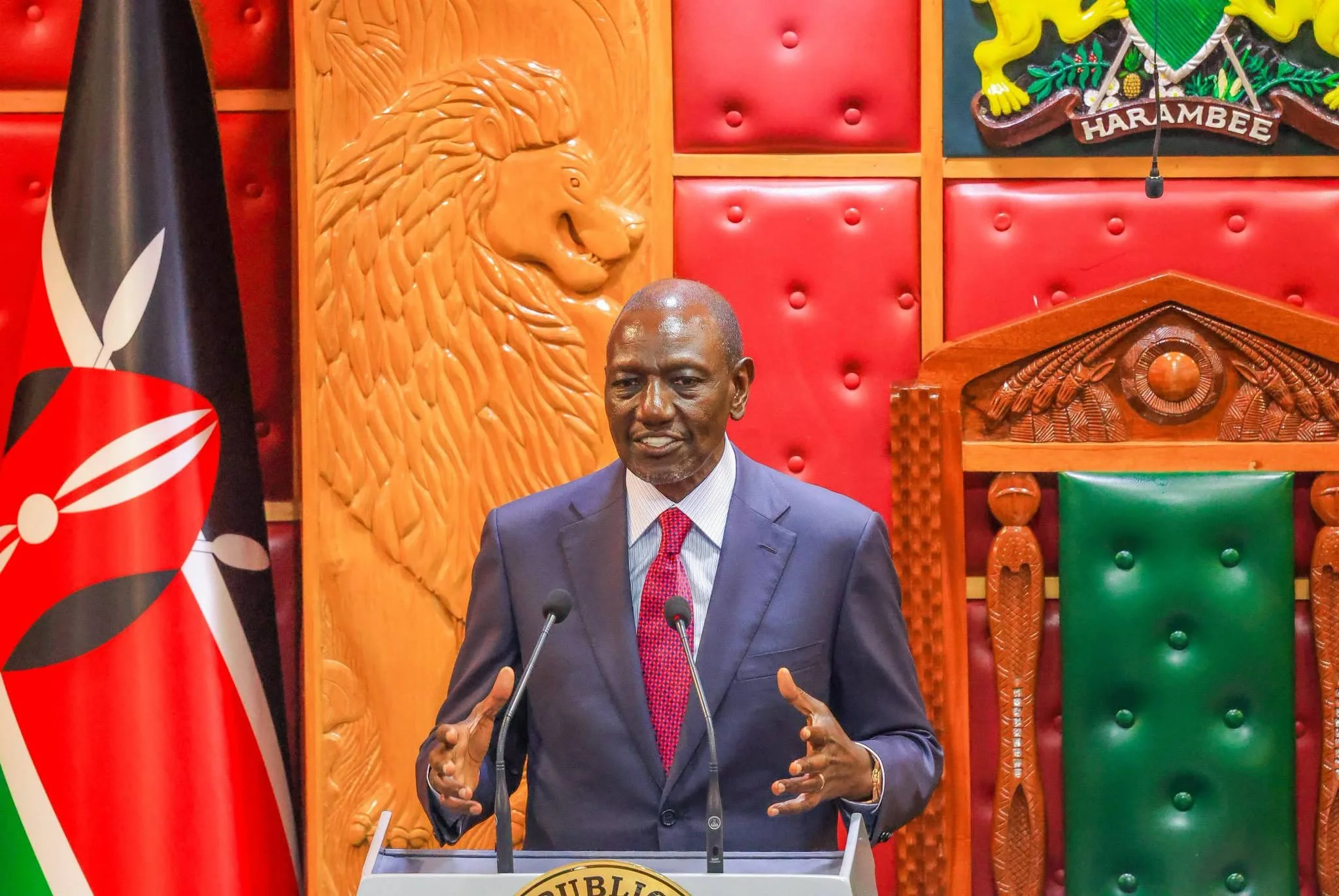
During the address, the President presented economic stability as one of the government's achievements under the Bottom-Up Economic Transformation Agenda (BETA), highlighting improvements in inflation, currency stability, agriculture and household incomes.
Ruto said inflation, which had reached 9.6 per cent in 2022, averaged 4.1 per cent in 2025, describing the decline as evidence of the economic reforms implemented by his administration.
However, the President acknowledged that renewed pressures from food and energy prices had pushed inflation higher in October, even as he maintained that the country had established a stronger economic foundation.
The government has also pointed to the stability of the Kenyan shilling, which has traded at approximately Sh129 against the US dollar, compared with nearly Sh162 in 2022, as evidence of improved economic conditions.
The Safina deputy leader however, maintained that improvements in headline economic indicators should not be used as the sole measure of recovery, arguing that the impact of government policies must be assessed against what households can afford.
He noted that food inflation of 10.2 per cent and transport inflation of 17.1 per cent were particularly concerning because low-income households spend a significant proportion of their earnings on basic necessities.
The October KNBS report further showed that food inflation had increased from 9.5 per cent in September to 10.2 per cent in October, while transport inflation rose from 15.6 per cent to 17.1 per cent over the same period.
Housing-related inflation also increased from 3.2 per cent to 3.7 per cent.
Together, food, transport and housing account for more than 57 per cent of the weighting used to calculate Kenya's overall consumer price index, making movements in these categories particularly significant to household expenditure.
Otieno argued that the rising cost of essential goods and services was reducing the purchasing power of households, particularly those whose earnings had not increased at the same pace as consumer prices.
"When food inflation is running at 10.2% and transport inflation at 17.1%, household purchasing power comes under pressure, particularly among low-income earners who spend a disproportionate share of their income on necessities," he said.
He further challenged the government to demonstrate how its economic policies were translating into tangible improvements in the lives of ordinary citizens rather than relying on national economic indicators.
According to the Safina deputy leader, the country's economic recovery should be assessed through improvements in real wages, disposable household income, employment opportunities and the purchasing power of citizens.
"The real measure of economic recovery is growth in real wages, disposable household income, employment and purchasing power. You cannot celebrate macroeconomic indicators while microeconomic conditions continue deteriorating for ordinary households," Otieno stated.
He maintained that economic stability should ultimately translate into better living conditions, with families able to meet their daily needs without facing increasing financial pressure.
The criticism adds to the debate over the government's handling of the economy as Kenya approaches the 2027 General Election, with the cost of living remaining an important issue in discussions about the administration's performance.
Otieno concluded by urging the government to prioritise policies that directly improve affordability and household welfare.
"Kenyans need an economy that makes life affordable, not a government that mistakes statistical explanations for economic relief."