
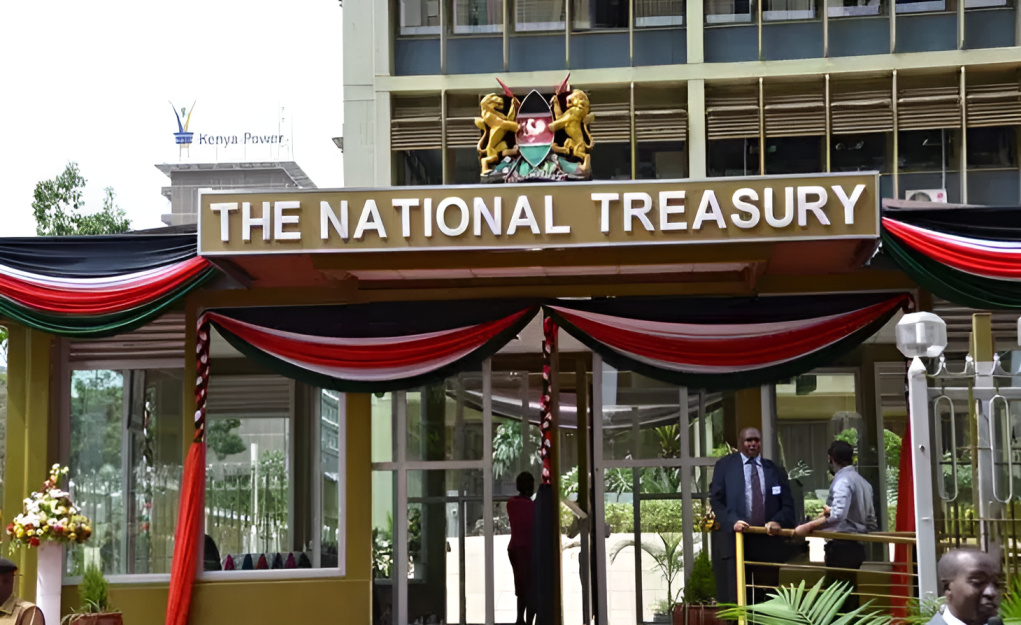
A sharp rise in money flowing to Kenya’s security agencies has placed the sector at the centre of government spending as the country moves into the final year before the 2027 General Election, with Sh44.6 billion released by the National Treasury in July.
The Ministry of Defence received the largest share at Sh19.4 billion, while the National Police Service (NPS) and the State Department for Internal Security each received Sh9.9 billion. The National Intelligence Service (NIS) was allocated Sh5.4 billion.
The amount released in July was 53 per cent more than the Sh29.1 billion given to security agencies during the same month last year. It is the biggest monthly rise in security funding recorded in a year before a General Election.
State officials have offered different reasons for the increase, including the need to improve police infrastructure, equip security agencies and support new administrative units. The timing of the rise has also raised focus on preparations for the 2027 elections.
Interior Principal Secretary Raymond Omollo said the additional money was tied to several needs within the security sector, including the government's programme to reform and modernise the police service.
"The increase reflects a number of operational and institutional priorities. First, the government's police reform and modernisation programme is ongoing, including investments aimed at strengthening police mobility, equipment, infrastructure, technology and general operational capacity," Interior Principal Secretary Raymond Omollo said.
Treasury figures show that most of the money released in July was meant for day-to-day operations. Sh39.7 billion went towards recurrent spending, including salaries and administrative expenses, while Sh4.9 billion was set aside for development.
More money for daily operations
Of the recurrent allocation, the Ministry of Defence received Sh19.1 billion. The NPS received Sh9.57 billion, while the State Department for Internal Security was allocated Sh5.6 billion and the NIS Sh5.36 billion.
The Sh39.7 billion recurrent allocation was 54 per cent higher than the Sh25.7 billion released in July 2025.
The rise also comes against the backdrop of a larger annual recurrent budget for the security sector. Treasury has increased it by 24 per cent to Sh494.4 billion.
Development spending has also gone up, rising from Sh3.4 billion in July last year to Sh4.9 billion this year. More than three-quarters of the development money went to the State Department for Internal Security.
The scale of the increase is unusual compared with previous periods before elections.
In July 2021, funding for the security sector grew by an average of six per cent. In July 2016, ahead of the 2017 General Election, funding fell by 4.7 per cent.
Treasury allocated Sh18.85 billion to the Ministry of Defence, NIS and the State Department for Interior and Citizen Services in July 2022. This was an increase from the Sh17.78 billion released in July 2021.
A year before the 2017 elections, the three security-related departments received Sh10.99 billion in July 2016. The figure was lower than the Sh11.5 billion they received during the same month in the previous year.
The wider security budget has also recorded a major jump. For the financial year ending June 2027, the sector has been allocated Sh510.8 billion, representing a 26 per cent increase, according to a Treasury statement published in the Kenya Gazette on August 14.
The increase of Sh106 billion is more than four times the rise recorded during the comparable election year in 2022. It is also 2.7 times the Sh34.9 billion increase in the financial year before the 2017 elections.
Some figures contained in the Kenya Gazette, however, do not match those in budget documents submitted to Parliament.
National Assembly Budget and Appropriations Committee chairman Samuel Atandi said MPs would examine the allocations after receiving quarterly budget reports from the relevant agencies.
He said the security sector had for years operated without enough resources and argued that additional funding could be considered if more money became available.
"We have never adequately funded the security sector. We hope that if more resources become available we can propose even more funding because this is going to be a very critical year due to the upcoming elections," Mr Atandi said.
The Alego Usonga MP said Parliament approves the budget but does not control how Treasury releases money after the budget has been passed. He added that the increases for the security sector in the current budget were minimal.
Omollo maintained that the money released to the departments under his docket had received parliamentary approval.
"Part of the funding was earmarked through Authorities to Incur Expenditure to support the operationalisation of newly established administrative units and support national government administration structures at the grassroots," the PS said.
He also said the budget provided for payments to village administrative elders after their formal recognition and inclusion in the national government administration structure.
"The budget also took into account the stipend for village administrative elders, following their formal recognition and integration into the national government administration framework," he added.
The NPS did not explain how an additional Sh20 billion allocated to it in the current financial year would be used. Instead, it directed the Nation to "financial mandarins at the NPS, Treasury and Departmental Committee on Administration and Internal Security."
The police service received Sh9.9 billion in July, which was Sh1.68 billion more than the amount it received in July last year.
Police spokesperson Nyaga Muchiri said the increase would have gone through the necessary process before approval.
"A justification for such 'upward revision' must have been done.