
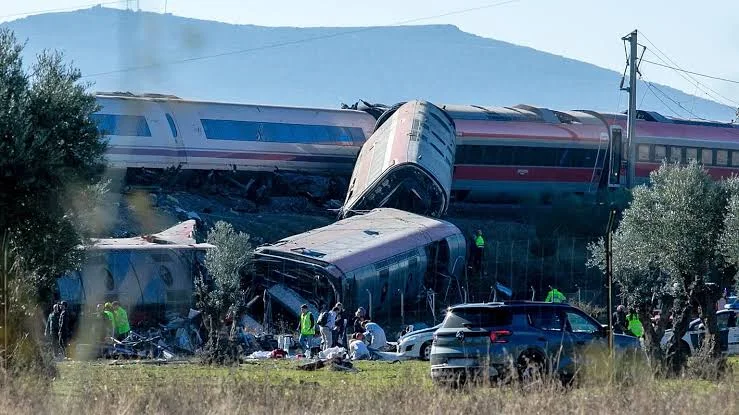
Spain has begun three days of national mourning after at least 68 people were killed when two high-speed trains collided near Urda in the Toledo province, prompting Prime Minister Pedro Sánchez to promise a thorough investigation into the country’s latest major railway disaster.
The crash on Wednesday, October 28, left dozens injured, disrupted families’ lives and intensified scrutiny of railway safety after another deadly accident earlier this year.
Sánchez announced the mourning period would run from October 29 to 31, with national flags flown at half-mast at public buildings as the country honours the victims.
“Today Spain is in mourning. All of Spain is in mourning,” Sánchez said during a visit to the accident site, expressing solidarity with bereaved families and injured passengers.
The collision occurred at approximately 8:54 am local time on Wednesday between Urda and Los Yébenes, when a Renfe-operated high-speed train struck the rear of a stationary train operated by private railway company Iryo.
The two trains were carrying a combined 544 passengers. The Renfe train had 397 people on board, while the Iryo train was carrying 147 passengers.
The force of the impact derailed several carriages, some of which plunged down an embankment, leaving passengers trapped in the wreckage and complicating rescue efforts.
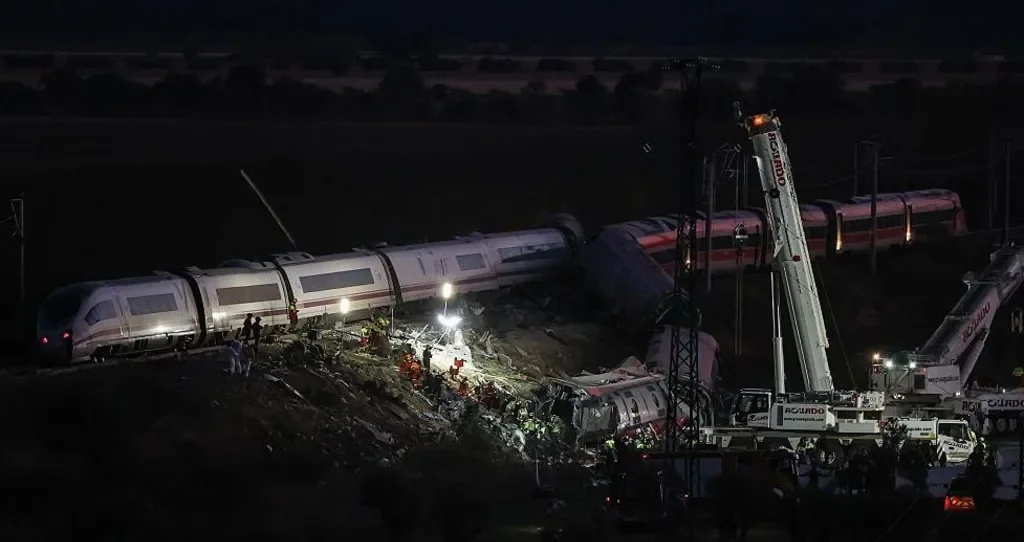
Emergency personnel worked through the night under powerful floodlights, cutting through damaged metal to recover victims and search for survivors. Drones and helicopters were also deployed to help locate victims and clear debris.
Authorities prioritised identifying the dead, tracing missing passengers and collecting DNA samples to help reunite families with their relatives. The scale of the damage and the difficulties accessing some carriages complicated the recovery operation.
Sánchez said the government’s immediate priority was to find survivors and provide material and psychological support to injured passengers and affected families.
Transport Minister Óscar Puente said a failure in the LZB railway signalling system had disrupted operations along a 63-kilometre section of the Madrid-Seville high-speed line, automatically stopping trains in the affected area.
According to Puente’s account, the railway infrastructure manager Adif’s control centre in Madrid subsequently authorised the Renfe train to resume moving, despite the Iryo train remaining on the tracks.
The Renfe train travelled approximately 25 kilometres before the collision. Puente described the decision to resume movement under those circumstances as “inexplicable”, saying investigators needed to establish precisely what happened before the impact.
The circumstances surrounding the authorisation, the signalling failure and the actions of railway personnel are central to the investigation. Authorities have yet to establish the full chain of events that led to the collision.
Sánchez vowed that those responsible would be held accountable if wrongdoing was established.
“We will get to the bottom of this. If there has been negligence, it will be known,” he said.
He added that any shortcomings in the safety system would be addressed decisively, pledging to take measures necessary to restore public confidence in the railway network.
The investigation is being conducted alongside efforts by emergency services to account for passengers and establish the full circumstances of the disaster.
The tragedy has intensified concern over Spain’s railway safety record, coming nine months after a separate high-speed train crash near Adamuz in Córdoba killed 46 people and injured more than 120.
That January disaster was among the country’s deadliest railway accidents in recent decades. The latest collision has renewed questions about the effectiveness of safety systems and the procedures used when trains encounter technical failures.
Sánchez cautioned against drawing premature conclusions about a connection between the two accidents, saying preliminary indications suggested they had different causes.
He nevertheless said Spain could not accept two serious high-speed rail disasters in one year and promised further safety measures if investigators identified weaknesses in the system.
The government has maintained that the independent railway accident investigation commission and judicial authorities will examine the evidence, while the relevant railway operators and infrastructure managers are expected to cooperate.
The findings will be important in determining whether the collision resulted from human error, technical failures, shortcomings in operational procedures or a combination of factors.
The disaster has also triggered political pressure on the government, with most political parties suspending campaign activities following the collision.
Alberto Núñez Feijóo, leader of Spain’s main opposition People’s Party, called for a comprehensive examination of the country’s railway infrastructure.
“Spain has the right to know what is happening with its infrastructure,” Feijóo said.
Meanwhile, Santiago Abascal, leader of the far-right Vox party, criticised the government and rejected calls to suspend political criticism during the mourning period.
Around 1,500 people gathered outside the Transport Ministry in Madrid on Wednesday night, according to Spanish broadcaster TVE, demanding accountability and the resignations of Sánchez and Puente.
Police used tear gas to disperse protesters after bottles and flares were thrown. No injuries or arrests were reported.
The Spanish Union of Railway Drivers, Semaf, was also expected to proceed with a planned strike on Thursday in defence of railway safety, adding to pressure for improvements across the network.
As Spain mourns the victims, European Union flags are flying at half-mast in Brussels as a sign of solidarity.
The latest collision is the country’s deadliest rail disaster since the 2013 derailment outside Santiago de Compostela, which killed 80 people.
Authorities now face the twin challenges of identifying all victims and establishing what went wrong, as families await answers and the country demands assurances that its high-speed rail network remains safe.