International Day to Combat Islamophobia: UN chief calls for tolerance
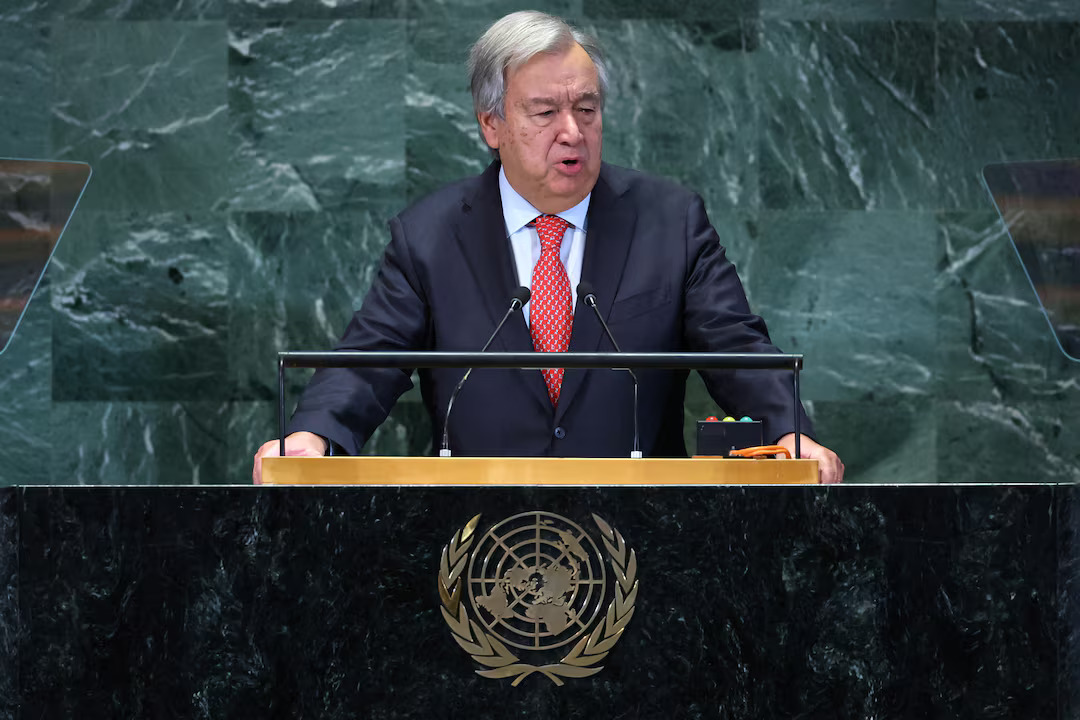
The annual observance on March 15 was established by the United Nations General Assembly to highlight the importance of respect for religious diversity and human rights and to counter discrimination and hatred against Muslims.
UN Secretary‑General António Guterres has called for tolerance as the world marks the International Day to Combat Islamophobia, urging global action against rising anti‑Muslim bigotry.
The annual observance on March 15 was established by the United Nations General Assembly to highlight the importance of respect for religious diversity and human rights and to counter discrimination and hatred against Muslims.
In a message marking this year’s day, Guterres said the world is witnessing a “disturbing rise in anti‑Muslim bigotry”, including racial profiling, discriminatory policies that undermine human dignity, and violence targeting individuals and places of worship. He warned that such hatred not only threatens Muslim communities but puts the rights and freedoms of all people at risk.
The UN chief stressed that discrimination in any form is a challenge to shared human values and called on governments to strengthen social cohesion and protect religious freedom, noting that intolerance weakens societies and fuels broader conflicts.
He also urged online platforms to curb hate speech and harassment, saying technology companies have a responsibility to fight the spread of bigotry as digital spaces remain a major source of harmful rhetoric.
“On this International Day to Combat Islamophobia, let us work together to uphold equality, human rights and dignity, and build inclusive societies where everyone, regardless of their faith, can live in peace and harmony,” Guterres said.
The observance, adopted by a UN resolution in 2022, was created to promote peace, tolerance, and mutual understanding across diverse cultures and faiths, and to reject the false association between terrorism and any religion.
In the European Union, nearly 1 in 2 Muslims (47%) experience racial discrimination, up from 39% in 2016, according to an EU report. This is the highest rates in the 13 survey countries are in Austria (71%), Germany (68%) and Finland (63%).
“Being Muslim in the EU – Experiences of Muslims” (2024) by the European Union Agency for Fundamental Rights (FRA) presents findings from a survey on the lived experiences of nearly 10,000 Muslims across 13 EU countries, conducted between 2021 and 2022.
The report is based on the experiences and opinions of 9,604 respondents who self-identified as Muslim when asked about their religion in 13 Member States: Austria, Belgium, Denmark, Finland, France, Germany, Greece, Ireland, Italy, Luxembourg, the Netherlands, Spain, and Sweden.
Muslims represent the second-largest religious group in the EU.
They comprise a distinct mix of ethnicities, religious affiliations, philosophical beliefs, political persuasions, secular tendencies, languages and cultural traditions. The most recent available estimates from the Pew Research Center are from 2016 and show that around 26 million Muslims live in the EU.
They represent about 5 % of the total population, with considerable variations in numbers across EU Member States. The number of Muslims in the EU has increased significantly in recent years due to people fleeing conflicts in Afghanistan, Iraq and Syria.


Comments
Sign in with Google to comment, reply, and like comments.
Continue with Google