
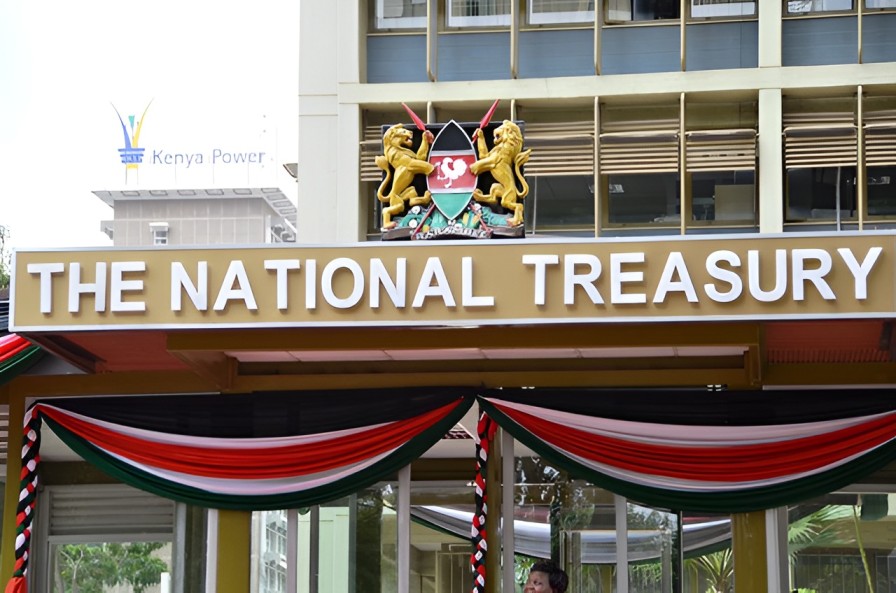
Billions of shillings continue to be set aside for government agencies that fail to spend the money, a trend that budget experts now say should come to an end if public funds are to deliver better services and faster development.
Financial experts have asked the National Treasury to stop giving large allocations to ministries and county governments that repeatedly fail to use the money within the financial year.
They said future budget decisions should be guided by an institution's ability to implement projects instead of allocating funds that later remain idle or are shifted through supplementary budgets.
The concerns were raised during a post-budget public finance discussion organised by the Institute of Certified Public Accountants of Kenya (ICPAK), where officials from the Office of the Controller of Budget said poor budget absorption continues to affect service delivery and slows down development across the country.
Deputy Director of Research and Planning at the Office of the Controller of Budget Cyrus Ondari said government spending should reflect the capacity of ministries and counties to utilise the resources they receive.
“If we know that you cannot absorb the funds, then let’s not give it to you, ministries frequently receive large allocations only to spend a fraction of the money before seeking reallocations through supplementary budgets,” Ondari said.
He said the government should move away from allocating funds that cannot be spent within the financial year, noting that the practice has contributed to repeated changes to the budget while planned projects remain incomplete.
The discussion also pointed to weak procurement systems, delayed implementation and poor project planning as some of the main reasons why development spending remains low. As projects fail to move as planned, billions of shillings are left unused while important public investments are pushed forward.
The latest Controller of Budget report covering the nine months to March 2026 also highlighted concerns over the handling of unspent public funds by some county governments.
The report shows that Bomet, Kericho, Laikipia, Nairobi City and Nandi counties did not return unspent balances from the 2024-25 financial year to their County Revenue Fund (CRF) accounts as required under Section 136 of the Public Finance Management (PFM) Act, 2012. Instead, the counties carried the balances forward and spent them in the following financial year.
“We monitor how resources allocated to national and county governments are utilised to ensure they translate into effective service delivery,” added Ondari.
The discussion comes as the government prepares to implement another national budget while facing growing debt repayments, rising recurrent expenditure and pressure to meet ambitious revenue targets.
ICPAK chief executive officer Grace Kamau said the country's budget continues to favour recurrent expenditure instead of development spending, reducing the government's ability to invest in projects that support economic growth.
She noted that out of the about Sh4.8 trillion national budget, more than three-quarters has been committed to recurrent expenditure and debt servicing.
According to Kamau, nearly Sh2 trillion has been allocated to recurrent expenditure while another Sh1.5 trillion will be used to repay debt, leaving only a small share of the budget for development.
“As we get into the next planning cycle, we must start seeing some trajectory towards reducing our expenditure on recurrent expenditure and moving towards development,” she said.
Kamau said directing more resources to infrastructure, productive sectors and other development programmes would help grow economic activity, expand the tax base and improve government revenue over time.
She added that rising debt repayment has continued to reduce the amount of money available for capital investment as more tax revenue is spent on salaries, government operations and servicing loans.
The experts also questioned whether the National Treasury's tax targets can be achieved under the current economic conditions.
Treasury is targeting about Sh3 trillion in ordinary tax revenue, alongside additional collections from appropriations-in-aid, to finance government expenditure.
Kamau warned that if revenue targets are set too high and collections fail to match expectations, the country could end up with wider budget deficits or be forced to borrow more.
“We are going to raise Sh3 trillion from taxes, but the question is how realistic is this? Are we really going to collect the Sh3 trillion?” she posed.
She said governments should avoid committing expenditure based on overly optimistic revenue projections because lower-than-expected tax collections often leave the country relying on additional borrowing to bridge the gap.