
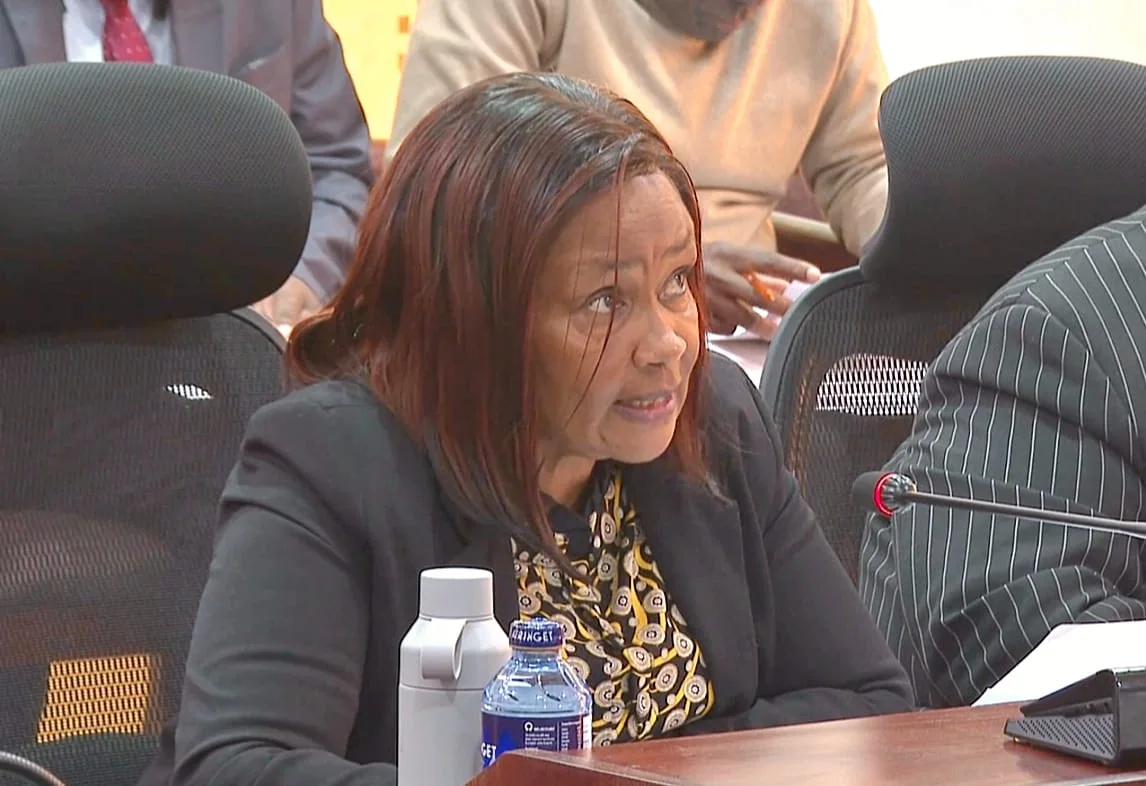
The Teachers Service Commission (TSC) has opposed proposals to convert three teacher training colleges into branches of the proposed Kenya School of Education, warning that the move could undermine the implementation of the Competency-Based Education (CBE) curriculum by worsening the shortage of teachers in critical learning areas.
The Commission, through its Acting Commission Secretary and Chief Executive Officer, Eveleen Mitei, raised the concerns in a memorandum presented before the National Assembly Committee on Education, arguing that Kibabii, Kagumo and Lugari Teacher Training Colleges should retain their independence and continue training teachers rather than being converted into conference facilities.
The TSC warned that the proposed changes under the Pre-Service Education and In-Service Training Bill, 2026, could deprive the country of the teaching workforce needed to implement the new curriculum, particularly as schools transition to emerging learning areas.
In her submission, Mitei said, “It is the Commission’s position that converting the three colleges to conference facilities will jeopardise implementation of CBE due to lack of the teaching resource.”
The Commission further cautioned that Kenya was already experiencing teacher shortages in several subjects introduced under the Competency-Based Education framework, raising questions about the country's preparedness to implement the curriculum if existing teacher training institutions were repurposed.
“Currently, the country does not have enough teachers in all the new learning areas such as pre-technical studies, Creative Arts, Science and Technology, Integrated Science, Theatre and Film, Music, Music and Dance, Sports and Recreation, Physical Education, Fine Arts, Home Science, Mathematics, Computer Studies, Agriculture, Aviation, Building Construction, Electricity, Metalwork, Power Mechanics, Woodwork, Media Technology, Marine and Fisheries Technology, Guidance and Counselling,” Mitei said.
The Commission argued that the three colleges should continue independently training teachers in the new learning areas to ensure the country has adequate personnel to support the curriculum.
It also warned that restricting the institutions to in-service training would weaken the country's capacity to produce enough teachers, particularly in science, technology, engineering and mathematics (STEM), which the government has identified as a priority under the new education framework.
“With the country’s vision to elevate the STEM pathway, converting the colleges to only offer in-service training shall deny the country the required teaching resource need,” the Commission stated.
Beyond the proposed restructuring of the colleges, the TSC challenged provisions in the Bill that could transfer teacher staffing responsibilities to the proposed Kenya School of Education.
The Commission maintained that the recruitment, employment and deployment of teachers fall within its constitutional mandate under Article 237 of the Constitution and should not be transferred to another institution.
It proposed retaining responsibility for staffing teacher training colleges, noting that the institutions are currently staffed by qualified teachers employed by the Commission.
“The Commission proposes to continue to staff Teacher Training Colleges in accordance with its Constitutional Mandate,” the memorandum stated.
The TSC also opposed provisions that could interfere with its authority over teacher management in public institutions, insisting that the responsibilities of education boards should not overlap with its constitutional functions.
It recommended amendments to the Basic Education Bill, 2026, to remove references assigning teacher management responsibilities to County Education Boards.
The Commission argued that teacher management exclusively falls within its mandate and that County Education Boards should instead focus on broader education management responsibilities.
The memorandum also called for closer collaboration between the Ministry of Education and the TSC in curriculum implementation, teacher preparation and professional standards.
On admission requirements for pre-service teacher training, the Commission proposed aligning entry qualifications with its teacher registration framework, arguing that requirements should reflect workforce needs and registration standards.
The submissions come as Parliament considers a series of education sector bills intended to reshape the administration, training, assessment, placement and financing of education in the country.
While supporting reforms aimed at improving education quality, the Commission maintained that the proposed laws must preserve its constitutional responsibilities and ensure that the country does not compromise the supply of qualified teachers.
“The Commission supports legislative reforms and other sectoral initiatives that improve access to quality education, strengthen teacher preparation and curriculum development, ensure credible assessment and certification, promote the recognition of qualifications, and expand access to education financing,” the memorandum stated.