
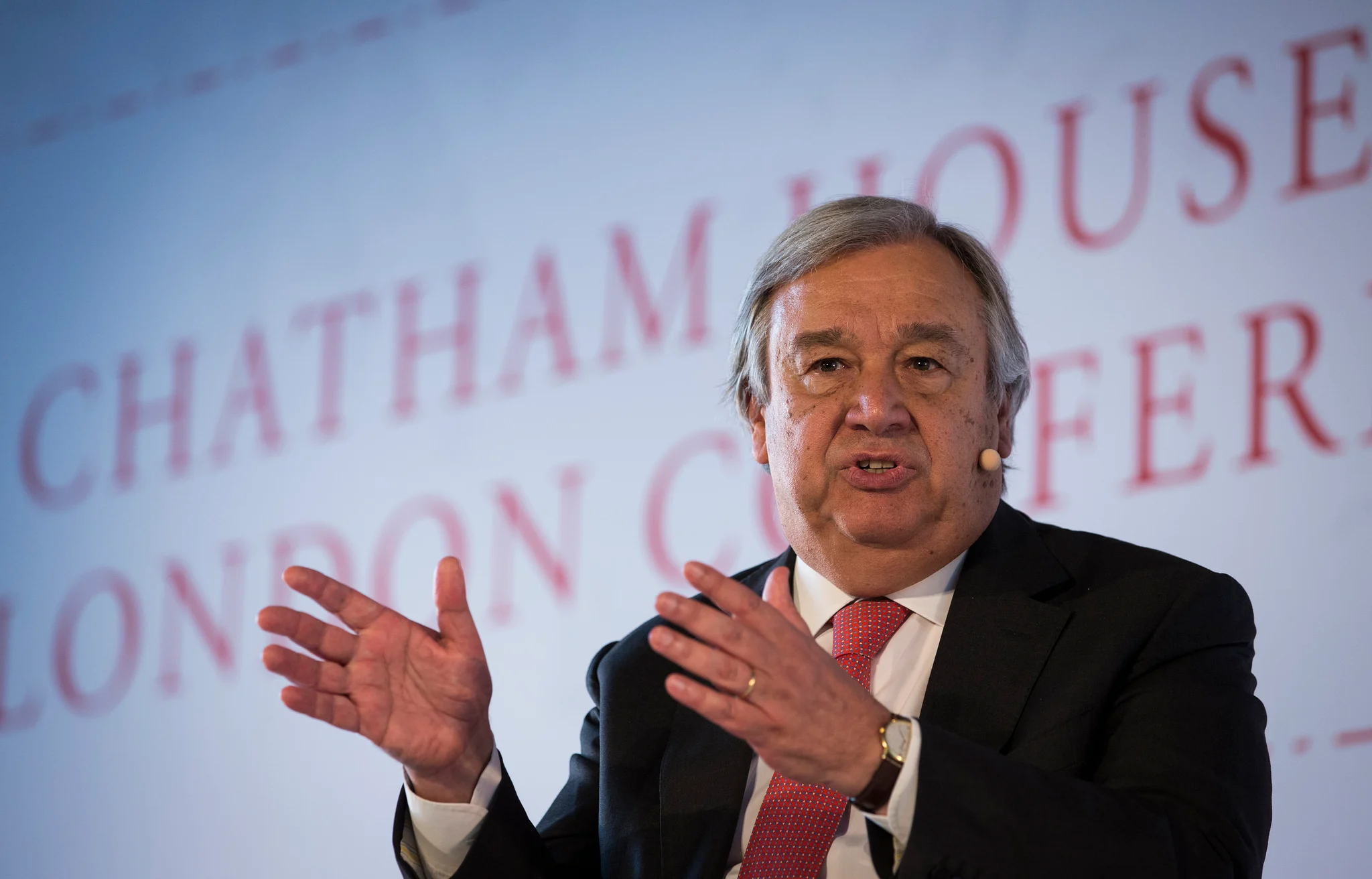
United Nations Secretary-General António Guterres has called for urgent action to end impunity for crimes against journalists, warning that media workers continue to face harassment, surveillance, imprisonment, torture and killings for carrying out their professional duties.
In his message marking the International Day to End Impunity for Crimes against Journalists on Monday, November 2, 2026, Guterres said at least 34 journalists had been killed over the past year, with six out of every seven killings going unpunished.
He described the continued failure to bring perpetrators to justice as an affront to victims, their families and the public that relies on journalism to remain informed.
“Across the world, journalists continue to pay an outrageous price for telling the truth,” Guterres said.
The UN chief noted that journalists and other media workers play a critical role in informing the public, exposing wrongdoing and holding those in positions of authority accountable.
However, he warned that their work increasingly exposes them to threats ranging from online harassment and surveillance to physical attacks, imprisonment and murder.
“Media workers play an essential role in keeping the public informed and holding those in power accountable. But they are often harassed, surveilled, sued, physically attacked or imprisoned — and sometimes even tortured or killed — simply for doing their jobs,” he maintained.
Guterres expressed particular concern over attacks against journalists working in conflict zones, where the rate of impunity for killings is close to 100%.
He warned that the failure to investigate and prosecute those responsible allows violence against journalists to continue while denying victims and their families justice.
“This scandal must end,” he attributed.
The UN Chief urged governments to ensure that attacks against journalists are thoroughly investigated and perpetrators held accountable.
He said protecting journalists requires more than condemning attacks, calling for investigations into every case, prosecution of those responsible and action against online attacks targeting media workers.
“Nothing should impede journalists’ ability to do their work, which is fundamental to human rights, democracy and the rule of law. That includes investigating every case, prosecuting every perpetrator and putting a stop to online attacks,” he said.
The Secretary-General also highlighted progress made through international efforts to improve the safety of journalists, although he maintained that existing interventions remain insufficient.
He noted that the impunity rate for crimes against journalists in countries not experiencing armed conflict had declined from 94 per cent to 77 per cent since the launch of the United Nations Plan of Action on the Safety of Journalists and the Issue of Impunity in 2012.
Despite the improvement, Guterres said more action was needed to ensure that attacks against media workers do not go unpunished.
The International Day to End Impunity for Crimes against Journalists is observed annually on November 2 following its proclamation by the United Nations General Assembly in December 2013.
The observance was established through Resolution A/RES/68/163, which called on member states to prevent violence against journalists, protect media workers and ensure accountability for crimes committed against them.
November 2 was selected in memory of two French journalists, Ghislaine Dupont and Claude Verlon, who were abducted and killed in Mali on November 2, 2013, while reporting on the conflict in the country.
The day seeks to draw international attention to the dangers journalists face while carrying out their work and the persistent failure to prosecute those responsible for attacks against them.
It also highlights the relationship between press freedom, access to information, accountability and the protection of democratic institutions.
The UN has repeatedly warned that impunity for crimes against journalists encourages further attacks, undermines independent reporting and limits the public's ability to access reliable information.
Guterres maintained that attacks against journalists affect society beyond the individual victims because they weaken the public's ability to receive information and participate in important national and international debates.
He warned that when journalists are silenced through intimidation, violence or murder, the consequences extend to communities that depend on independent reporting to understand events and hold institutions accountable.
The Secretary-General called for renewed international commitment to protecting media workers and ensuring justice for those targeted because of their profession.
He urged governments to strengthen investigations, prosecute perpetrators and address online attacks that increasingly threaten journalists' safety.
Concluding his message, Guterres called for justice for journalists whose lives have been lost or whose work has been interrupted through violence and intimidation.
“On this International Day to End Impunity for Crimes against Journalists, we demand justice. When journalists are targeted and their reporting is extinguished, it makes victims of us all,” he said.