
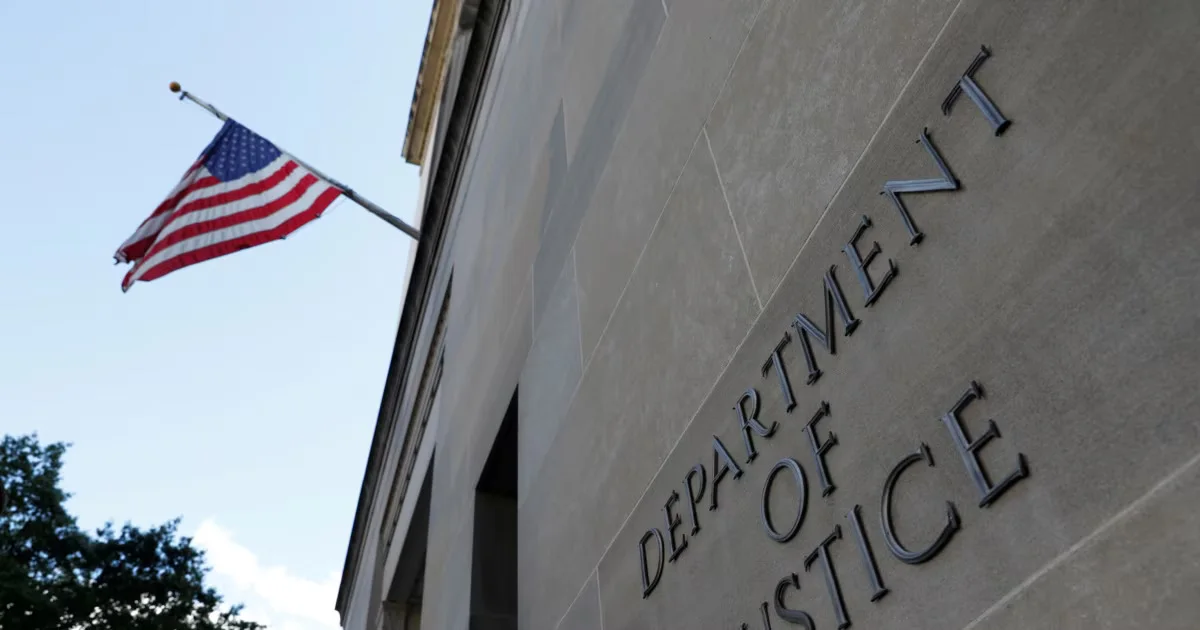
The United States Department of Justice has announced the first five indictments in a major student loan fraud investigation involving Kenyan nationals accused of using stolen American identities to enrol in colleges as fictitious students and illegally obtain federal financial aid.
Colin McDonald, the assistant attorney general for the Justice Department’s National Fraud Enforcement Division, said on Thursday that investigators identified several Kenyan nationals allegedly involved in schemes to exploit the US student aid system through so-called “ghost students.”
“The methods used in these schemes are increasingly sophisticated. Some use super intelligence to fill out college applications and complete coursework, so it looks like the ghost student is actually completing the class,” McDonald said at a news conference.
“The goal is to keep the ghost student in school for as long as possible, semester after semester after semester, stealing money from the taxpayer.”
The investigation, dubbed Operation Ghostbusters, brings together the Justice Department, US attorneys’ offices, the FBI, the Department of Education, US Customs and Border Protection, and the State Department.
In Nebraska, a grand jury indicted Francis Mogambi earlier this month on charges of theft of government money and aggravated identity theft.
Prosecutors allege that Mogambi worked with associates in Kenya to steal Americans’ identities and enrol people in colleges without their knowledge before redirecting federal financial aid payments to himself and his co-conspirators in Kenya.
Last week, Mabed Utate-Alberto, George Alfau Mendez and Patricia Perez were arrested on charges of conspiracy to commit wire fraud.
The three are accused of diverting more than 1.5 million dollars in student loan funds into Kenyan bank accounts.
In a separate case in Virginia, a grand jury last week indicted another Kenyan national on charges of conspiracy to commit wire fraud and student aid fraud, according to the Justice Department.
The defendant, whose case remains sealed, is accused of conspiring to use stolen identities belonging to US citizens to submit fraudulent federal student aid applications.
Prosecutors say the scheme resulted in more than 700 fraudulent federal student aid refund deposits and the theft of over 1.4 million dollars.
The Justice Department also disclosed that it had seized more than 750,000 dollars from a cryptocurrency account linked to the scheme, which was allegedly laundered through a wider network.
McDonald said the fraud may have been ongoing since at least 2021 and has resulted in “several hundred million dollars lost.”
Nicholas Kent, the under secretary of education, blamed the increase in student loan fraud on the Biden administration, claiming it “turned off nearly every fraud detection measure.”
Kent said the Department of Education had introduced new safeguards in federal financial aid applications requiring students to provide identification.
According to him, the measures had generated nearly 600 million dollars in savings within six months and prevented more than 2 billion dollars in attempted federal student aid fraud.
“Let me be very clear: every dollar that falls into the hands of a fraudster is $1 that will not only go to a fraudster, but not go to a poor or low-income student,” Kent said at the news conference.
“We will not stand by as fraudsters rob opportunities from our students to learn, grow, and to thrive, and we will not allow international actors to pocket the money American taxpayers have entrusted us with.”
Kent and McDonald said fraudsters frequently target lower-cost institutions, including community colleges, because their tuition and fees are relatively low.
Americans who have never attended college are also vulnerable because they have no previous student aid applications that could trigger alerts within the Department of Education's systems.
Heith Janke, assistant director of the FBI’s Criminal Division, said the agency had opened 45 investigations across dozens of offices into ghost student schemes.
Janke added that investigators had identified more than 830,000 potentially fraudulent student aid accounts created using the personally identifiable information of US citizens.
“What is even more horrifying is that our victims did not even know their information and their PII was being used,” Janke said.
“You could go completely unaware until that loan repayment notification came in, which could be years down the road.”