
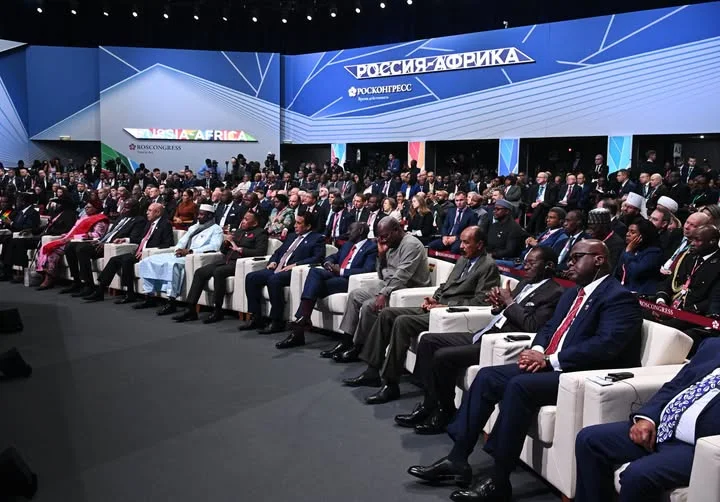
Amnesty International has urged African leaders attending the Russia-Africa Summit in Moscow to demand an immediate end to the deceptive and coercive recruitment of African nationals into the Russian military to fight in Ukraine.
In an open letter ahead of the summit, which runs from 28 to 29 October, the rights group warned that the recruitment practices amount in many cases to human trafficking, with people allegedly lured by promises of employment and exploited because of economic hardship.
“For African leaders to remain silent on this issue would be a profound disservice to the people of their countries,” said directors of Amnesty International’s sections across Africa.
The organisation called on leaders to raise the matter directly with Russian authorities and demand an end to practices that leave recruits with little or no choice but to fight in a war far from home.
It also urged African governments to push for investigations and prosecutions of those involved in trafficking, including state officials or others acting with the acquiescence of Russian authorities.
“African leaders must demand investigations and prosecutions for all acts of trafficking in persons involving state officials or others acting with the acquiescence of the Russian authorities,” the directors said.
Amnesty said African governments, while speaking out about the legacy of colonialism and defending sovereignty and African agency in international affairs, should reject the treatment of their citizens as commodities for other countries’ political and military objectives.
In a briefing published on September 10, titled Russia: Trafficking of Foreign Nationals to Fight in Ukraine, the organisation documented alleged recruitment through deception, coercion and the exploitation of economic hardship.
It said some recruits were drawn into devastating combat far from their homes, often in circumstances that left them with little or no choice but to fight.
The concerns have also emerged in Kenya, where authorities have been tracking citizens recruited into Russia’s military.
Prime Cabinet Secretary and Foreign Affairs Cabinet Secretary Musalia Mudavadi on October told Parliament that the government had records of 354 Kenyans involved in the conflict.
The government’s latest breakdown listed 77 Kenyans on the front line, 38 in military camps, 52 whose whereabouts were unknown or unclassified and 34 who were hospitalised. A further 62 had been repatriated, 84 were classified as killed or missing in action, five were prisoners of war in Ukraine, one was in detention and another had completed a military contract.
The calls come as African leaders gather in Moscow for the Russia-Africa Summit on 28 and 29 October, with Amnesty urging them to make the protection of their citizens and accountability for alleged trafficking a central issue in their engagements with Russian authorities.