
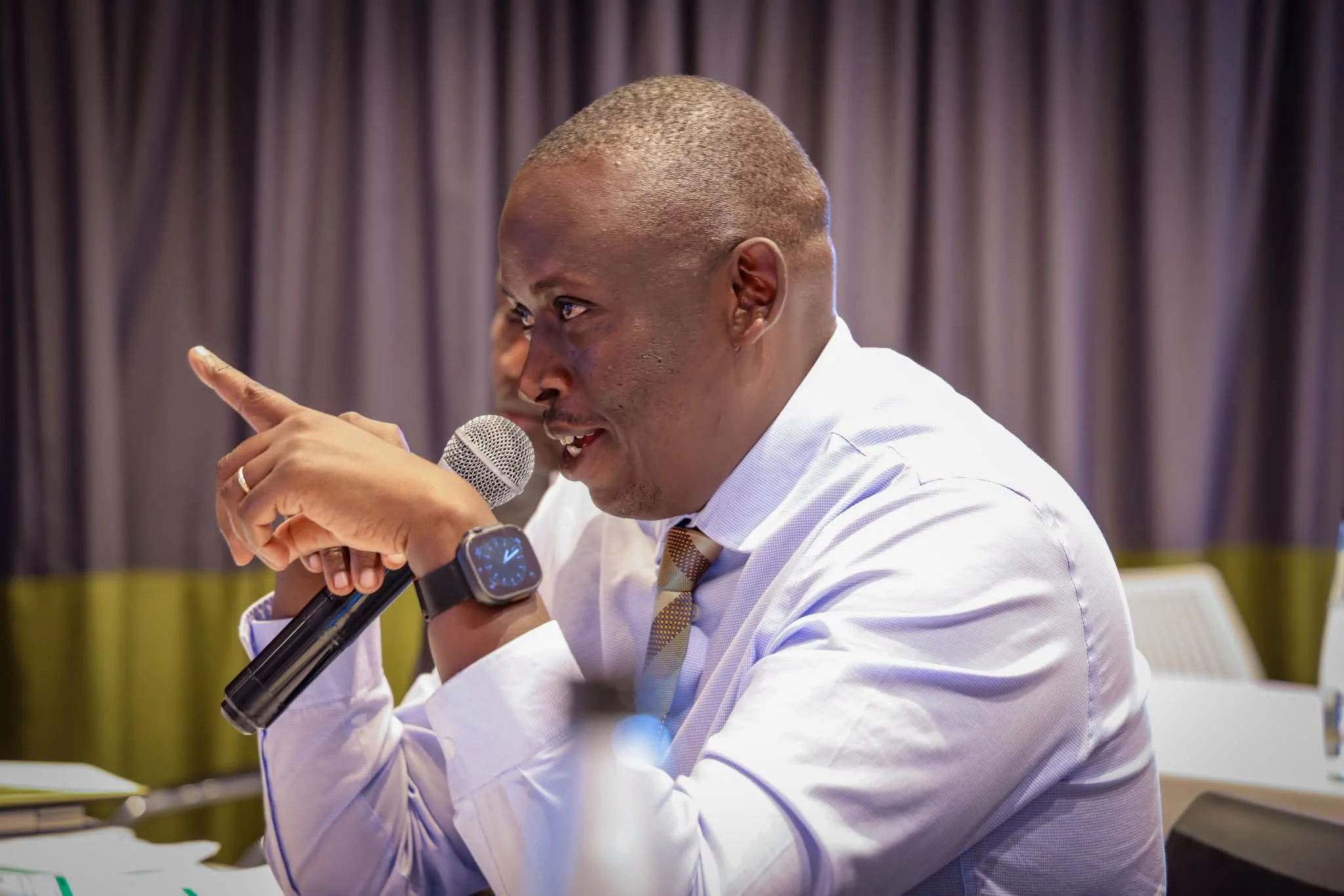
Members of the National Assembly Committee on Finance and National Planning have urged the National Government Constituencies Development Fund (NG-CDF) Board to accelerate the digitisation of its operations, saying a unified digital system could improve bursary allocation, strengthen accountability, and reduce administrative costs.
The lawmakers made the call during a budget implementation monitoring meeting with a delegation from the Board led by acting chief executive officer Benjamin Magut, where they also examined the fund’s expenditure, project approvals and outstanding disbursements.
Committee Chairman Kuria Kimani said the current bursary application process exposed students to unnecessary bureaucracy and raised concerns about fairness in allocating public funds.
“What we take our students through in bursary issuance is not fair. The bureaucracy is not necessary. We need to build a dignified digital system which ensures there’s fairness and transparency in bursaries administrators”, stated Committee Chair Kuria Kimani.
Kimani said some students had been able to apply for bursaries in multiple constituencies, potentially receiving more assistance than they needed while other deserving applicants missed out.
“There’s need to curb multiple allocation of bursaries to students where some applicants get more than they require because they had unfair access to bursary allocations by applying in multiple constituencies. There should be a digital system which ensures you only benefit once”, Hon. Kimani added.
The committee also urged the Board to strengthen the technical and digital capacity of its staff, particularly in reconciling financial statements with minimal human intervention.
Kesses lawmaker Julius Ruto said digitisation could help the Board reduce operating costs and improve value for money. He also praised the quality of the budget implementation report presented to the committee.
“Since we sat here in the morning, we have not reviewed a better report. We have been insisting on agencies making full disclosures on how they have spent monies appropriated to them, and while we have had to ask other agencies to go and revise their reports, we are happy with what we have received from the NG-CDF.’’ Rutto noted.
Magut told the lawmakers that the Board had begun developing a Smart NG-CDF operating system to improve project monitoring and trace disbursed funds to their intended purposes.
“Members, we are very keen to implement a smart NG-CDF operating system. Majority of our processes have remained manual over the years, but we have commenced the process of digitizing them. We have already rolled out a fleet e-management system and are in process of developing a project monitoring system”, he disclosed.
The digitisation programme also includes plans to introduce an Enterprise Resource Planning system, while the Board continues to strengthen financial oversight and governance across constituencies.
According to the report presented to the committee, all 290 constituencies submitted project proposals, which were reviewed within the stipulated 14-day period. The Board also reported that its governance performance score rose to 93.15 per cent, up from 88.64 per cent in the previous year.
To strengthen institutional accountability, the Board said it had trained 3,190 NG-CDF committee members, 271 Fund Account Managers, 197 National Sub-County Accountants and 270 Board Secretariat staff. The Board also conducted system audits in 126 constituencies to strengthen risk management.
However, the management of unspent funds remained a concern during the meeting, with lawmakers seeking an explanation for money that had not reached constituencies.
The Board reported that Sh3.01 billion remained undistributed at the close of the financial year on June 30, 2026, largely because of unapproved project proposals, land disputes and delays in technical approvals.
“The Sh. 3.01 billion which remained held at the close of the financial year on June 30, 2026 is primarily due to unapproved project proposals, land disputes, and delays in technical institution approvals. The Board has continued to process outstanding balances, further shrinking the held reserves in ongoing disbursement cycles”, he told the Committee.
The report also cited delays in submitting Bills of Quantities, errors in submitted estimates and pending technical approvals as factors affecting the release of funds. The Board said it continued processing outstanding balances after the end of the financial year.
In a separate disclosure on its operational expenditure, the Board reported spending Sh3.551 billion of its Sh3.644 billion approved secretariat budget, representing 97 per cent utilisation. However, spending on corporate tax exceeded its approved allocation.
Magut also told the committee that the Board intended to seek parliamentary intervention to update regulations governing its operations, arguing that the existing framework no longer reflected the current law.
“We have been operating under the framework of regulations dating back to 2015 which do not align with the current NG-CDF Act. We shall be approaching the House with a request to review the regulations to align with them with the current operational realities”, he stated.