
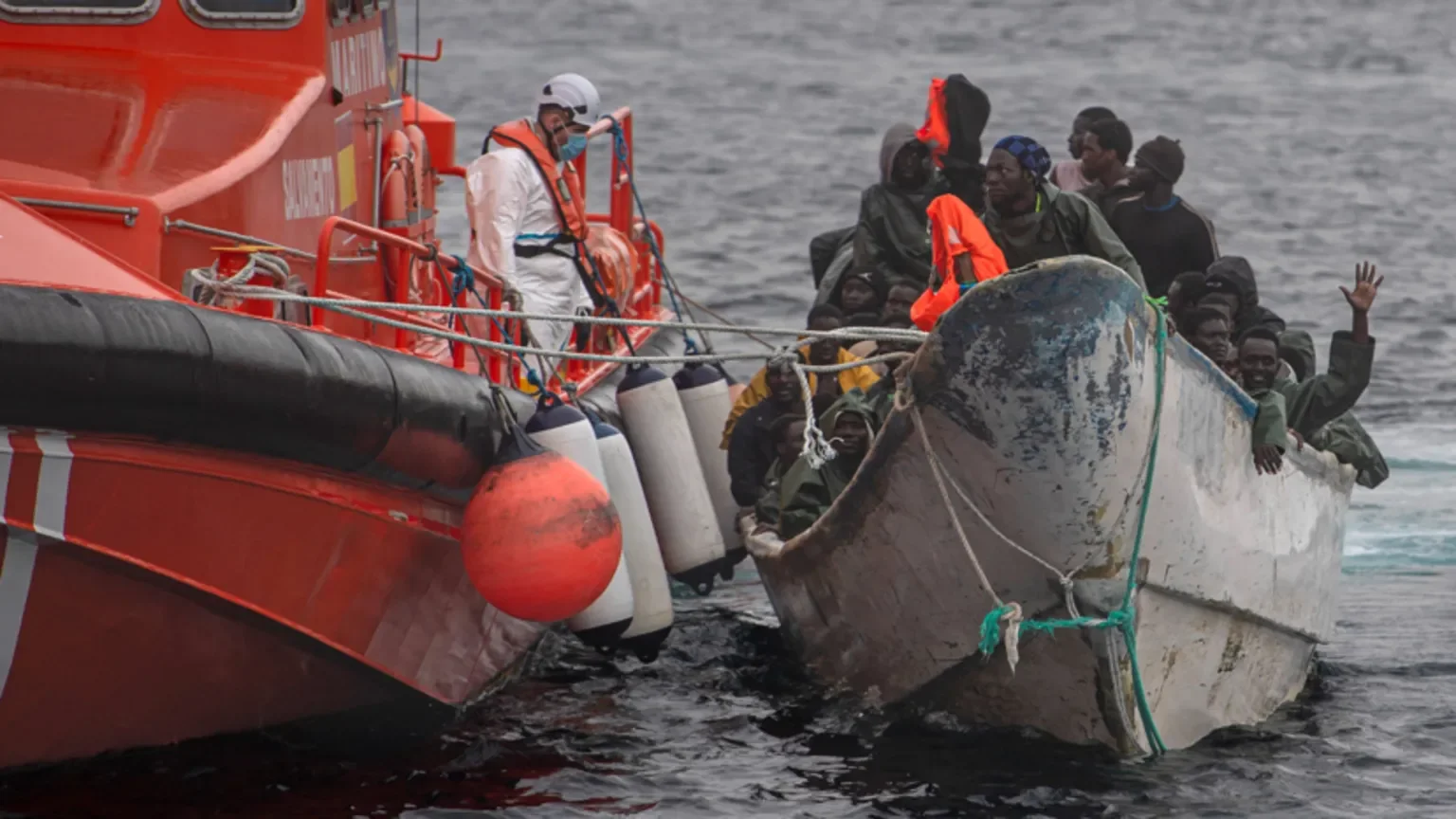
A dangerous attempt to reach Europe has turned into a deadly disaster off Senegal after a boat carrying migrants towards Spain's Canary Islands capsized, leaving at least 39 people dead and scores potentially unaccounted for as rescue operations continue.
The wooden vessel overturned in the Atlantic Ocean between Dakar, Senegal's capital, and the northern city of Saint-Louis while making its way towards the Spanish archipelago.
The Senegalese Press Agency (APS) reported that at least 39 bodies had been recovered, while the Interior Ministry confirmed that only one passenger had survived.
Authorities were yet to determine the exact number of people who had boarded the vessel, making it difficult to establish how many passengers were still missing.
The scale of the disaster has been compounded by challenging conditions along the coastline, where rescue teams are battling strong ocean currents and difficult access as they search for more victims.
Search operations are covering a 25-kilometre stretch of coastline, with powerful currents carrying bodies further south and making recovery efforts increasingly difficult.
Saliou Diouf, who founded Senegalese migrant assistance organisation Boza Fii, said the bodies recovered by Sunday evening were all believed to belong to Senegalese nationals. The identities of other passengers, however, remained unknown as authorities continued investigations.
Four more bodies were discovered on Monday morning in an advanced state of decomposition. They were subsequently buried after a collective funeral prayer conducted by the fire service.
The Interior Ministry reported that 24 victims had been identified and their bodies released to relatives, while 11 others were still awaiting identification.
President Bassirou Diomaye Faye reacted to the tragedy by sending condolences to the bereaved families and warning young Senegalese against undertaking life-threatening journeys across the ocean in pursuit of better opportunities.
He also pledged a tougher crackdown on the criminal groups responsible for arranging illegal migration journeys.
In a statement posted on X, the President said: "We will relentlessly continue the fight against those who organise these crossings and the work that gives our young people reasons to hope here," he said.
The latest deaths have drawn attention to the growing dangers along the Atlantic corridor, which has become one of the most deadly routes used by African migrants seeking entry into Europe.
Walking Borders, a Spanish migrant rights organisation, documented 635 deaths along the Atlantic route to the Canary Islands between January and May 2026. The group said this was the highest death toll recorded across the migration routes it monitors.
Its estimates indicate that approximately 21 people die for every 100 migrants who successfully make it to the Canary Islands by sea, highlighting the enormous risks involved in the crossing.
Senegal has also reported fresh attempts by migrants to make the journey despite the dangers. On Friday, security officers intercepted another boat carrying 142 people who were allegedly travelling towards Spain.
Among those intercepted were 23 women, two babies and two other children. Police said the passengers included citizens of Senegal, Gambia, Guinea-Bissau, Guinea and Nigeria.
The developments coincide with a sharp increase in arrivals on Spain's Canary Islands, where local authorities are struggling to manage the growing number of people reaching their shores.
On Saturday, a state of emergency was declared on El Hierro after more than 3,300 migrants arrived on the island in approximately 30 boats since the beginning of November.
The number of new arrivals is equivalent to almost one-third of the island's population. El Hierro is among the main European entry points for migrants making the journey from West Africa across the Atlantic.
Fernando Clavijo, president of the Canary Islands regional government, described the situation as "absolutely unsustainable," according to Reuters.
The Atlantic corridor has gained prominence as European nations strengthen border controls and increase cooperation with North African countries. These measures may have contributed to redirecting some migrant journeys away from the central Mediterranean towards the West African route.
The continued departures from Senegal have been linked to economic hardship, pressure from families and established networks that facilitate migration, according to the International Organization for Migration (IOM).
For many young people, the hope of securing employment and earning better wages in Europe remains a powerful motivation, even with the threat of drowning during the journey in overcrowded and poorly equipped vessels.
The economic situation in Senegal has added to the pressure, with nearly one in four young people unemployed during the second quarter of 2026, according to the country's statistics agency.
The high unemployment rate presents a major challenge for President Faye's administration, which has promised to create more opportunities for a predominantly young population that overwhelmingly voted him into office in the 2024 elections.
The Interior Ministry said on Sunday that authorities would continue targeting human-smuggling networks and strengthen cooperation with neighbouring countries to prevent more people from embarking on dangerous journeys.