
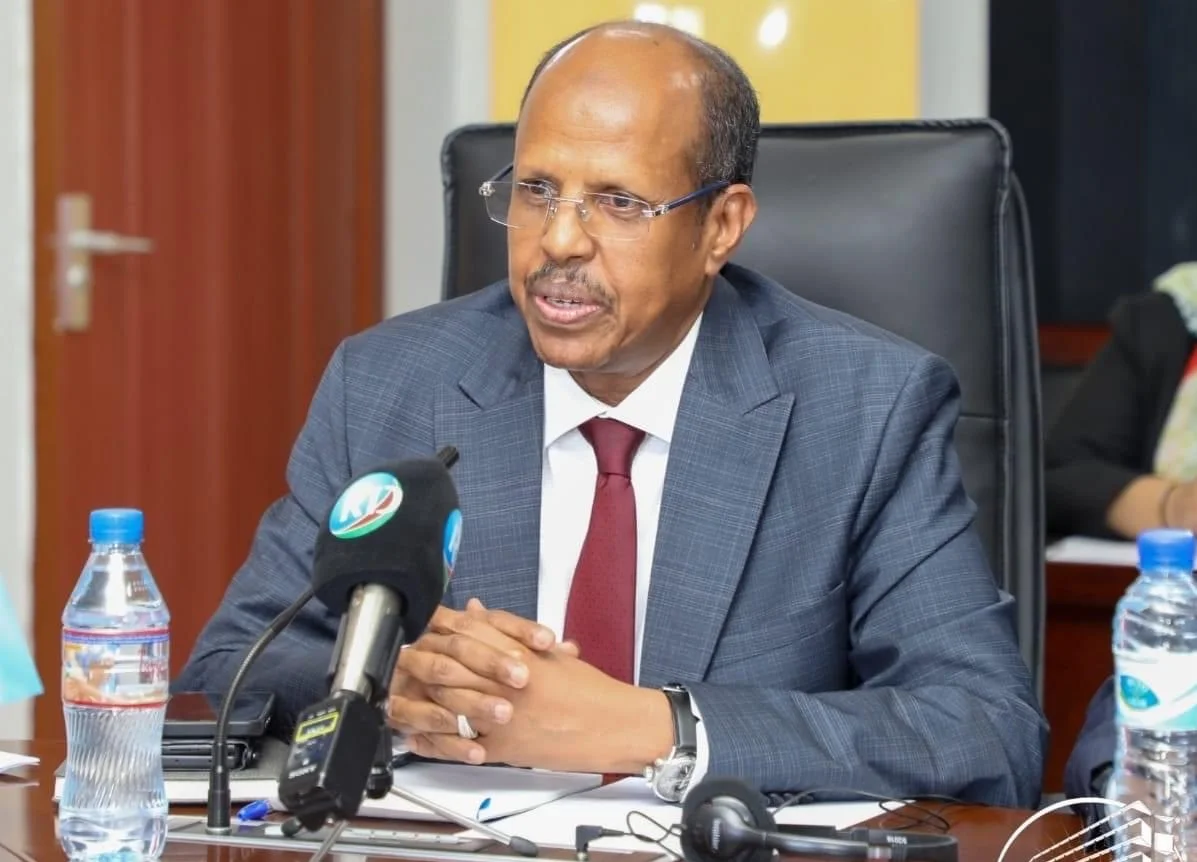
The African Union has urged political leaders and other parties in the Democratic Republic of the Congo (DRC) to avoid actions that could worsen tensions, calling for peaceful dialogue as fighting in the country's eastern region continues despite international efforts to end the conflict.
African Union Commission Chairperson Mahmoud Ali Youssouf also reaffirmed the continental body's support for President Félix Tshisekedi's efforts to organise an inclusive national dialogue that brings together political and social groups to address the country's challenges.
In a statement dated October 19, 2026, Youssouf called on all parties to put peaceful engagement first and protect the chances of reaching an agreement through negotiations.
“In this context, he calls on all political actors and concerned parties to prioritize exclusively peaceful means, to exercise restraint, and to refrain from any initiative likely to fuel tensions or compromise the prospects for dialogue and national reconciliation.” The statement read.
The appeal comes as government forces continue to battle March 23 Movement (M23) rebels in eastern DRC, where diplomatic efforts involving the United States, Qatar and the African Union have yet to bring lasting calm.
The fighting has forced millions of people from their homes and drawn neighbouring countries into a crisis linked to regional tensions, security concerns and competition over land and mineral resources. M23 has controlled Goma, the capital of North Kivu province, since January 2025.
The country's political situation has also grown more complex following the emergence of a new political-military coalition led by former President Joseph Kabila. The coalition challenges Tshisekedi's government and succeeds the Alliance Fleuve Congo (AFC) and M23 alliance, raising further questions about the direction of the conflict and the prospects for peace.
Kinshasa has repeatedly accused Rwanda of backing M23, a claim Kigali denies. Rwanda, in turn, has accused the Congolese government of supporting the Democratic Forces for the Liberation of Rwanda (FDLR), which it views as a security threat.
Against this backdrop, Youssouf called on the parties to protect progress made under the Doha and Washington peace processes, which aim to address different aspects of the conflict.
The Washington agreement, signed by the DRC and Rwanda in June 2025, sets out security commitments intended to reduce tensions between the two countries. The separate Doha process, facilitated by Qatar, seeks to secure a comprehensive peace agreement between the Congolese government and AFC/M23.
However, fighting has continued despite the diplomatic initiatives, with the implementation of ceasefire commitments and unresolved security arrangements remaining major obstacles to peace.
“The President of the Commission reaffirms the African Union’s unwavering commitment to the sovereignty, unity, and territorial integrity of the DRC. He underscores the need to preserve the gains of the Doha and Washington processes, to ensure the implementation of the commitments undertaken, to respect the ceasefire, and to guarantee the protection of civilian populations.” The AU Commission chairperson added.
Youssouf also restated the African Union's backing for mediation led by Togolese President Faure Essozimna Gnassingbé, who serves as the bloc's mediator in the DRC conflict, working alongside facilitators from the East African Community (EAC) and the Southern African Development Community (SADC).
He said the continental body remained committed to supporting efforts by regional and international partners to secure lasting peace in the DRC and the wider Great Lakes region.
“The President of the Commission reaffirms the African Union’s full support for the mediation efforts led by H.E. Faure Essozimna Gnassingbé, President of the Togolese Republic and African Union Mediator, with the support of the Facilitators’ Panel of the East African Community (EAC) and the Southern African Development Community (SADC),” the statement said.
The AU chief also recalled the organisation's commitment to its Constitutive Act, the 2000 Lomé Declaration and the African Charter on Democracy, Elections and Governance. These frameworks reject unconstitutional changes of government, including attempts to take power through force.
The latest appeal reinforces the African Union's position that political disagreements should be addressed through dialogue rather than actions that could trigger further violence or weaken efforts to reach a settlement.
With fighting persisting in eastern DRC despite diplomatic engagement, the AU is calling on the parties to honour their commitments, protect civilians and keep negotiations on course as efforts to restore peace continue.