
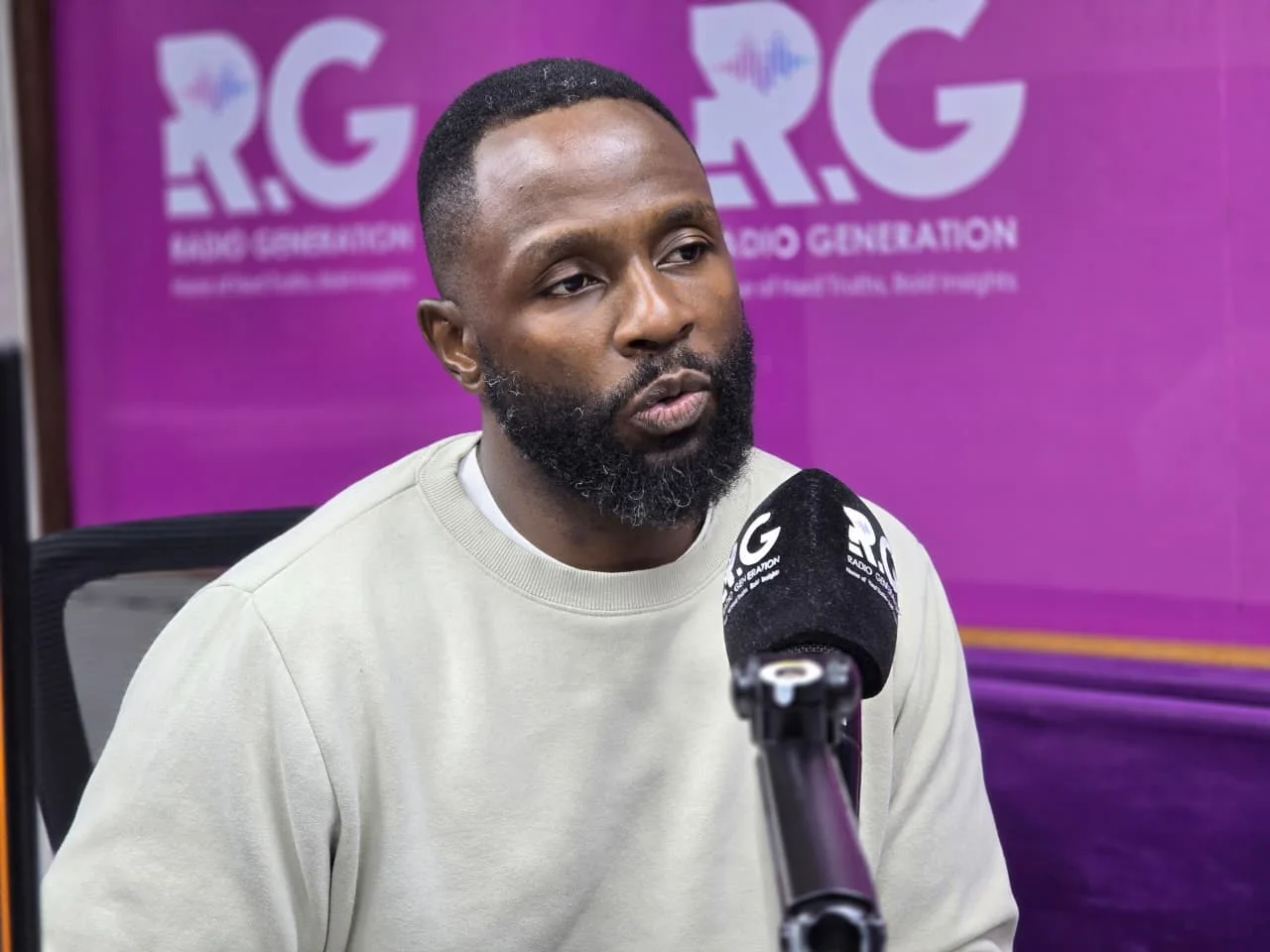
Africa Uncensored Co-Founder and Managing Partner John-Allan Namu has raised concerns over alleged corruption in Kenya’s infrastructure sector, warning that criminal networks have exploited public borrowing to siphon funds intended for major development projects.
Speaking on Radio Generation on Wednesday, Namu explained how his documentary Beg, Borrow, Steal investigates alleged schemes through which money borrowed for infrastructure development is diverted, leaving taxpayers with enormous debts but incomplete projects and inadequate public services.
He said the investigation examined how Kenya’s growing indebtedness had become vulnerable to networks that allegedly work with major contractors to manipulate infrastructure projects and divert public resources.
“Beg, Borrow, Steal essentially is a story about how Kenya's indebtedness has become subordinate to, you know, criminal networks, purported criminal networks, who are using, or rather, you know, predating off of the debt that we borrowed for large-scale infrastructure projects, then work with contractors, well-known contractors like the China Road and Bridge Corporation, to then steal that same money from infrastructure projects themselves,” Namu said.
Infrastructure projects involve substantial public investments, often financed through domestic revenue, loans and partnerships with international development institutions.
Their complexity, high construction costs and involvement of multiple contractors can also create opportunities for corruption, particularly where procurement, project supervision and accountability mechanisms are weak.
Such practices can take different forms, including inflating project costs, manipulating contracts, altering approved designs and failing to deliver components that were included in the original project specifications.
The consequences extend beyond the loss of public funds. When contractors fail to deliver agreed infrastructure, communities are left with incomplete roads, inadequate safety facilities and services that do not match the amount of money spent.
Namu, a seasoned journalist, explained that these concerns were central to the documentary, which examined how alleged financial irregularities in infrastructure projects ultimately deny Kenyans value for their money.
He cited the Western Bypass as one of the projects investigated, revealing that six interchanges that were expected to be constructed were not delivered.
“For the example of the Western Bypass that we focused on, six interchanges were unbuilt. Six, you know, that's a lot. And there's other road infrastructure that wasn't built,” he said.
The journalist further questioned the safety implications of the missing infrastructure, noting that some sections of the bypass remain without adequate street lighting and pedestrian crossing facilities.
He explained that the limited availability of footbridges has exposed pedestrians to road accidents, with people forced to cross busy sections of the highway.
Namu recounted the death of a young family man who was knocked down while crossing the road, arguing that the alleged diversion of infrastructure funds has consequences that cannot be measured in financial terms alone.
“The funeral was like two months ago, so there's a real cost to what is happening when people steal that money or siphon that money away,” he said.
He maintained that the failure to deliver essential infrastructure can translate into preventable deaths, particularly where road safety provisions are neglected.
The investigation also examined the involvement of major contractors, including China Road and Bridge Corporation (CRBC), in infrastructure projects whose implementation is under scrutiny.
Namu disclosed that Africa Uncensored had submitted questions to CRBC and another principal actor identified in the documentary, but had not received official responses by the time of the interview.
“So we sent our questions to the Quadruple C and the China Road and Bridge Corporation because they are the principal actors in this story. As of now, we haven't received a response. If we do receive a response, we will carry it.”
The documentary highlights the wider accountability challenges surrounding infrastructure financing, particularly where public institutions borrow money to fund projects whose actual delivery may fall short of contractual expectations.
For taxpayers, the implications are significant. Government borrowing creates repayment obligations that remain even when projects are incomplete, compromised, or fail to deliver their intended benefits.
This means Kenyans can ultimately bear the cost of infrastructure that does not fully serve the purpose for which the money was borrowed.
Through Beg, Borrow, Steal, Africa Uncensored seeks to expose alleged networks exploiting infrastructure financing and demonstrate how corruption can undermine development, public safety and confidence in the management of public resources.