
Millions of Kenyan girls and women have been affected by child marriage, with poverty, harmful traditions and gaps in law enforcement continuing to expose girls to early unions despite a steady decline in the national prevalence rate, the National Gender and Equality Commission (NGEC) has warned.
The commission is calling for tougher enforcement of laws protecting children, improved access to education and greater financial support for vulnerable girls, saying sustained efforts are needed to prevent early marriages and give every girl the opportunity to shape her future.
In a statement ahead of the 2026 International Day of the Girl Child, NGEC said an estimated 3.9 million Kenyan girls and women had been married before their 18th birthday, highlighting the scale of the challenge facing the country.
The international observance, marked annually on October 11, will be held this year under the theme “End Child Marriage and Invest in Girls’ Rights.”
The commission cited UNICEF estimates showing that about 640 million girls and women worldwide who are alive today were married during childhood. Each year, approximately 12 million girls enter marriage before reaching the age of 18.
Kenya has made progress in reducing the number of girls entering early unions. Data from the Kenya Demographic and Health Survey shows that the proportion of women aged 20 to 24 who had married or entered a union before turning 18 dropped from 23 per cent in 2014 to 13 per cent in 2022.
Despite the improvement, NGEC cautioned that the national figures conceal wide differences across counties and between households of different economic backgrounds.
Tana River has the highest child marriage prevalence among the counties highlighted in the data, at 43 per cent. Marsabit follows at 40 per cent, while Samburu records 37 per cent, according to figures cited from UNICEF.
The commission also noted that girls living in rural areas face a greater risk of early marriage than those in towns and cities. Prevalence stands at an estimated 16 per cent in rural areas, compared with nine per cent in urban communities.
Family income also plays a major role, with girls from the poorest households recording a prevalence rate of 29 per cent. The figure falls to six per cent among girls from the wealthiest households, illustrating the unequal burden faced by children from disadvantaged families.
NGEC warned that child marriage can have lasting effects on girls’ lives, putting their health and safety at risk, interrupting their schooling and limiting their ability to take part in economic activities.
The commission further highlighted the connection between child marriage and teenage pregnancy, whose national prevalence is estimated at 15 per cent.
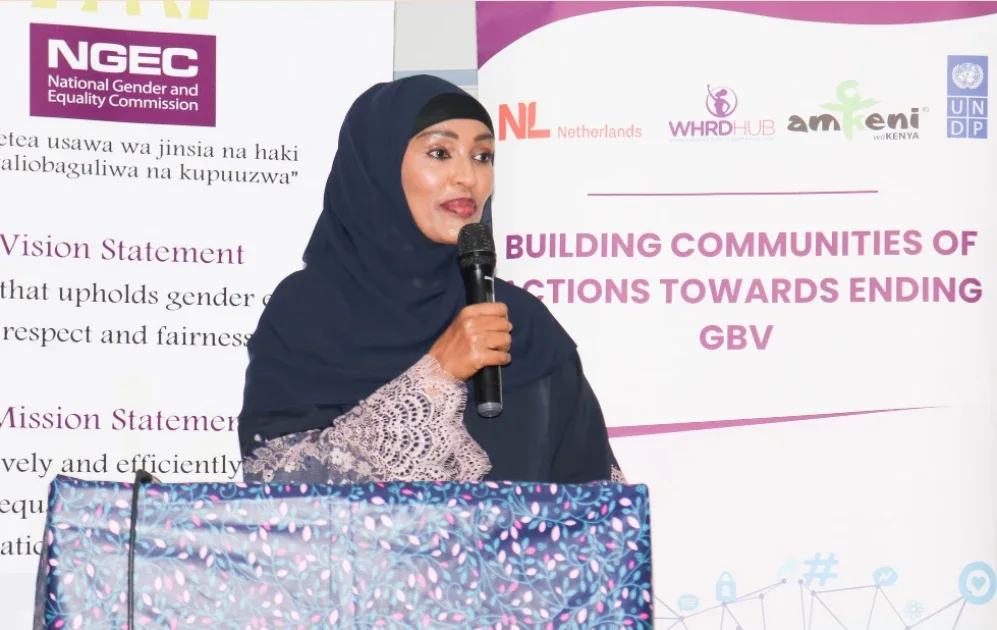
NGEC Chairperson Rehema Jaldesa said Kenya needed to turn its existing policies and commitments into effective action, particularly in areas where early marriage remains widespread.
As part of its recommendations, the commission called on law enforcement agencies, prosecutors and the Judiciary to investigate and prosecute child marriage-related offences promptly.
It also stressed that survivors and witnesses must be protected against intimidation and retaliation to ensure they can report offences and participate in legal proceedings without fear.
NGEC urged civil registration and marriage authorities to strengthen birth registration and age verification systems to prevent children from being married before reaching the legal age. The safeguards, it said, should also apply to customary and religious marriages.
The commission placed particular emphasis on education, asking the Ministry of Education and county governments to address the financial and social difficulties that force girls to leave school.
It also called for adolescent mothers and girls who leave child marriages to be given an opportunity to return to school without discrimination, allowing them to continue their education and improve their future prospects.
To make these interventions more effective, NGEC wants increased funding for bursaries, menstrual health support, life skills programmes, safe spaces and child protection services.
The commission also called for closer cooperation among health, education, child protection and justice agencies to improve the response to cases involving girls at risk of early marriage.
NGEC said efforts to end the practice should extend beyond government institutions, urging families, religious and cultural leaders, men and boys to challenge harmful social beliefs that encourage or allow child marriage.
It further called for girls to be included in decisions affecting their lives, saying communities must play an active role in protecting their rights and ensuring they can pursue their education and ambitions.
Members of the public were encouraged to report children facing abuse or at risk of early marriage through the National Child Helpline on 116 or the National Gender-Based Violence Helpline on 1195.
The commission reaffirmed its commitment to gender equality, calling for continued action to protect girls’ rights and ensure they can complete their education, remain safe and decide their own futures.