
County governments directed less than the legally required share of their spending towards development in the 2025/26 financial year, with a new budget review revealing gaps in project implementation, mounting unpaid bills and revenue collection shortfalls.
The counties allocated just 25.51 per cent of their total expenditure to development, below the mandatory 30 per cent threshold, raising questions about the pace of project delivery and the use of public funds.
The County Governments Budget Implementation Review Report for the year ending June 30, 2026, shows that counties spent Sh496.58 billion out of approved expenditure budgets of Sh648.23 billion, translating to an absorption rate of 76.6 per cent.
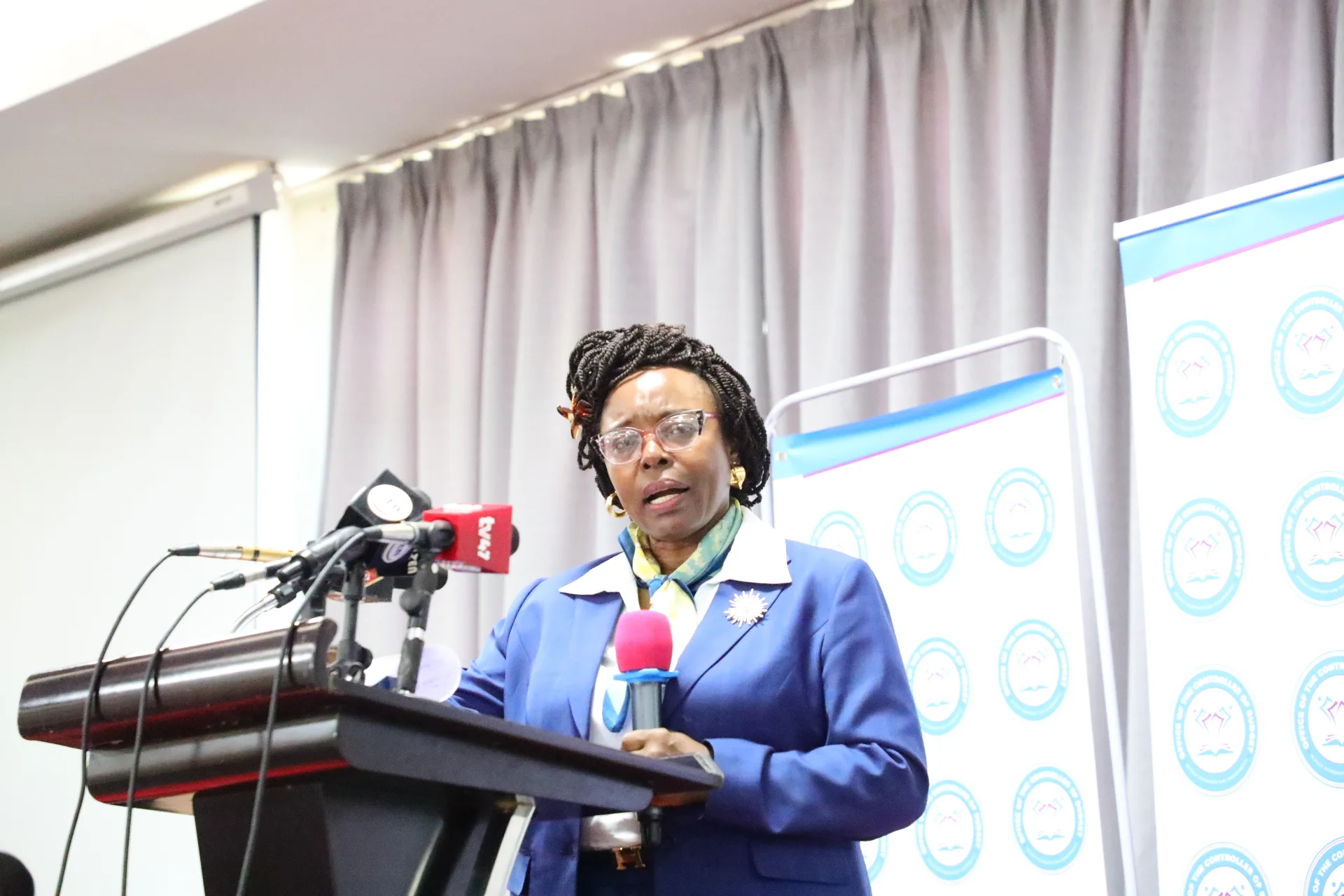
Speaking during a media engagement on Tuesday, Controller of Budget Margaret Nyakang’o presented findings showing that recurrent costs continued to take up the bulk of county spending, leaving development programmes with a smaller share of available resources.
Charles Njoroge, Director of Budget Implementation for County Governments, said Sh369.89 billion went towards recurrent expenditure, while Sh126.69 billion was spent on development projects.
The difference was also reflected in budget absorption rates, with recurrent expenditure reaching 89.2 per cent of its allocation compared with only 54.2 per cent for development.
“Only 25.51percent of total expenditure went to development, below the statutory 30 percent threshold. This affected the rollout of vital projects and public service delivery,” Njoroge said.
The review found that 42 counties absorbed less than 75 per cent of their development budgets, suggesting that many administrations struggled to implement projects within the financial year.
Low absorption means approved development allocations were not fully translated into expenditure, with potential consequences for the delivery of planned infrastructure and other public services.
Pending bills continue to burden county finances
The report also raised concerns over the growing burden of unpaid obligations, with county governments reporting Sh171.81 billion in outstanding trade payables as of June 30, 2026.
Nandi County did not disclose its pending bills, leaving its figures unavailable in the review.
Salary obligations accounted for Sh100.24 billion of the reported payables, while 42 per cent of the total outstanding bills had remained unpaid for more than three years.
The prolonged delays in settling obligations threaten to limit the money available for other county priorities, including the implementation of new projects and the provision of essential services.
“High payables reduce fiscal space and threaten current service delivery,” Njoroge stated.
The report's findings point to the pressure counties face in balancing existing financial commitments with the need to fund ongoing operations and development programmes.
Own-source revenue falls short of targets
County governments also failed to meet their local revenue collection targets, despite receiving their full equitable share from the national government.
Total revenue stood at Sh596.79 billion against budget estimates of Sh648.29 billion, representing performance of 92.06 per cent.
The equitable share from the national government amounted to Sh415 billion, while ordinary own-source revenue collections reached Sh55.69 billion against a target of Sh72.77 billion.
The shortfall indicates that counties collected less from their own revenue streams than they had planned, reducing the funds available to support their budgets.
Twenty counties collected less than 75 per cent of their own-source revenue targets, while uncollected revenue arrears reached Sh113.29 billion.
Nairobi, Nakuru and Mombasa were identified as the main areas of concern in relation to the outstanding revenue arrears.
The findings highlight the challenge county administrations face in converting expected local revenue into actual collections, even as they continue to rely on transfers from the national government to finance their activities.
The report recommends setting more realistic revenue targets and strengthening collection systems to improve performance and reduce outstanding arrears.
Wage spending remains above legal ceiling
The review also found that county governments continued to spend a higher-than-permitted share of their revenue on employee compensation.
Salaries and related costs accounted for 39.54 per cent of county revenues, exceeding the statutory ceiling of 35 per cent.
The high wage bill reduces the proportion of revenue available for development projects and other services, adding to the financial pressures created by unpaid bills and weak revenue performance.
The report's findings point to the need for counties to manage personnel costs while ensuring sufficient resources remain available for investment and service delivery.
Kwale Hospital programme records high absorption rate
Questions were also raised over spending controls after the review identified programmes whose expenditure exceeded their approved budget allocations.
In Kwale County, the development programme for Kwale Hospital recorded an absorption rate of 2,763.86 per cent.
The figure highlights a major departure from the programme's approved allocation and raises concerns about compliance with budget controls.
The report calls for stronger oversight of expenditure to ensure that county departments and programmes operate within approved budgets and public finance requirements.
115 County Public Funds require action
The review identified 115 County Public Funds established in 2016 or earlier that had lapsed and need to be re-enacted or wound up to comply with public finance regulations.
County governments are expected to address the status of the funds through the required legal processes to ensure compliance with the applicable financial management rules.
To improve performance, the report recommends that counties prioritise development projects and settle pending bills using the first-in, first-out principle, under which older obligations are paid before newer ones.
It also urges county administrations to improve revenue collection, adopt realistic revenue projections, strengthen expenditure controls and resolve the challenges delaying stalled projects.
The measures are intended to improve the use of public resources and ensure that approved budgets translate into actual projects and better services for residents.
The findings reveal a continuing gap between county budget allocations and implementation, with recurrent expenditure taking the largest share of spending while development programmes struggle to absorb their budgets. The combination of low project spending, high employee costs, unpaid bills and revenue shortfalls remains a challenge for county governments seeking to meet their financial obligations while delivering services.