
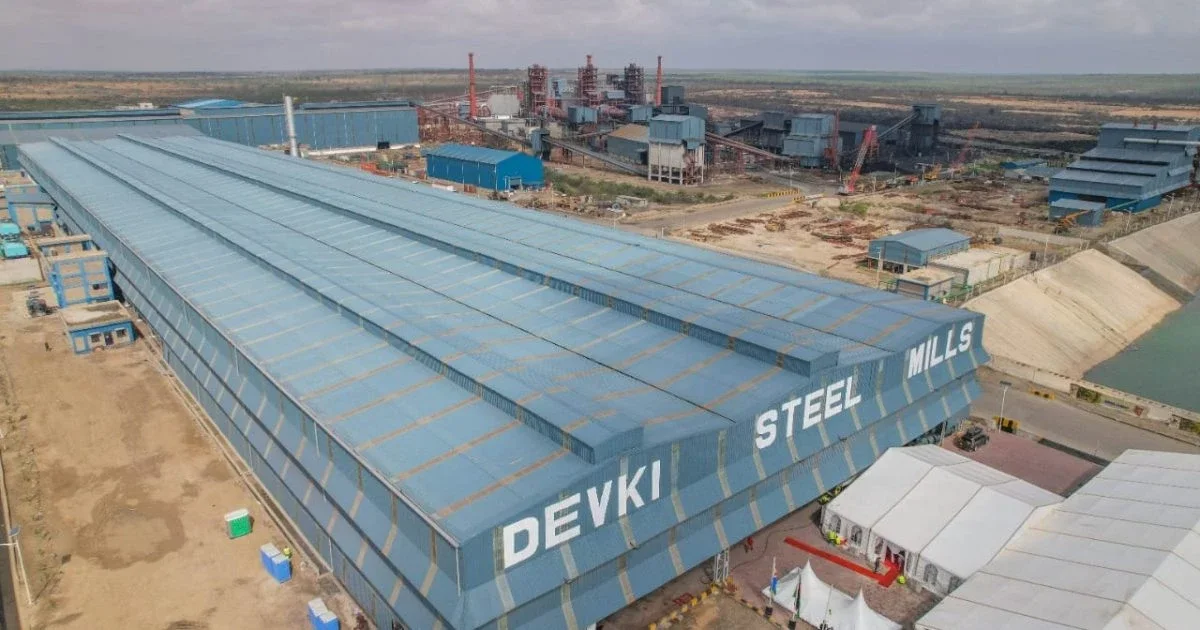
Narendra Raval’s plans to expand his steel business into iron ore extraction have advanced, with his Devki Steel Mills seeking government approval to mine the mineral across 7,371 acres in Taita-Taveta County, a move that could secure local supplies for steel production and strengthen the industrialist’s position in Kenya’s steel sector.
The proposed mining licence marks a shift from exploration to commercial extraction, following an earlier application by the company to search for iron ore and other minerals in the area.
Mining Cabinet Secretary Hassan Joho published a notice in the Kenya Gazette on October 16, 2026, inviting members of the public and affected communities to raise objections before a decision is made on the application.
“Pursuant to section 34 of the Mining Act, the Cabinet Secretary for Mining, Blue Economy and Maritime Affairs notifies receipt of an application for mining licence from Devki Steel Mills Limited, which details are set out in the schedule,” Joho said in the notice.
The proposed mining area covers 29.83 square kilometres, slightly below the 30.789 square kilometres covered by Devki’s earlier prospecting application.
In September 2025, the company sought permission to explore 7,610 acres in Taita-Taveta for iron ore and other minerals. That application was published in the Kenya Gazette on September 5, 2025.
The latest filing signals the company’s intention to move beyond searching for mineral deposits and towards extracting the ore for use in its industrial operations.
The proposed mining site is in the same locality where Devki commissioned a steel plant valued at Sh11 billion in 2024, linking its latest application to its existing investment in the county.
Raval is seeking to expand his business across more stages of steel production, from obtaining raw materials to manufacturing finished products. Access to locally mined iron ore could support that plan by providing an alternative source of the material needed to make primary steel.
Unlike secondary steel, which is produced mainly by melting scrap metal in electric arc furnaces, primary steel is made from iron-bearing raw materials. It is used in construction and major infrastructure projects, including high-rise buildings, bridges, railways and structural reinforcement.
The distinction is important for Kenya’s steel industry, where production relies heavily on recycled scrap metal. Developing an iron ore supply would give Devki an opportunity to broaden its production process and reduce its dependence on scrap-based manufacturing.
Iron ore also has applications in cement production, another business in Raval’s National Cement Group, giving the mineral potential uses beyond steelmaking.
However, the proposed mining venture faces local challenges that could affect the pace of development.
Leadership disputes at Kishushe Ranching Cooperative Society in Taita-Taveta have disrupted mining activities and discouraged investors, exposing governance problems that have complicated efforts to develop the county’s mineral resources.
Devki had planned to establish a Sh11 billion iron ore pelletisation plant in Voi, with the project relying heavily on ore from Kishushe for processing and value addition.
The plant is intended to process iron ore into pellets, a form of raw material used in iron and steel production. However, disputes over the ranch’s leadership and questions surrounding Devki’s mining licence threaten to delay the project.
The latest application therefore comes as the company seeks to secure access to the mineral resources needed to support its broader industrial plans, even as local disputes present hurdles to development.
Raval’s ambitions also extend beyond Kenya, following an agreement to export iron ore from Uganda valued at Sh15 billion annually.
The deal was brokered by President William Ruto and his Ugandan counterpart, Yoweri Museveni, as Devki sought to secure additional raw materials for its steel operations.
Uganda subsequently amended its laws to lift a five-year suspension on exports of raw and semi-processed iron ore, clearing the way for the agreement to proceed.
The proposed Taita-Taveta mine would add another potential source of iron ore to Devki’s supply chain while bringing the company closer to its ambition of producing primary steel.
Joho has given individuals and communities 42 days from the publication of the notice to submit objections to the proposed licence.
“Any objection by any person or community against the grant of the mining licence may be submitted to the Cabinet Secretary within forty-two (42) days from the date of this notice,” the October 16, 2026, gazette notice reads.
The application now faces the statutory objection period as Devki seeks to advance its plans for iron ore extraction in Taita-Taveta.