
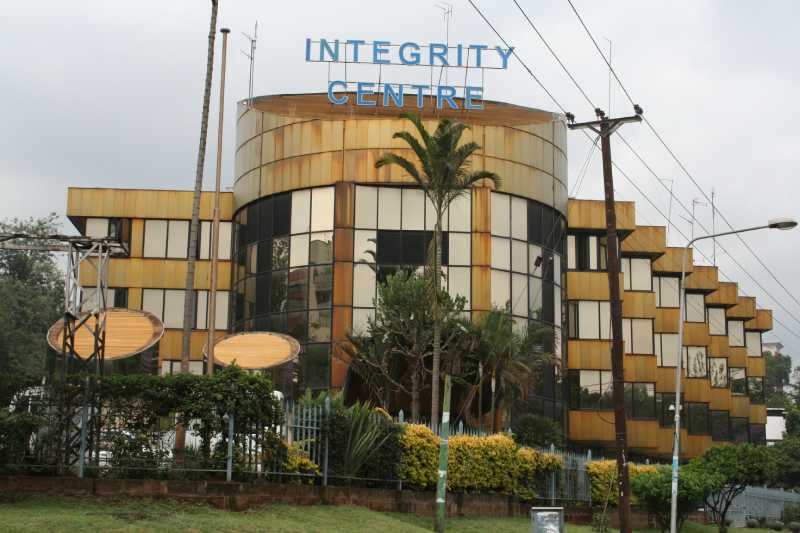
The Ethics and Anti-Corruption Commission (EACC) has secured a court order forfeiting assets worth Sh207.7 million held by a former government accountant after he failed to satisfactorily explain the source of his wealth.
The assets belong to Andrew Biketi Musuya, a former accountant at the Ministry of Public Health and Sanitation and the County Government of Trans Nzoia.
In a judgment delivered on October 8, 2026, Anti-Corruption and Economic Crimes Court judge Rose Ougo ordered that assets valued at Sh207,741,928 be forfeited to the Government of Kenya.
In its statement issued on Wednesday by EACC, the court found that Musuya had failed to explain the disproportion between the assets he acquired and his known legitimate sources of income.
The forfeiture follows investigations into wealth accumulated by Musuya between January 1, 2013, and October 31, 2018.
During that period, he accumulated assets valued at Sh289.9 million, including bank and mobile money deposits, landed properties and motor vehicles, the commission said.
The assets ordered forfeited comprise properties in Mombasa and Bungoma valued at Sh150.2 million, cumulative bank and M-Pesa deposits amounting to Sh53.5 million, and two motor vehicles valued at Sh4 million.
The properties include two five-storey apartment blocks in Mtwapa, Mombasa County, a five-bedroom townhouse in the same area and seven undeveloped parcels of land in Mombasa and Bungoma.
The EACC said its investigations established that Musuya's accumulated wealth during the period included bank and M-Pesa deposits worth Sh53,532,910, landed properties valued at Sh226.8 million and motor vehicles worth Sh9.6 million.
The commission later instituted proceedings under Section 55 of the Anti-Corruption and Economic Crimes Act (ACECA), seeking the recover Sh284,087,664 in assets it considered disproportionate to his known legitimate sources of income.
The court ultimately found that Musuya failed to satisfactorily explain the source of Sh207,741,928 and ordered the assets forfeited to the state.
The case highlights the legal process by which authorities can seek to recover unexplained assets when a person's wealth is disproportionate to their known legitimate income and the court deems the explanation unsatisfactory.
The forfeiture order covers real estate, financial deposits, and vehicles, representing assets accumulated over the period investigators examined.
EACC reaffirmed its commitment to recovering assets linked to unexplained wealth and safeguarding public resources.
“EACC remains committed to protecting public property and ensuring that public resources are preserved for the benefit of all Kenyans,” the statement read.
The recovery forms part of the commission's asset-recovery mandate under the country's anti-corruption legal framework, which provides for proceedings targeting wealth that cannot be satisfactorily accounted for through legitimate sources of income.