Koskei warns school heads against illegal charges on parents
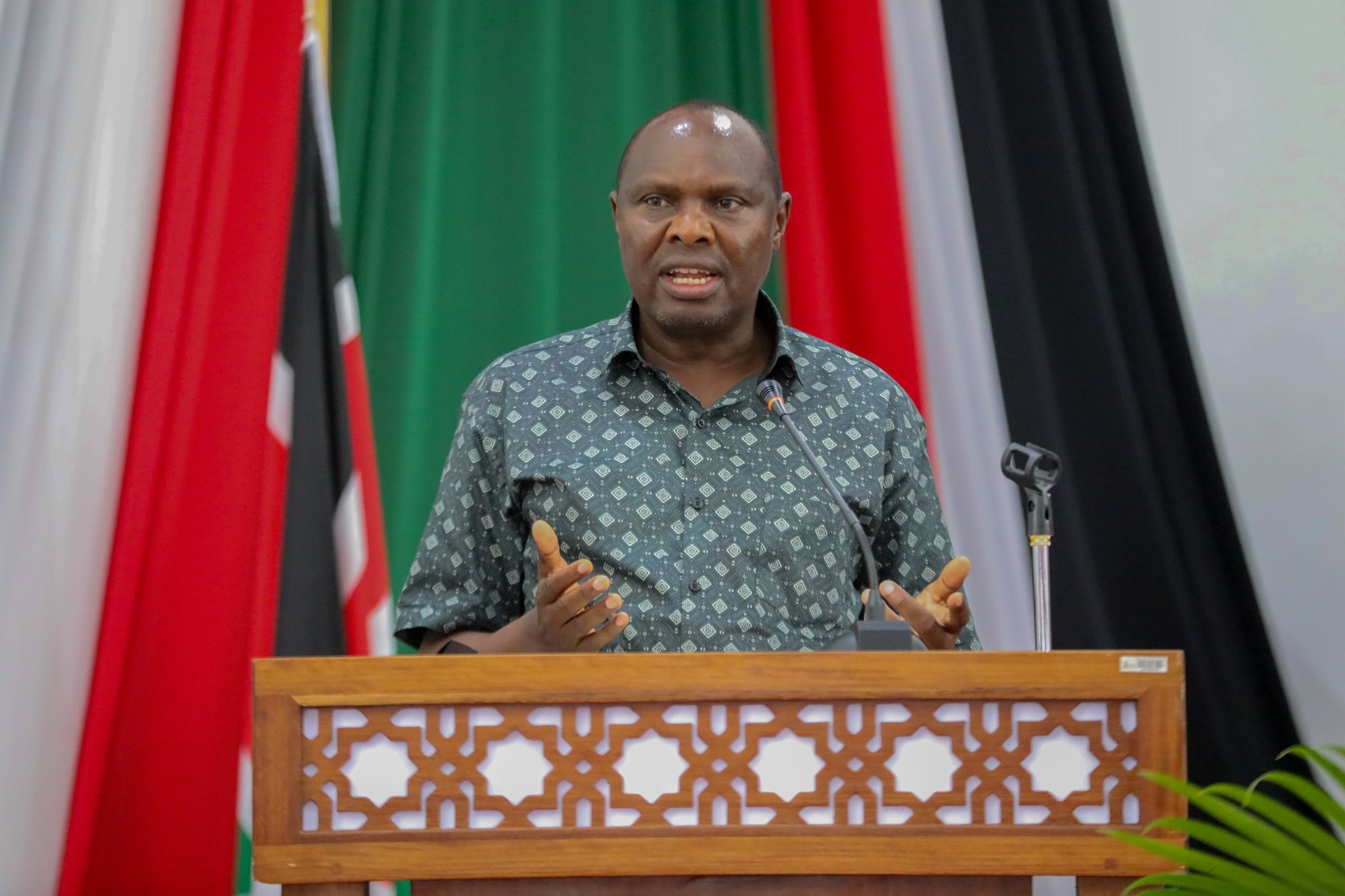
Koskei instructed school administrators and boards of management to strictly follow all government circulars and regulations on school fees to prevent the continued collection of illegal charges.
Chief of Staff and Head of Public Service Felix Koskei has warned school principals across the country against imposing extra charges on parents outside the government’s approved school fees guidelines.
Speaking during a virtual meeting attended by about 80,000 school administrators on Wednesday, Koskei said the government had received reports that some institutions were still demanding money from parents through charges disguised as payments for uniforms, sports items and equipment.
He said such practices go against government policy and place unnecessary financial pressure on families.
“Such practices undermine the spirit and intent of government policy and place unnecessary burden on parents and guardians. I wish to make it clear that such actions must stop immediately,” he said.
Koskei instructed school administrators and boards of management to strictly follow all government circulars and regulations on school fees to prevent the continued collection of illegal charges.
“Our collective responsibility is to ensure that access to education is not hindered by practices that place undue financial strain on families,” he said.
The meeting brought together principals, boards of management and senior administrative officers from public secondary schools, including heads of administration responsible for finance, accounts and procurement.
Koskei emphasised that management of schools must be guided by transparency, accountability and careful use of resources, noting that boards of management have a duty to ensure that all decisions are made openly and in the best interest of learners.
He also acknowledged that some schools face operational challenges that may require additional funding.
“If it is found that the fees guidelines that have been given are not adequate to run a school, please have a conversation with the ministry until you agree, so that we do not transfer the challenges we are having in schools to parents,” he said.
On February 6, the government released a revised fees structure for public senior schools aimed at ending arbitrary charges and protecting parents from extra financial demands.
Under the framework, the total cost per student in day schools stands at Sh22,244, which is fully funded by the government.
The breakdown includes Sh4,144 for tuition, Sh1,500 for activities, Sh2,000 for medical and insurance, and Sh200 for Strengthening of Mathematics and Science in Secondary Education.
Other allocations include Sh9,400 for administration, learning and teaching, early years education and physical education, as well as Sh5,000 for maintenance and improvement.
With the new structure in place, parents with children in day senior schools are no longer required to pay school fees.
However, boarding senior schools will continue to charge fees depending on previously approved limits.
Schools that had been allowed to charge up to Sh53,554 will now have a total fee of Sh75,798 per student, with parents contributing up to Sh53,554 while the government provides Sh22,244.
Institutions that previously charged a maximum of Sh40,535 will maintain that parental contribution, with the government adding Sh22,244 to bring the total cost to Sh62,779.
During the meeting, Willie Kuria, chairperson of the Kenya Secondary Schools Heads Association and chief principal of Murang’a High School, urged the government to review capitation to reflect the rising cost of living.
He said the current funding framework, which was introduced in 2014, no longer reflects the economic reality facing schools.
“Because of the little capitation that is coming, it becomes so difficult for schools to operate,” Kuria said.
“Even the fees that have been set up were set in 2014, and now we are in 2026 — the inflation. It has become a big problem to the school leadership when they are trying to ensure there is efficient delivery of services.”




Comments
Sign in with Google to comment, reply, and like comments.
Continue with Google