
The government cannot say how many schoolgirls have become pregnant or how many teachers have been implicated in such cases, exposing major gaps in the Ministry of Education’s ability to track teenage pregnancies across the country.
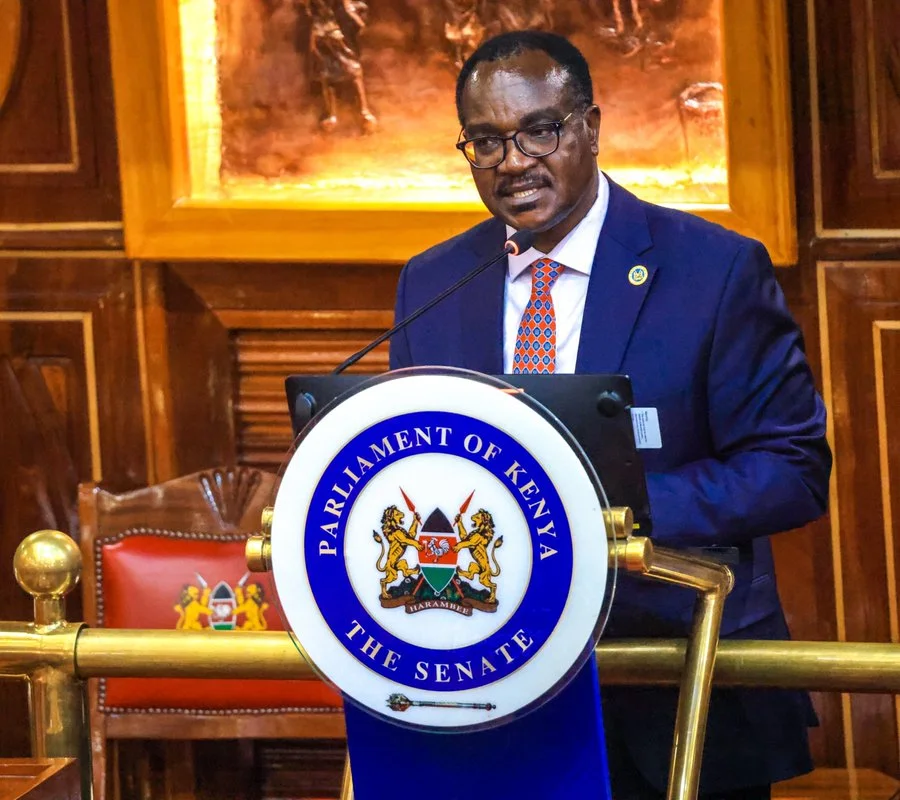
Education Cabinet Secretary Julius Ogamba told the Senate on Wednesday that the ministry does not have a comprehensive system for collecting and bringing together information on pregnancies reported among learners.
The admission came as Ogamba responded to questions from nominated Senator Catherine Mumma, who had sought detailed information on teenage pregnancies recorded in 2023 and 2024.
Mumma wanted the ministry to provide the number of learners affected in each county and sub-county, as well as information on cases involving teachers.
She also sought to know how many defilement cases had been prosecuted after pregnancies were identified within the school system.
However, Ogamba said the ministry could not provide the requested figures because it lacks a system capable of combining information from schools, disciplinary agencies and the criminal justice system.
“At present, the Ministry of Education does not have a comprehensive framework and information management system for the aggregation of data on reported pregnancies among learners and perpetrators,” Ogamba said.
The CS explained that the existing arrangement largely depends on school heads and teachers to identify pregnancies and report them.
He, however, acknowledged that the system has significant gaps, including reluctance by some school heads to disclose information.
“Some school heads are hesitant to give information due to fear of releasing secrets and weaknesses,” the CS said.
The absence of a central system has also made it difficult for the ministry to establish the number of teachers who may have been involved in cases reported within schools.
Ogamba said identifying perpetrators requires information and action from several institutions, including the Ministry of Education, Teachers Service Commission, National Police Service, Office of the Director of Public Prosecutions and the Judiciary.
He explained that a person cannot simply be listed as a perpetrator based on a report before the relevant process is completed.
“Designation as a perpetrator necessarily implies that a disciplinary and/or criminal justice process has been concluded with a finding against the suspect,” he said.
Ogamba said the government was working on reforms aimed at creating a system that would enable the different agencies to share information on teenage pregnancies and their perpetrators.
Until that system is in place, the Ministry of Education continues to rely heavily on figures from the health sector when assessing the scale of teenage pregnancies among adolescents.
According to Ogamba, Kenya Health Information Systems recorded 110,821 cases involving adolescents aged between 10 and 19 during the first five months of 2023.
Of these cases, 6,110 involved adolescents aged between 10 and 14, while 104,711 involved those aged between 15 and 19.
The data cited by the CS showed that the national teenage pregnancy rate among girls aged between 15 and 19 stood at 14.8 per cent in 2022.
Samburu recorded the highest rate at 50.1 per cent, followed by West Pokot at 36.3 per cent.
Marsabit had a rate of 29.4 per cent, while Narok recorded 28.1 per cent and Meru 23.6 per cent.
Other counties with high rates were Homa Bay at 23.2 per cent, Migori at 22.4 per cent, Kajiado at 21.8 per cent and Siaya at 20.9 per cent.
Despite having health sector figures on teenage pregnancies, the ministry does not have comprehensive information on the education status of girls after they become mothers.
Ogamba said the government could not provide complete figures showing how many child mothers had successfully returned to school and how many remained out of school.
The data gap therefore extends beyond the number of pregnancies recorded. The ministry is also unable to give a complete account of what happened to affected learners after they became mothers.
Ogamba's response to the Senate highlighted the difficulty the ministry faces in bringing together information held by schools and other agencies involved in handling cases of teenage pregnancies and alleged perpetrators.
The government is now seeking to address the problem through reforms that will allow the various agencies to share information, with the aim of creating a more complete record of pregnancies among learners and cases involving perpetrators.