
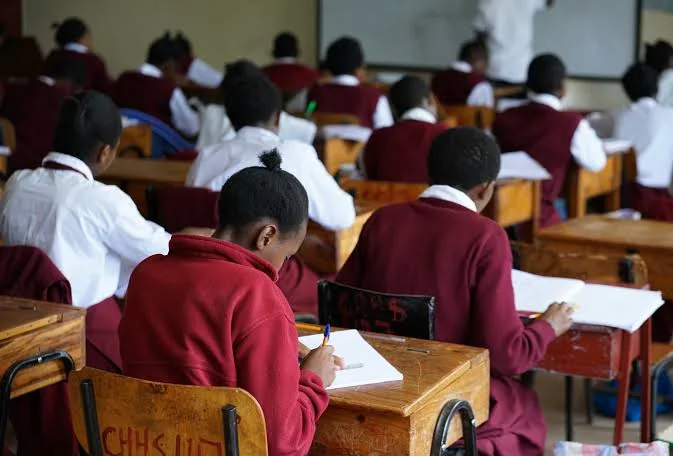
For thousands of Kenyan families, keeping a child in school is becoming a financial struggle, with a new survey showing that learners are being sent home, missing examinations and losing school days because their households cannot meet unauthorised charges.
The findings by the Elimu Bora Working Group show that more than nine out of every 10 households surveyed had either paid an illegal levy in 2025, expected to pay one in 2026 or faced demands exceeding the officially gazetted school fees.
The survey involved 388 parents, guardians and grandparents drawn from Baringo, Kakamega, Kiambu, Kisumu, Makueni, Mandera, Meru, Mombasa, Nairobi, Nakuru and Uasin Gishu counties.
Illegal charges were reported in all the counties, school clusters and school categories covered by the study.
The financial demands have had a direct effect on learners' access to education.
Nearly half of those surveyed, representing 45.9 per cent, said learners were occasionally or very often sent home or prevented from attending class because of levies.
For 17.5 per cent of learners, the disruption occurred very often.
The problem was more widespread in day schools, where 64.9 per cent of learners were reportedly sent home or barred from class because of unpaid levies.
This compared with 40.5 per cent among learners in boarding schools.
The survey further found that 60.6 per cent of day-school learners missed school days because of the charges.
More than half, at 51.1 per cent, also missed examinations or tests.
The disruption was not limited to attendance and academic assessments. Some 48.9 per cent of day-school learners were reported to have lost motivation to attend school, while 42.6 per cent experienced discrimination linked to unpaid illegal charges.
Income determines who stays in class
The findings show that household income plays a major role in determining how badly learners are affected by the levies.
Among households earning less than Sh10,000 a month, 61.3 per cent of learners were sent home at least occasionally because their families could not meet the charges.
The figure fell to 23.1 per cent among learners from households earning between Sh30,001 and Sh60,000 a month.
This means children from the lowest-income households faced a much higher risk of losing classroom time when additional school costs became due.
The extra demands have also pushed many families into difficult financial choices.
Overall, 61.6 per cent of households said the levies were difficult or impossible to afford.
Nearly 37 per cent said they very often borrowed money or sold assets to raise funds for the charges.
Remedial tuition and motivation fees were among the common additional demands, affecting 49.2 per cent of households. The median amount reported for these charges was Sh5,000.
Development levies affected another 32.2 per cent of households, with the median payment also standing at Sh5,000.
However, some households reported being asked to pay between Sh50,000 and Sh60,000 in development levies.
Such charges were also closely linked to learners being excluded from school.
Of the households that reported paying development levies, 83.3 per cent said they had experienced threats or actual cases of learners being sent home because of failure to pay.
Law protects children from exclusion
The findings have brought into focus the legal protection of children against barriers to basic education.
Kenya's Constitution guarantees every child the right to free and compulsory basic education and requires that the best interests of the child be given primary consideration.
The Basic Education Act also prohibits public schools from charging tuition fees.
Section 29 allows other charges only where the required government approval has been obtained. It further states that a child should not be denied attendance because of failure to pay such charges.
The reported practice of sending learners home over unpaid levies therefore raises concerns about whether schools are following the law.
The Elimu Bora Working Group said financial difficulties faced by parents should not result in children losing access to lessons, examinations or the chance to complete their education.
“Illegal levies are a barrier to the right to education, and the government must not allow schools to impose them and then punish children for their parents’ inability to pay.”
Certificates caught up in levy disputes
The survey also found cases in which schools allegedly withheld certificates or declined to clear learners until outstanding illegal charges had been settled.
Form Four candidates were particularly mentioned in the findings.
The reported withholding of certificates could affect learners after completing secondary education by creating difficulties as they seek to progress to higher education or enter the job market.
The Working Group said the government should ensure schools do not impose charges that have not been authorised and then penalise learners when their families fail to pay them.
It wants the Ministry of Education to urgently review school fee structures and take action against institutions found to be imposing illegal levies.
The group has also called for schools to receive full and timely capitation from the government.
It further wants confidential complaint systems to be put in place so that parents and learners can report illegal charges without worrying about retaliation.
The survey does not claim to represent the entire country because it covered 388 respondents from 11 counties.
However, its findings offer a picture of the financial difficulties reported by families and the effect of additional school charges on learners whose households cannot afford them.
The results raise concerns over whether the promise of free and compulsory basic education is being fully realised for children whose families are unable to meet demands outside officially approved school fees.