
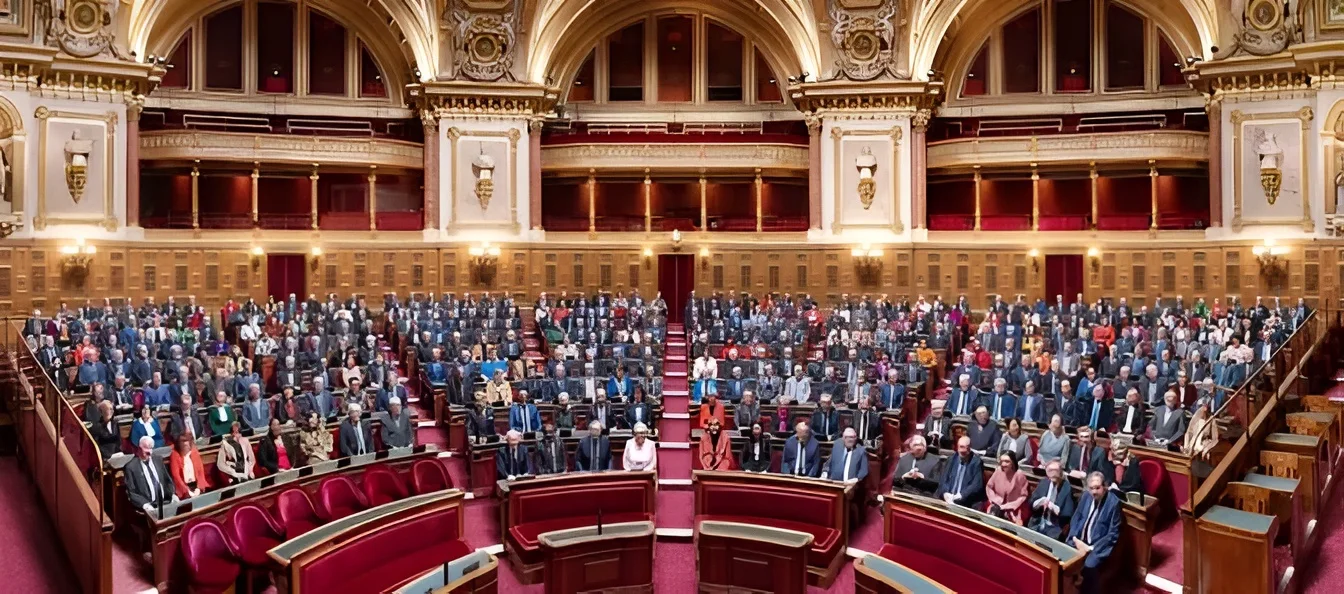
France’s Senate has passed legislation that could force protesters to pay for damage caused during demonstrations, amid growing concerns over public disorder and the potential impact of the measures on the right to protest.
The bill was approved by 229 votes to 105 on Wednesday, October 28, following support from a right-wing and centrist alliance that holds a majority in the upper house.
The legislation will now go to the National Assembly, where lawmakers will debate and vote on the proposed measures before they can become law.
The bill was initially drafted following riots that erupted after Paris Saint-Germain defeated Arsenal in the UEFA Champions League final in May. However, its significance has grown following violent demonstrations across France, including unrest on October 17 that left thousands of businesses damaged and looted.
Interior Minister Laurent Nunez said the government needed to respond to the destruction and disorder witnessed during the protests.
“We can no longer allow the vast majority of our fellow citizens to pay for a minority of vandals,” Nunez told parliament.
Under the proposed legislation, protesters could face financial liability of up to €10,000 for damage caused during street demonstrations. The measure introduces joint liability for individuals found to have knowingly participated in a group formed with the intention of committing acts of vandalism.
It would also cover people who voluntarily remain at gatherings likely to disrupt public order after receiving two police dispersal warnings.
The expanded bill further allows authorities to seize certain welfare benefits and housing assistance to recover the cost of damage. During its second reading, senators extended the provisions to include benefits such as the family supplement, back-to-school allowance and employment bonus.
France has experienced recurring waves of street demonstrations over economic hardship, inequality, government policies and the rising cost of living.
While many demonstrations have been peaceful, some have been accompanied by clashes with police, vandalism, looting and damage to businesses and public property. The unrest has fuelled debate over how authorities should balance public safety and property protection with citizens’ constitutional rights to assemble and demonstrate.
The latest legislation follows a series of violent incidents, including riots after PSG’s Champions League final victory in May. It has gained further urgency following the October 17 unrest, described in the report as among the worst violence France has experienced in years.
The proposed law seeks to make those involved in violent gatherings financially accountable for the resulting damage. However, critics argue that its provisions could extend liability beyond individuals who directly commit acts of vandalism.
Communist senator Fabien Gay criticised the proposed framework, saying it confused peaceful demonstrators with rioters.
“Legal travesty that deliberately conflates protesters and rioters,” Gay said.
Green senator Melanie Vogel also accused the government of responding to social grievances with collective punishment.
Supporters of the legislation have rejected concerns that peaceful protesters would automatically be penalised. Olivier Bitz of the centre-right Horizons party said the government needed to distinguish between those participating peacefully and those involved in destruction.
“We must not give the impression that this bill would criminalise a passer-by or a peaceful protester,” Bitz said.
Welfare concerns and proposed online restrictions
The possibility of seizing welfare payments has drawn criticism from left-wing parties, trade unions, student groups and human rights organisations, which argue that the measures could disproportionately affect low-income households.
Amnesty International France has called on the government to abandon the bill, warning that recovering damages through welfare payments could deepen financial hardship among vulnerable families.
“If passed, this bill would be a deeply regressive step,” Nathalie Godard of Amnesty International France said on Monday.
“Seizing family allowances, housing assistance, or the active solidarity income could have disastrous consequences for some of the most vulnerable people.”
Meanwhile, the Senate approved a separate measure on Tuesday allowing authorities to demand the rapid removal of social media content calling for insurrection or taking up arms against the state.
Under the proposal, platforms would have 24 hours to remove such content or risk measures including blocking or delisting.
The government says the restrictions are intended to prevent calls for violence, while critics warn that the wider measures could undermine civil liberties and encourage arbitrary enforcement.
The legislation now faces scrutiny in the National Assembly, where divisions among political factions could shape its final form.
The debate highlights the challenge facing French authorities as they seek to address violent unrest while protecting peaceful protest and avoiding disproportionate consequences for vulnerable citizens.