
The Anti-Counterfeit Authority (ACA) has intensified its nationwide campaign against fake products, making school textbooks, examination equipment, and subsidised fertiliser priorities while expanding investigations into counterfeit alcohol, tobacco, and other consumer goods.
The operation comes as learners prepare for national examinations and farmers anticipate the planting season, two periods when demand for educational supplies and agricultural inputs rises. The authority has warned that counterfeit products threaten students’ learning, expose consumers to potentially unsafe goods and undermine government efforts to make essential supplies affordable.
In a statement issued on Thursday, October 22, 2026, ACA Board of Directors Chairperson Nelson Ributhi Gaichuhie said enforcement officers would increase inspections of bookshops, stationery wholesalers and suppliers serving schools to prevent the sale of pirated textbooks and revision materials.
The authority cautioned that fake learning resources could contain errors, omit important information or rely on outdated content, potentially putting candidates at a disadvantage during their examinations.
The operation will also target counterfeit calculators and mathematical sets that imitate registered brands and publishers. According to ACA, such instruments may fail to meet required accuracy standards, affecting students who depend on them for their schoolwork and examinations.
“Stationery was among the highest-value categories of goods in the Authority's most recent destruction exercise. Officers will step up inspections of bookshops, stationery wholesalers and suppliers serving schools,” Gaichuhie said.
Beyond educational supplies, ACA is stepping up efforts to prevent counterfeit foodstuffs and personal care products from reaching the market as purchases increase during the festive season.
Gaichuhie advised consumers to buy goods from licensed, reputable outlets, urging them to check product seals, labels, and packaging before buying.
"Check seals, labels and packaging, and verify excise stamps and standardisation marks through official channels," he said.
The authority is also relying on public reports to identify suspected counterfeit products and has encouraged consumers to alert its officers whenever they encounter suspicious goods.
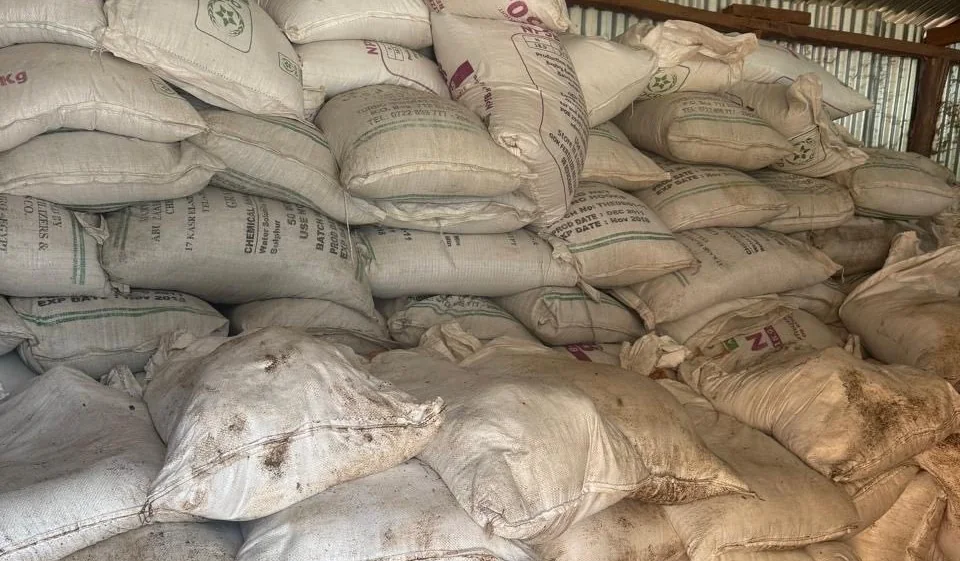
Agricultural inputs have emerged as another major focus of the campaign following an operation in Matungu, Kakamega County, last Friday, in which ACA officers recovered two loaded lorries and industrial packaging equipment linked to the suspected illegal repackaging of fertiliser.
Preliminary investigations suggest the fertiliser was diverted from the government subsidy programme, transferred into counterfeit branded bags, and offered for sale at commercial prices.
The alleged scheme raises concerns about the diversion of agricultural inputs meant to help ordinary farmers reduce production costs, with the authority saying the subsidised commodity was instead being channelled into private profit.
ACA warned that the threat could grow as the planting season approaches and demand for fertiliser increases. It said tackling counterfeit agricultural products would remain central to its intensified nationwide enforcement campaign.
Farmers have consequently been urged to obtain subsidised fertiliser only from authorised distribution points to reduce the risk of purchasing illegally repackaged or falsely branded products.
The authority has also stepped up action against counterfeit and illicit alcoholic products, with recent operations uncovering thousands of suspected fake bottles and substantial quantities of illicit brew.
A multi-agency Rapid Results Initiative conducted in high-risk areas of Nairobi between August 20 and September 3, 2026, resulted in 36 arrests and apprehensions. The operation led to the seizure of more than 5,555 suspected counterfeit bottles and the recovery of approximately 39,580 litres of illicit brew.
Dagoretti North accounted for about 27,330 litres of the recovered illicit alcohol. Officers also seized more than 5,000 bottles in Kayole, while 868 assorted alcoholic beverages were recovered in Eastleigh.
On September 15, ACA officers working with the police seized another 8,459 suspected counterfeit alcoholic products in Makindu, with the consignment valued at approximately Sh2.1 million.
Further seizures in Nairobi, Nyeri, and Eldoret pushed the value of goods recovered in September to about Sh3.74 million.
The authority said it would continue enforcement against counterfeit and illicit alcohol as it seeks to stop the circulation of products whose quality and safety may not have been verified.
The campaign will also target counterfeit tobacco products, including cigarettes that imitate registered brands and carry forged excise stamps.
Other products facing scrutiny include counterfeit nicotine products, electronic cigarettes, vapes, refill liquids, rolling papers and filters.
ACA said these goods are manufactured outside regulatory oversight, leaving their contents unverified. Their sale also reduces government revenue and disadvantages legitimate manufacturers competing in the market.
The authority will work alongside the Kenya Revenue Authority (KRA), the Kenya Bureau of Standards (KEBS), the Ministry of Health and rights holders to strengthen enforcement across the different product categories.
Parents and schools have been advised to source textbooks and other learning materials from authorised publishers and suppliers, while farmers have been urged to purchase subsidised fertiliser through approved channels.
Members of the public can report suspected counterfeit products through ACA's official channels or visit any of its regional offices. The authority said it would treat information provided by the public confidentially.
“Counterfeiters should not expect a holiday from enforcement,” Gaichuhie said.