
A severe shortage of early childhood teachers and the growing number of children missing out on pre-primary education have exposed major weaknesses in the delivery of education services in Coast counties, with Kwale facing a deficit of 1,502 tutors and an annual staffing bill of Sh1.36 billion.
A Senate inquiry into Early Childhood Development Education (ECDE) and vocational training has revealed that learners in Mombasa, Kilifi and Kwale are grappling with overcrowded classrooms, inadequate learning materials, poor facilities and funding shortfalls that threaten the quality of education.
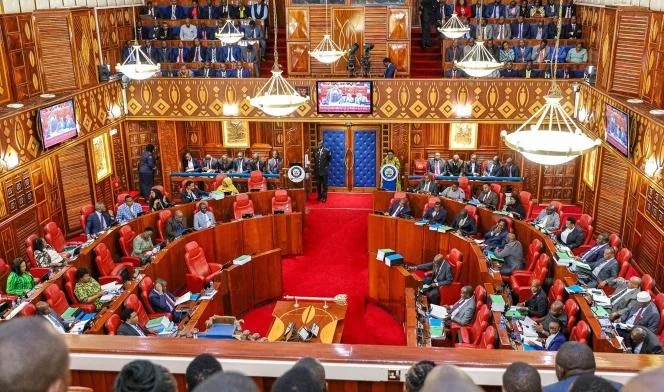
The Senate Education Committee, chaired by nominated Senator Betty Montet, found that the challenges extend beyond the availability of teaching staff, with thousands of children still unable to access formal pre-primary education despite legal and constitutional provisions guaranteeing access to basic education.
Kwale faces one of the most pressing staffing challenges, with the county unable to provide enough teachers to meet the needs of its growing number of young learners.
The committee established that the county needs 2,419 ECDE teachers to support effective learning but has a shortfall of 1,502. The shortage has pushed the teacher-to-pupil ratio to 1:55, more than twice the nationally recommended standard of one teacher for every 25 pupils.
“The teacher-to-pupil ratio stands at 1:55. The county’s own assessment is that effective teaching and learning requires 2,419 teachers, leaving a deficit of 1,502,” the committee report states.
The deficit has left existing teachers responsible for large numbers of children, raising concerns about their ability to provide sufficient attention and support to individual learners.
The investigation further found that approximately 150 ECDE centres in Kwale have no teachers employed by the county government.
To keep the centres operational, parents and school management boards have been forced to hire teachers using their own resources. However, the arrangement has created concerns about the terms of employment and the sustainability of relying on parental contributions to maintain learning activities.
Some of the teachers hired by parents earn extremely low salaries, placing their welfare at risk and raising questions about the long-term viability of the system.
Addressing the shortage will require substantial financial commitment from the county government, which needs approximately Sh1.36 billion every year to meet its ECDE staffing requirements.
The committee wants the county to develop a clear recruitment plan that sets out the costs and stages for filling the vacant positions rather than leaving the shortage unresolved.
“The committee recommends that the County Government of Kwale develop and submit a costed and phased plan for addressing the structural ECDE teacher deficit of 1,502 posts,” the report states.
The senators also found that school attendance remains a challenge in Kwale, where approximately 3,800 children of pre-primary school-going age are not enrolled in school.
This is despite the county recording an enrolment rate of about 93 per cent, indicating that thousands of eligible children have yet to gain access to formal early childhood education.
Mombasa is also facing a gap in access to ECDE, with an estimated 7,051 children potentially missing out on formal pre-primary learning.
The committee's report cites projections by the Kenya National Bureau of Statistics showing that Mombasa was expected to have 60,570 children aged between four and five years in 2025.
The findings in Mombasa and Kwale were part of a wider assessment of ECDE and vocational education in the three Coast counties, with the committee identifying shortcomings in staffing, learning facilities, teaching materials and funding.
The investigation found that dilapidated infrastructure and crowded classrooms are among the problems affecting learning, while inadequate resources continue to place pressure on institutions expected to provide early education and technical training.
The gaps raise concerns about whether county governments are adequately meeting the needs of learners, particularly children at the pre-primary level, when access to teachers and suitable learning environments is essential.
The committee's findings point to the need for county governments to address staffing shortages, improve infrastructure and strengthen funding to ensure that children can access early education and learners in vocational institutions receive adequate training.