
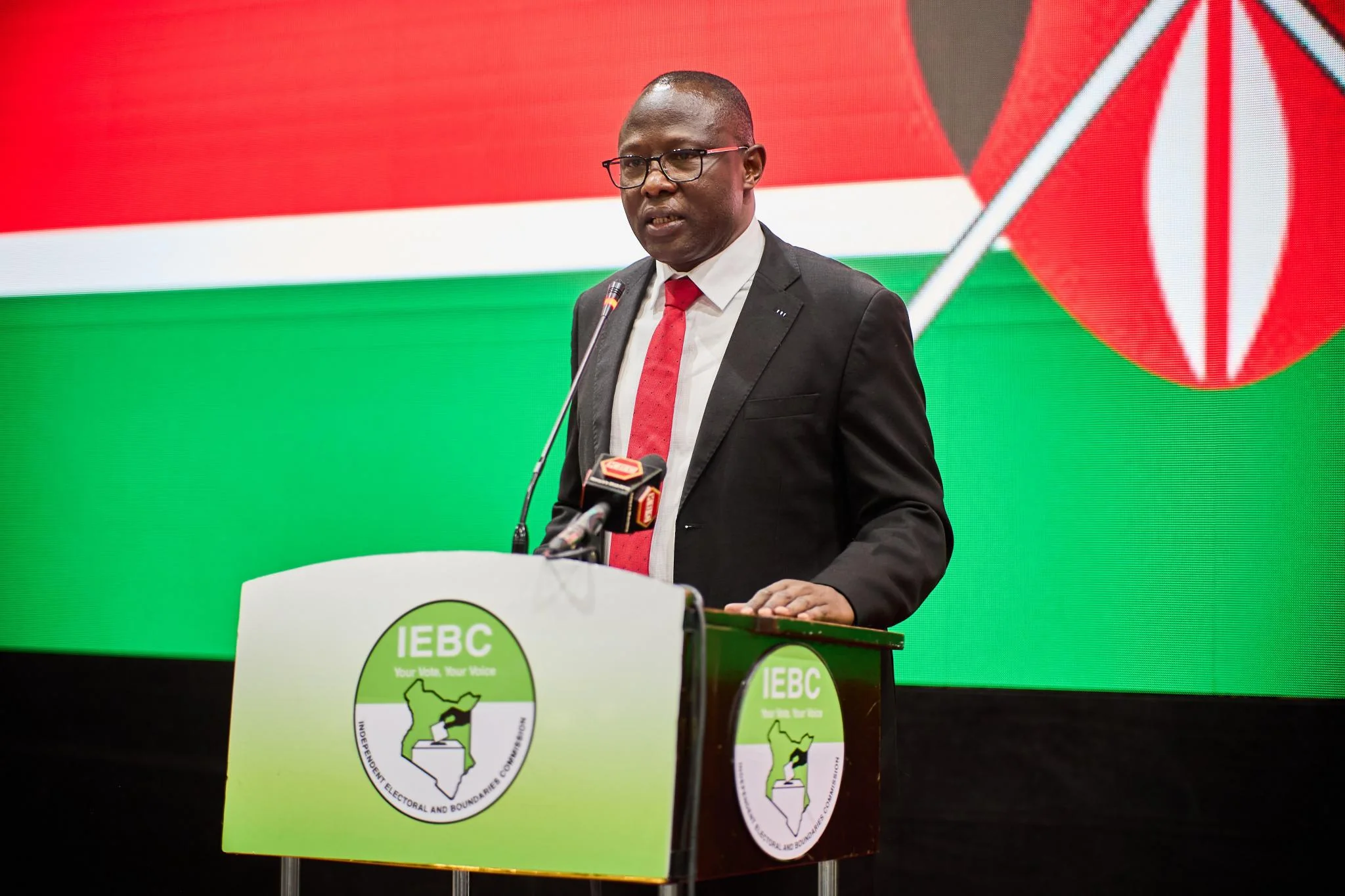
IEBC Chairperson Erastus Ethekon has called on media organisations to intensify efforts to expose hate speech, propaganda and election-related misinformation ahead of the 2027 General Election, warning that misleading claims could erode public trust in the electoral process and keep voters away from polling stations.
Ethekon said journalists had a critical responsibility to ensure Kenyans received accurate information about the elections, particularly on the use of electronic systems, noting that false claims about election technology could raise unnecessary doubts about the credibility of the polls.
Speaking during a breakfast meeting with political reporters on Tuesday, November 24, 2026, the Independent Electoral and Boundaries Commission (IEBC) chairperson urged newsrooms to strengthen their fact-checking practices and work closely with the Commission to challenge misleading information.
“We need you to help us address the challenges around hate speech. We know what hate speech can do to a country, to a people. We need you to help us deal with propaganda,” he said.
He warned that unverified claims could gain public acceptance when journalists fail to investigate their origins and provide factual information to counter them.
According to Ethekon, the spread of propaganda without proper scrutiny could leave ordinary Kenyans believing information that has no factual basis, potentially influencing their decisions on whether to participate in elections.
“Sometimes, without any factual basis, you hear this propaganda, this and that, and then as media, if we don't do our job very well, do our research, and get the correct information in order to refute some of this — of course the ordinary Kenyans will believe that this propaganda is actually true,” he said.
The IEBC chairperson further noted that misleading election information could be spread by individuals and groups operating both within and outside Kenya, making closer cooperation between the Commission and media houses necessary.
He particularly called for careful reporting on electronic election systems and other technology-related processes, saying journalists should verify information before publishing claims that could create doubts about the conduct of the elections.
Ethekon also challenged media organisations to reconsider their coverage of political leaders, urging journalists to give greater attention to issues that directly affect voters rather than focusing excessively on the personalities of public officials.
He questioned the value of giving prominence to photographs of leaders when the public needed information about the electoral process and how it would be conducted.
“Sometimes I look at, even for myself, some news that doesn't deserve my picture on the front page of a newspaper. So I wonder, are you informing Kenyans about my face, or are you telling Kenyans facts about our electoral process?” he posed.
He said public understanding of electoral procedures should take priority over coverage centred on individuals, adding that Kenyans needed factual reporting to make informed decisions ahead of the 2027 polls.
The Commission has also entered into a Memorandum of Understanding (MoU) with media organisations to strengthen collaboration and improve the flow of election-related information as preparations for the General Election continue.
The agreement establishes a framework for sharing results covering presidential, gubernatorial, senatorial and other elective positions, including the streaming of results from polling stations to the National Tallying Centre.
Ethekon described the relationship between the media and the electoral body as essential to ensuring openness and accountability throughout the election process.
“IEBC and the media fraternity are inseparable,” he said.
He urged journalists to maintain high standards of professionalism, integrity and responsibility in their coverage, noting that both the media and the Commission had an obligation to respect the rights of Kenyans and operate within the law.